Native Plants

Q. Who is Mr. Smarty Plants?
A: There are those who suspect Wildflower Center volunteers are the culpable and capable culprits. Yet, others think staff members play some, albeit small, role. You can torture us with your plant questions, but we will never reveal the Green Guru's secret identity.

Did you know you can access the Native Plant Information Network with your web-enabled smartphone?

Ask Mr. Smarty Plants
Ask Mr. Smarty Plants is a free service provided by the staff and volunteers at the Lady Bird Johnson Wildflower Center.

rate this answer

Thursday - February 02, 2012
From: Deltona, FL
Region: Southeast
Topic: Invasive Plants, Non-Natives, Planting, Trees
Title: Trees to replace some non-native invasives in Deltona FL
Answered by: Barbara Medford
QUESTION:
I would like to replace 3 large ChinaBerry & 3 large Chinese Tallow trees in my good sized back yard with some local wildlife friendly trees native to the Deltona area(first area.) What do you recommend?ANSWER:
Good for you! Those are both non-native invasive plants, two characteristics that neither the Lady Bird Johnson Wildflower nor Mr. Smarty Plants likes. We will get to some suggested replacements in a minute, but first let's talk about getting rid of the present bad boys. Just cutting down these trees does not make them go away-they have been spreading seedlings far and wide and sprouts are probably coming up all over your neighborhood and beyond.
To begin with Melia azedarach, Chinese tallow. This link takes you to the Texas Invasives.org Invasives Database. Texas Invasives is a partnership in which the Lady Bird Johnson Wildflower Center is actively involved. Another website, the Plant Conservations Alliance's Alien Plant Working Group LEAST WANTED on Melia azedarach, native from southern Asia to northern Australia, gives basically the same instructions for elimination, but with more detail.
Again from Texas Invasives.org, here is an article on Triadica sebifera, Chinaberry, which is native to eastern China, Taiwan and Japan. And from Invasives.org, some links to control of this plant specifically for Florida. We also suggest you consider having the stumps ground out, as new plants can sprout from those.
Our suggestion is, get rid of the non-native invasives first, or as much as you can, before you plant your new trees. In fact, in warmer areas like Florida and Texas, December and January are better times to plant trees. We realize it just turned February, so if you can afford professional help removing the old trees and preparing the holes for the new trees quickly, it would probably be fine. If you are doing the work yourself give yourself some time. We are going to list some trees native to your area of Florida that we think will work out well, and some instructions for preparing the holes and getting those trees properly planted. Trees can be the most valuable part of your landscape and planting them is not necessarily an easy, do-it-yourself job.
In order to select appropriate trees, we are going to go to our Native Plant Database and, using the Combination Search, select on "tree" for General Appearance and Florida for state. In the process, you can select for desired height, evergreen or deciduous, bloom time, light requirements, etc. Usually we recommend you look at all the suggestions we make, and then follow the plant link to each to see what growing requirements and qualities it has, and then make your selection.
There are a lot of trees that will grow in Florida and we have selected only those native to Volusia County, because of soil and rainfall differences in different parts of the state. We found these by going to the bottom of our webpage for each plant and clicking, under ADDITIONAL RESOURCES, on "Find (plant name) in USDA Plants." For instance, here is the USDA page on Carya alba (Mockernut hickory). If the state you are in is green, that means that plant is native to that state, or at least that it grows there. Click on the green state (Florida, in this case) and you will get a map of the counties in that state where that plant will grow. Volusia County, on the central eastern coast of Florida is green. In that same ADDITIONAL RESOURCES area you can also click for a Google search. When you are doing your own plant search, and before you go to the nursery, check the trees that fit your needs the mostly closely.
Make at least two trips to the nursery, because they will offer you a lot of things not on your list. Write down the scientific name (if they have it) and the common name of each plant offered, come home and do your research. Is it native? Is it native to your area? Will it fit in the space? Is it messy, invasive, have invasive roots, attract pests, is short-lived? And on and on. Then, go to our Step-by-Step Guide How to Plant a Tree.
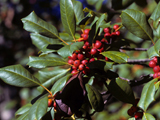
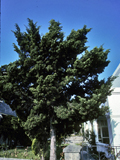
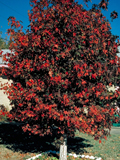
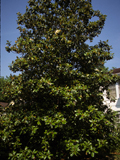
Trees native to Volusia County, FL:
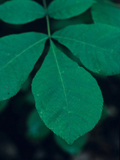
Carya alba (Mockernut hickory)
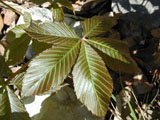
Aesculus pavia var. pavia (Scarlet buckeye)
Carpinus caroliniana (American hornbeam)
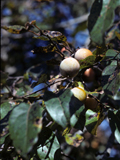
Diospyros virginiana (Common persimmon)
Juniperus virginiana (Eastern red cedar)
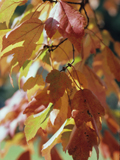
Liquidambar styraciflua (Sweetgum)
Magnolia grandiflora (Southern magnolia)
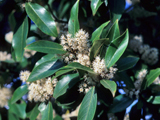
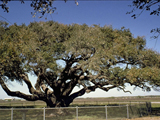
From the Image Gallery


More Non-Natives Questions
Pruning of non-native nectarine tree from Lakeway TX
December 16, 2010 - Could you describe when and how a nectarine tree should be pruned? Or, give us a resource for such information? Also, when and what type
of treatment/pesticide (?) should one use on it in the Austi...
view the full question and answer
Growing conditions for non-native Thlaspi caerulescens
June 19, 2007 - I want to know what is the best condition for growing Thlaspi caerulescens and what is its life span.
Thanks
view the full question and answer
Plants for hanging baskets in Austin
October 06, 2009 - Can you suggest some plants for winter hanging baskets in the Austin, TX area?
view the full question and answer
Non-native crepe myrtles in Coleman, TX
March 06, 2009 - We want to plant 2 white crepe myrtle trees on our family cemetery plot in Coleman TX. Once they get established, they will be pretty much on their own. Wind and sun are abundant. Rain is scarce. ...
view the full question and answer
Wintering non-native liriope spicata indoors in Chillicothe IL
November 08, 2013 - I live in zone 5, zip 62523, wintering liriope spicata starter plants in basement, ambient consistent. Do I need grow lamps or is the plant satisfied being dormant as long as I do not let it dry out? ...
view the full question and answer
| Support the Wildflower Center by Donating Online or Becoming a Member today. |