Native Plants
Q. Who is Mr. Smarty Plants?
A: There are those who suspect Wildflower Center volunteers are the culpable and capable culprits. Yet, others think staff members play some, albeit small, role. You can torture us with your plant questions, but we will never reveal the Green Guru's secret identity.
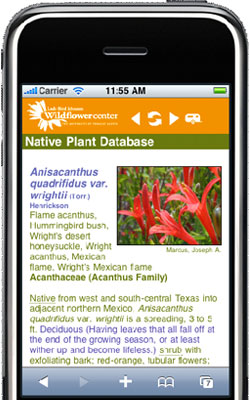
Did you know you can access the Native Plant Information Network with your web-enabled smartphone?

Ask Mr. Smarty Plants
Ask Mr. Smarty Plants is a free service provided by the staff and volunteers at the Lady Bird Johnson Wildflower Center.

rate this answer

Monday - July 06, 2009
From: Natick, MA
Region: Northeast
Topic: Wildflowers
Title: Will a gift of bluebonnet seeds grow in Massachusetts?
Answered by: Barbara Medford
QUESTION:
I recently received a gift of bluebonnet seeds and would like to know if they are suitable to grow in Massachusetts. We live in Zone 5. If so, would they be considered an annual due to our hard winters? Thanks in advance!ANSWER:
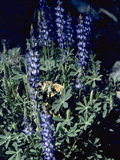
That was a kind thought to give you some bluebonnet seeds, but probably not practical. Lupinus texensis (Texas bluebonnet) is endemic to Texas, but some are grown through cultivation in Florida, Louisiana, and Oklahoma. They thrive on our alkaline soils, low moisture, lots of sun and sometimes very thin soil coating over limestone. You ask if they would be an annual because of your hard winters; they ARE an annual, period. In Central Texas, where we are located, they begin to show rosettes around Christmas, freshly sprouted from seeds sown either by the natural process of the mature seed pods basically exploding in early summer, or by gardeners in the fall. They bloom from late February to early April, according to the moisture and temperatures. Because of the hard protective coating on the seeds, they sometimes don't germinate for several years, waiting for rain and letting the earth around them wear down that coating.
The Lady Bird Johnson Wildflower Center recommends the propagation of plants native not only to North America but to the area in which the plant is being grown. Plants growing where they are native will need less water, fertilizer and maintenance. Short of a very protected greenhouse environment, I don't think there is anything that would induce Texas bluebonnets to grow in Massachusetts. Another reason we encourage only native plants is that a plant out of place, with no natural impediments to its development, can become invasive and take over natural habitat. That seems hardly likely for bluebonnets in Massachusetts, but we always consider that.
We realize you would like to show your appreciation for the gift by planting the seeds, and there is certainly nothing to stop you from doing that. We would suggest spring, after the ground thaws, and just see what happens. Not to be too discouraging, but we're betting nothing happens. This is a very thoroughly acclimated native plant that likes living rough. The soils, moisture and cool summers of Massachusetts probably would not suit it at all.
If you would like to raise some lupines anyway, we found, of 54 species of the genus Lupinus native to North America, there are exactly two native to Massachusetts:
Lupinus perennis (sundial lupine) - perennial, blooms blue, purple May and June, acidic, dry, sandy soils
Lupinus polyphyllus (bigleaf lupine) - perennial, blooms pink, blue, purple in May, part shade, acidic soil
Most of the other lupines seems to be native to states in the Northwest.

More Wildflowers Questions
Raised bed for wildflowers in Kilgore TX
September 29, 2008 - Please give me ideas of how to build a raised wildflower garden in a small back yard with 50% shade all day. I have common bermuda grass with an area of a 5' X 10' setting that will receive the mos...
view the full question and answer
Native flowering plants for Frisco, Texas
August 12, 2015 - Hi There, I recently moved from Ohio, Cleveland to TX, Frisco. Could you please suggest me native flowering plants in my back yard and front yard. I like different flowers.
view the full question and answer
Seeds for native Sandyland Bluebonnet
October 04, 2008 - I live in Bastrop County Texas and would like to plant our native Sandyland Bluebonnet, Lupinus subcarnosus. I have checked most of the native plant supply firms, but can't find this species (except...
view the full question and answer
More on bluebonnets
September 13, 2006 - I have a small field (about 1/2 acre) where I would like to grow bluebonnets and perhaps some other wildflowers for added color. Do bluebonnets need to be fertilized? Should I water them? How can I...
view the full question and answer
Native plant bibliography
March 20, 2004 - What book do you recommend for identifying the native plants and wildflowers of my region?
view the full question and answer
| Support the Wildflower Center by Donating Online or Becoming a Member today. |