Native Plants
Q. Who is Mr. Smarty Plants?
A: There are those who suspect Wildflower Center volunteers are the culpable and capable culprits. Yet, others think staff members play some, albeit small, role. You can torture us with your plant questions, but we will never reveal the Green Guru's secret identity.
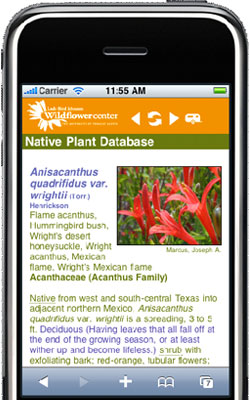
Did you know you can access the Native Plant Information Network with your web-enabled smartphone?

Ask Mr. Smarty Plants
Ask Mr. Smarty Plants is a free service provided by the staff and volunteers at the Lady Bird Johnson Wildflower Center.
rate this answer

Saturday - October 04, 2008
From: Paige, TX
Region: Southwest
Topic: Wildflowers
Title: Seeds for native Sandyland Bluebonnet
Answered by: Barbara Medford
QUESTION:
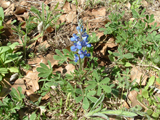
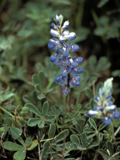
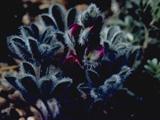
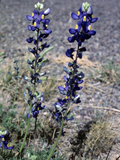
I live in Bastrop County Texas and would like to plant our native Sandyland Bluebonnet, Lupinus subcarnosus. I have checked most of the native plant supply firms, but can't find this species (except for B&T in Europe). Do you know anyone supplying it? Thank you very much for any help you can pass my way.ANSWER:
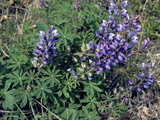
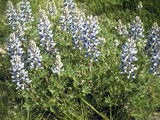
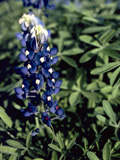
You are correct, the usual native seed suppliers that we rely on don't seem to differentiate between the different Texas native bluebonnets in their catalogs. When we searched on the botanical names of the six species of Lupinus considered to be Texas State Flower, our usual old reliable Native American Seed gave us a "hit" only on Lupinus texensis (Texas bluebonnet) and they were referred to simply as "Bluebonnets." Lupinus concinnus (bajada lupine), Lupinus havardii (Big Bend bluebonnet), Lupinus perennis (sundial lupine), Lupinus subcarnosus (Texas bluebonnet), and Lupinus plattensis (Nebraska lupine) did not rate a mention. We discussed this with some staff people at the Lady Bird Johnson Wildflower Center who do some of the seed and plant collection for the Wildflower Center. They did not know of any harvesting of Lupinus subcarnosus (Texas bluebonnet), specifically. We are of the opinion that, for the harvesters, just determining which species was which when they were taking seeds would be very difficult, especially since the blossoms are long gone when the seeds are harvested. It's very possible that when you buy a packet of Texas Bluebonnet seeds, you may be getting some of the other species' seeds besides Lupinus texensis (Texas bluebonnet), but who could tell the difference?
We did find a very technical article comparing the soils in which Lupinus texensis (Texas bluebonnet) and Lupinus subcarnosus (Texas bluebonnet) grow, which stated that Lupinus subcarnosus (Texas bluebonnet) did very well in Bastrop Park sandy loam. Of course, we're sure you know that you cannot harvest seeds in a State park, nor from any private property without express permission from the landowners. However, if you keep a sharp eye out during the next bloom season, you might be able to mark some of the blooming plants in the Bastrop area for the species you want, and (remember, not without permission) harvest some of those seeds for your project. Who knows, you may have Lupinus subcarnosus (Texas bluebonnet) already growing on your property!
More Wildflowers Questions
Milkweed Seedlings Source for Austin, Texas
March 18, 2013 - Where can I find seedlings or four inch pots of common milkweed? I have a backyard garden that is mostly filtered sunlight and space for them.
view the full question and answer
Plants for a Steep, Sunny Slope in Iowa
April 28, 2013 - I am looking for plants native to Iowa for a steep, sunny slope or groundcover.
view the full question and answer
Wildflower preparation for winter
October 22, 2009 - I live in Onieda New York and I would like to know what do I do with my wild flowers before winter so they look great next year?
view the full question and answer
Eliminating Claytonia virginica in Varna IL
April 13, 2010 - How do I get rid of or control Claytonia virginica? It is starting to take over my lawn.
view the full question and answer
First to Bloom in Western PA
October 02, 2010 - What spring wildflower is consistently among the first to bloom in Butler, PA?
view the full question and answer
| Support the Wildflower Center by Donating Online or Becoming a Member today. |