Native Plants

Plant Database
Search for native plants by scientific name, common name or family. If you are not sure what you are looking for, try the Combination Search or our Recommended Species lists.
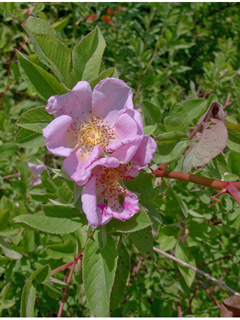
Brundage, Stephanie
Rosa carolina
Rosa carolina L.
Carolina Rose, Pasture Rose
Rosaceae (Rose Family)
Synonym(s):
USDA Symbol: roca4
USDA Native Status: L48 (N), CAN (N)
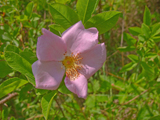
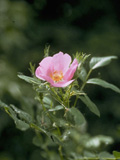
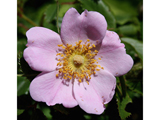
A low, freely suckering shrub, Carolina Rose grows 1-3+ ft. high. From thorny stems are borne fragrant, 2 in. wide, 5-petaled, pink flowers. Flowers occur singly or in small clusters. The fruit, a hip, turns from dark green to bright red as it ripens.
The Carolina Rose is a member of the rose family (family Rosaceae) which includes about 2,000 species of trees, shrubs, and herbs worldwide; approximately 77 native and 9 naturalized tree species and many species of shrubs and herbs in North America.


Plant Characteristics
Duration: PerennialHabit: Shrub
Leaf Retention: Deciduous
Fruit Type: Achene
Size Notes: Up to about 6 feet tall, often shorter.
Leaf: Green
Autumn Foliage: yes
Fruit: Red hip (mature floral tube) surrounding achenes.
Bloom Information
Bloom Color: PinkBloom Time: May , Jun , Jul , Aug
Distribution
USA: AL , AR , CT , DC , DE , FL , GA , IA , IL , IN , KS , KY , LA , MA , MD , ME , MI , MN , MO , MS , NC , NE , NH , NJ , NY , OH , OK , PA , RI , SC , TN , TX , VA , VT , WI , WVCanada: NB , NS , ON , PE
Native Distribution: Eastern U.S., w. to WI, IA, MO, extreme s.e. KS & e. TX
Native Habitat: Dry prairies; disturbed areas; sandy, open woods; thickets; roadsides
Growing Conditions
Water Use: LowLight Requirement: Sun , Part Shade
Soil Moisture: Dry , Moist , Wet
Soil pH: Acidic (pH<6.8)
CaCO3 Tolerance: Low
Soil Description: Rocky or sandy, well-drained soils.
Conditions Comments: Though one of the most shade-tolerant roses, this species grows best in open, sunny locations. It is susceptible to fungal problems.
Benefit
Warning: Plant has thorns or prickles.Conspicuous Flowers: yes
Fragrant Flowers: yes
Attracts: Birds
Value to Beneficial Insects
Special Value to Native BeesSpecial Value to Bumble Bees
Provides Nesting Materials/Structure for Native Bees
This information was provided by the Pollinator Program at The Xerces Society for Invertebrate Conservation.
Propagation
Description: Propagated by seed, cuttings or stolon division. Separate and transplant stems arising from the underground stolons in late fall or early spring. Make softwood cuttings in early spring after vigorous shoot growth has just started. Semi-hardwood cuttingSeed Collection: Collect seeds as soon as the hips have turned red in the late summer or early fall. Do not allow the seeds to dry out.
Seed Treatment: Remove seeds from pulpy hip. Seeds require stratification (3 months at 40 degrees) and may benefit from scarification.
Commercially Avail: yes
Find Seed or Plants
Find seed sources for this species at the Native Seed Network.
View propagation protocol from Native Plants Network.
National Wetland Indicator Status
| Region: | AGCP | AK | AW | CB | EMP | GP | HI | MW | NCNE | WMVE |
| Status: | FACU | FACU | FACU | FACU | FACU |
From the National Organizations Directory
According to the species list provided by Affiliate Organizations, this plant is on display at the following locations:Delaware Nature Society - Hockessin, DE
Native Seed Network - Corvallis, OR
Bibliography
Bibref 1620 - Gardening with Native Plants of the South (Reprint Edition) (2009) Wasowski, S. with A. WasowskiBibref 946 - Gardening with Prairie Plants: How to Create Beautiful Native Landscapes (2002) Wasowski, Sally
Bibref 318 - Native Texas Plants: Landscaping Region by Region (2002) Wasowski, S. & A. Wasowski
Search More Titles in Bibliography
Web Reference
Webref 38 - Flora of North America (2019) Missouri Botanical Garden, St. Louis, MO & Harvard University Herbaria, Cambridge, MA.Webref 23 - Southwest Environmental Information Network (2009) SEINet - Arizona Chapter
Additional resources
USDA: Find Rosa carolina in USDA PlantsFNA: Find Rosa carolina in the Flora of North America (if available)
Google: Search Google for Rosa carolina
Metadata
Record Modified: 2023-02-24Research By: TWC Staff