Native Plants

Plant Database
Search for native plants by scientific name, common name or family. If you are not sure what you are looking for, try the Combination Search or our Recommended Species lists.
Bransford, W.D. and Dolphia
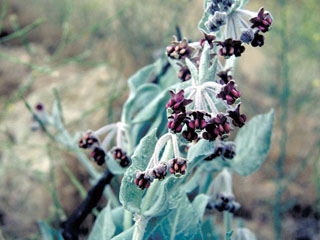
Asclepias californica
Asclepias californica Greene
California Milkweed
Asclepiadaceae (Milkweed Family)
Synonym(s):
USDA Symbol: ASCA3
USDA Native Status: L48 (N)
"Asclepias californica is a gray, very wooly-haired perennial in this family growing up to two feet high with large, opposite leaves. The flowers are pink to purple or maroon, and the expanded structure between the anthers on the central column is hoodlike, dark purple, and situated lower than the anthers. The fruit is narrow and podlike with numerous silky-haired seeds." (Bibref 1052)
"Some of the milkweeds were used in early days for healing cuts and treating rheumatism." (Bibref 1052)
From the Image Gallery
Bloom Information
Bloom Color: Red , PurpleBloom Time: Apr , May , Jun , Jul
Bloom Notes: Reddish purple.
Distribution
USA: CANative Distribution: Central California and south, excluding Central Valley.
Native Habitat: Dry slopes, 600–7,000' (182-2,134 m).
Value to Beneficial Insects
Special Value to Native BeesSpecial Value to Bumble Bees
Special Value to Honey Bees
Supports Conservation Biological Control
This information was provided by the Pollinator Program at The Xerces Society for Invertebrate Conservation.
Find Seed or Plants
Find seed sources for this species at the Native Seed Network.
From the National Organizations Directory
According to the species list provided by Affiliate Organizations, this plant is on display at the following locations:Santa Barbara Botanic Garden - Santa Barbara, CA
Native Seed Network - Corvallis, OR
Bibliography
Bibref 1052 - Introduction to California Spring Wildflowers of the Foothills, Valleys, and Coast (2004) Munz, P. A. ; D. Lake; P. M. FaberSearch More Titles in Bibliography
Additional resources
USDA: Find Asclepias californica in USDA PlantsFNA: Find Asclepias californica in the Flora of North America (if available)
Google: Search Google for Asclepias californica
Metadata
Record Modified: 2017-08-07Research By: TWC Staff, NH