Native Plants

Q. Who is Mr. Smarty Plants?
A: There are those who suspect Wildflower Center volunteers are the culpable and capable culprits. Yet, others think staff members play some, albeit small, role. You can torture us with your plant questions, but we will never reveal the Green Guru's secret identity.

Did you know you can access the Native Plant Information Network with your web-enabled smartphone?

Ask Mr. Smarty Plants
Ask Mr. Smarty Plants is a free service provided by the staff and volunteers at the Lady Bird Johnson Wildflower Center.

rate this answer

Friday - February 18, 2011
From: Athens, GA
Region: Southeast
Topic: Wildlife Gardens
Title: Plants for bees in GA
Answered by: Anne Bossart
QUESTION:
Hi, I'm in Georgia and I am starting beekeeping this spring and I am also hoping to plant a mostly evergreen hedge around my yard to add privacy from neighbors. There are already some well established pine and other trees so the hedge is part to semi shade, to full shade in some places. I would like to plant mostly evergreens, but some deciduous, shrub type plants that are native and will naturalize well, but that will also provide a good source for honeybees all throughout the year. Thank you!ANSWER:
Landscaping for wildlife and polllinators is a great way to "give back" some of the habitat/ecosystem that we have taken with our built environment so we applaud your efforts.
We encourage you to contact your local agricultural extension service and check out this link to the University of Georgia Honey Bee Program. They will be able to give you more locally helpful information about plants and can probably put you in contact with a local organization like our local SMABeeWranglers.
You will find that bees are not particular about where they gather nectar and so you will find many non-native plants on lists you may find by doing an internet search.
Unfortunately, our database cannot sort plants according to their wildlife benefit, but that characteristic is noted on the detailed plant information page. So if you visit the database and do a Combination Search for Georgia, selecting the plant type (shrub) and your conditions (shade and part shade) it will generate lists of plants with links to the detailed page. You can also create separate lists for bloom time (as you know, your bees will be looking for food throughout the growing season).
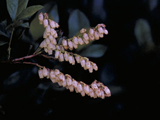
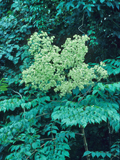
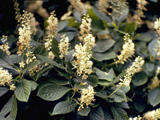
Here are some plants that are native to Georgia and may be of interest:
Blooms early spring
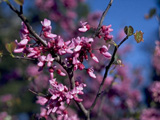
Cercis canadensis (Eastern redbud)
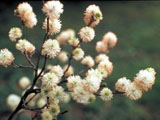
Fothergilla gardenii (Dwarf witchalder)
(all the hollies are good nectar sources for bees)
Blooms spring/summer
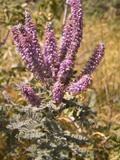
Amorpha fruticosa (Indigo bush)
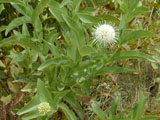
Cephalanthus occidentalis (Common buttonbush)
Vaccinium corymbosum (Highbush blueberry)
Blooms mid summer
Aralia spinosa (Devil's walkingstick)
Baccharis halimifolia (Groundseltree)
Clethra alnifolia (Coastal sweet pepperbush)


More Wildlife Gardens Questions
Host plants to monarch butterflies in Starr County, TX
July 14, 2005 - I plant native larval and nectar plants that support the life cycle of the monarch butterfly here in the east; but, where can I find a list of native plants for my friends in the Tamaulipan Biotic P...
view the full question and answer
Wildlife and bird friendly hedgerow for Chicago suburb
November 30, 2013 - Want to plant a wildlife/bird friendly hedgerow
in suburban Chicago. Looking for a recommended mix of understory trees as well a shrubs and grasses. Site is part shade with average to wet soil and tr...
view the full question and answer
Planting for parrots
March 23, 2005 - I have 2 parrots, a sun conure and a nanday conure, and I would like to find some plants to put in their aviary room that are safe for parrots. Can you help me with this question?
view the full question and answer
Latin name for botany mist in McAllen TX
November 10, 2009 - What is the latin name or formal name of botany mist which is a Queen butterfly nectar source in the Rio Grande Valley?
view the full question and answer
Need plants beneficial or attractive to bees in Dripping Springs, TX
January 27, 2014 - Can you provide a specific list of plants beneficial or attractive to honey bees in the Texas Hill Country (we raise bees in Dripping Springs, TX.) Thanks.
view the full question and answer
| Support the Wildflower Center by Donating Online or Becoming a Member today. |