Native Plants

Plant Database
Search for native plants by scientific name, common name or family. If you are not sure what you are looking for, try the Combination Search or our Recommended Species lists.
Page, Lee
Ilex decidua
Ilex decidua Walter
Possumhaw, Possumhaw Holly, Deciduous Holly, Meadow Holly, Prairie Holly, Swamp Holly, Welk Holly, Deciduous Yaupon, Bearberry, Winterberry
Aquifoliaceae (Holly Family)
Synonym(s): Ilex curtissii, Ilex decidua var. curtissii
USDA Symbol: ILDE
USDA Native Status: L48 (N)
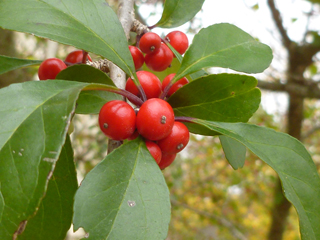
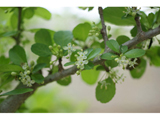
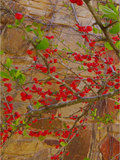
Deciduous holly or possum haw is a small, deciduous tree or shrub,15-30 ft. tall, with pale gray, twiggy, horizontal branches. Glossy, oval, toothed leaves remain dark green through autumn, finally turning yellow. Inconspicuous flowers precede clusters of persistant, red berries on female trees which provide winter color.
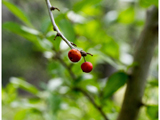
Possum Haw is conspicuous in winter, with its many, small, red berries along leafless, slender, gray twigs. Opossums, raccoons, other mammals, songbirds, and gamebirds eat the fruit of this and related species.

Plant Characteristics
Duration: PerennialHabit: Shrub
Root Type: Tap
Leaf Retention: Deciduous
Leaf Complexity: Simple
Leaf Shape: Obovate
Leaf Pubescence: Glabrous
Leaf Margin: Crenate
Breeding System: Flowers Unisexual , Dioecious
Fruit Type: Drupe
Size Notes: Up to about 30 feet tall.
Leaf: Green above, paler below
Fruit: Red, orange. Although technically drupes, the fruit is commonly referred to as berries.
Bloom Information
Bloom Color: WhiteBloom Time: Mar , Apr , May
Distribution
USA: AL , AR , DC , FL , GA , IL , IN , KS , KY , LA , MD , MO , MS , NC , OK , SC , TN , TX , VANative Distribution: VA to s. IL & s. MO, s. to FL Panhandle & c. TX
Native Habitat: Low, wet woods; coastal plains; river bottoms
Growing Conditions
Water Use: MediumLight Requirement: Sun , Part Shade
Soil Moisture: Moist
CaCO3 Tolerance: Low
Cold Tolerant: yes
Heat Tolerant: yes
Soil Description: Moist sands, loams or clays. Sandy, Sandy Loam, Medium Loam, Clay Loam, Clay, Caliche type
Conditions Comments: Deciduous holly or possum haw is a small, deciduous tree or shrub with pale gray, twiggy, horizontal branches. Glossy, oval, toothed leaves remain dark green through autumn, finally turning yellow. Inconspicuous flowers precede clusters of persistant, red berries on female trees which provide winter color.
Benefit
Use Ornamental: Understory tree, Fruits ornamental, Accent tree or shrubUse Wildlife: Berries attract songbirds. Fruit-mammals, Fruit-birds, Nesting site, Nectar-insects
Conspicuous Flowers: yes
Interesting Foliage: yes
Attracts: Birds
Deer Resistant: Moderate
Propagation
Description: Seeds germinate best if planted immediately after collection. They may be pretreated with double-stratification but the essential element seems to be time. Once internal conditions in the seed are right (it may take years), it will germinate in warm moiSeed Treatment: Some benefit may be obtained from 30-60 days treatment at 68-86 degrees followed by 60-90 days of 41 degrees.
Commercially Avail: yes
Find Seed or Plants
View propagation protocol from Native Plants Network.
Mr. Smarty Plants says
Plants for wildlife and trees for shade.
September 29, 2007
We live in Kempner Texas, our land has mostly cedar trees. We would like to make a wildlife habitat on the back side of our property. Can you recommend plants that will grow in shade to partial sun,...
view the full question and answer
Variety of native tall plants for a screen in shady area near Ft. Worth
June 12, 2007
Hello, we live west of Ft Worth. We are looking for tall plants to form a visual screen along a chain link fence we share with a neighbor. We have post oaks there and it is very shady and the ground ...
view the full question and answer
Native plants for seasonal poor drainage
May 16, 2006
I have an area in my front yard that has a drainage ditch running through it. When it rains, that area stays very wet. What kind of plants available for sale will work in this situation?
view the full question and answer
National Wetland Indicator Status
| Region: | AGCP | AK | AW | CB | EMP | GP | HI | MW | NCNE | WMVE |
| Status: | FACW | FACW | FAC | FACW |
From the National Organizations Directory
According to the species list provided by Affiliate Organizations, this plant is on display at the following locations:Lady Bird Johnson Wildflower Center - Austin, TX
Pineywoods Native Plant Center - Nacogdoches, TX
Brackenridge Field Laboratory - Austin, TX
Patsy Glenn Refuge, c/o Wimberley Birding Society - Wimberley, TX
NPSOT - Native Plant Society of Texas - Fredericksburg, TX
Crosby Arboretum - Picayune, MS
Stengl Biological Research Station - Smithville, TX
Texas Parks and Wildlife Department - Austin, TX
NPSOT - Fredericksburg Chapter - Fredericksburg, TX
Georgia Native Plant Society - Atlanta, GA
Texas Master Naturalists - Lost Pines Chapter - Bastrop, TX
NPSOT - Austin Chapter - Austin, TX
Jacob's Well Natural Area - Wimberley, TX
NPSOT - Williamson County Chapter - Georgetown, TX
Mt. Cuba Center - Hockessin, DE
Herbarium Specimen(s)
NPSOT 0233 Collected Mar. 27, 1987 in Bexar County by Harry CliffeNPSOT 0592 Collected Oct 19, 1990 in Comal County by Harry Cliffe
NPSOT 0094 Collected April 10, 1987 in Bexar County by Harry Cliffe
Bibliography
Bibref 298 - Field Guide to Texas Trees (1999) Simpson, B.J.Bibref 1620 - Gardening with Native Plants of the South (Reprint Edition) (2009) Wasowski, S. with A. Wasowski
Bibref 355 - Landscaping with Native Plants of Texas and the Southwest (1991) Miller, G. O.
Bibref 354 - Native & Naturalized Woody Plants of Austin & the Hill Country (1981) Lynch, D.
Bibref 841 - Native Alternatives to Invasive Plants (2006) Burrell, C. C.
Bibref 318 - Native Texas Plants: Landscaping Region by Region (2002) Wasowski, S. & A. Wasowski
Bibref 291 - Texas Wildscapes: Gardening for Wildlife (1999) Damude, N. & K.C. Bender
Bibref 297 - Trees of Central Texas (1984) Vines, Robert A.
Search More Titles in Bibliography
From the Archive
Wildflower Newsletter 1988 VOL. 5, NO.5 - Penny Campaign Grows Oklahoma Wildflowers, Wildflower Center Collects Honors, Di...Wildflower Newsletter 1996 VOL. 13, NO.6 - Winter Wonderland, Origins of the Christmas Tree, Development Director\\\'s Repo...
Additional resources
USDA: Find Ilex decidua in USDA PlantsFNA: Find Ilex decidua in the Flora of North America (if available)
Google: Search Google for Ilex decidua
Metadata
Record Modified: 2021-03-18Research By: TWC Staff