Native Plants

Q. Who is Mr. Smarty Plants?
A: There are those who suspect Wildflower Center volunteers are the culpable and capable culprits. Yet, others think staff members play some, albeit small, role. You can torture us with your plant questions, but we will never reveal the Green Guru's secret identity.

Did you know you can access the Native Plant Information Network with your web-enabled smartphone?

Ask Mr. Smarty Plants
Ask Mr. Smarty Plants is a free service provided by the staff and volunteers at the Lady Bird Johnson Wildflower Center.

rate this answer

Wednesday - October 20, 2010
From: Dallas, TX
Region: Southwest
Topic: Propagation
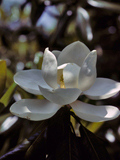
Title: Growing Magnolia from Seed in Dallas
Answered by: Mike Tomme
QUESTION:
I recently visited the property that had once been my grandmother's. Lots of memories. The house burned down years ago, but the magnolia tree that she loved still stood. I gathered several dried seed pods and put them in a bag thinking I would grow a magnolia from my grandmother's tree. When I got home, there were five red seeds in the bottom of the sack. My grandmother had five children including my mother so I sort of think I am supposed to try this. Anything you can offer that would help me grow these seeds would be appreciated. I believe the tree is the variety grandiflora. Patti HerndonANSWER:
Let's see here - five seeds, five children, yep, you're supposed to try this.
Magnolia grandiflora (Southern magnolia) is a magnificent tree and it holds a special place for all of us from the south.
Dr. William C. Welch of Texas A&M has written an article about the southern magnolia. In that article, he gives detailed instructions on how to propagate the tree from seed, including the preparation and care of the seeds. Here is that part of the article:
_________
There are frequent requests to my office for instructions on growing magnolias from seed. The seeds should be collected as soon as possible after the fruit is mature which is usually mid-September or early October. The cone-like fruit should be spread out to dry for several days until they open. The seeds can then be shaken from the dried cone or fruit.
If the seed is to be kept for any length of time, the red pulp should be allowed to dry enough to lose its fleshy character, placed in sealed containers and stored at 32 to 41 degrees F. If stored over winter at room temperature seed will lose its viability. The seed should be cleaned before planting or stratifying. To remove the fleshy seed coat, soak the seed overnight in warm water. Remove the seed coat by rubbing against hardware cloth or window screening. After cleaning, the seeds should be sown immediately or stored for 3 to 6 months at about 40 degrees F and planted in the spring. An excellent way to stratify seeds is to use a polyethylene bag and place alternating layers of a moist medium such as a sand and peat mixture and seeds in the bag. Tie the top of the bag and place in a refrigerator at about 40 degrees. The medium should be just moist enough to stick together but not so wet that it will drip if squeezed by hand.
Whether sown in the fall or stratified in the refrigerator and sown in the spring, the seeds should be covered with about l/4" of soil and mulched to prevent drying. Seedbeds should be kept moist until germination is complete. Partial shade should be provided the first summer for seedlings.
_________
Success for the long term with any plant is going to depend on its growing conditions so pick locations with favorable sun and soil conditions as described in the links above. Also, this grows to be a large tree, so make sure you have plenty of room.
More Propagation Questions
Making cuttings from purple sage in Austin, TX.
May 15, 2012 - I would like to plant additional purple sage for landscaping. May I do this with cuttings from an existing adult plant? If so, how and when would be the best method?
I live in Lago Vista, TX
view the full question and answer
How to grow milkweeds (Asclepias spp.) for monarch butterflies
March 31, 2010 - I tried and tried and tried to grow Asclepias viridis, A. asperula and even A. oenotheroides from seeds and even tubers for fourteen years! Do you have advice for growing these and other milkweed plan...
view the full question and answer
Transplanting wild sumac
September 23, 2010 - About a month ago I dug up five sumac from my backyard in Aylmer Quebec. I potted them. They now look dead. I wanted to transplant them at my cottage in Barrie Ontario. Can I still transplant them...
view the full question and answer
How to Propagate Mountain Laurel by Seed
January 02, 2003 - How do I propagate mountain laurel by seed?
view the full question and answer
Encouraging Daisies to Reappear
September 16, 2007 - Having moved into our home in the early spring of the year we hadn't seen any of the flowering plants around the place until we were living here and we were not given any info on care for them. So ...
view the full question and answer
| Support the Wildflower Center by Donating Online or Becoming a Member today. |