Native Plants

Q. Who is Mr. Smarty Plants?
A: There are those who suspect Wildflower Center volunteers are the culpable and capable culprits. Yet, others think staff members play some, albeit small, role. You can torture us with your plant questions, but we will never reveal the Green Guru's secret identity.

Did you know you can access the Native Plant Information Network with your web-enabled smartphone?

Ask Mr. Smarty Plants
Ask Mr. Smarty Plants is a free service provided by the staff and volunteers at the Lady Bird Johnson Wildflower Center.

rate this answer

Sunday - June 27, 2010
From: East Syracuse, NY
Region: Northeast
Topic: Erosion Control, Grasses or Grass-like, Herbs/Forbs, Shrubs
Title: Plants for a steep slope in New York
Answered by: Nan Hampton
QUESTION:
We just installed a swimming pool in our back yard, which is at the top of a south facing slope. After the pool was installed the slope is now 3 ft higher and very steep (unmowable). I'd guess steeper than a 45 degree angle. The over all area is about 45 ft wide and 12 ft high. The area was back filled with a gravely dirt mixture to ease the slope. And we will soon be adding topsoil on top of that. We'd like to plant the area with a variety of native plants, grasses and shrubs to avoid any erosion. Do you have any suggestions? Thank You.ANSWER:
With your steep slope and with new loose top soil, it sounds as if you would benefit from using some sort of erosion control blanket. The erosion-control fabric works by slowing the runoff water and allowing sediments to fall out rather than be washed away. Seeds are sown under the erosion-control material and grow up through the matting when they germinate. You can insert plants into the soil by cutting through the matting. The roots of the plants that are growing through the erosion-control material anchor the soil to stop the erosion. If you use erosion-control blankets made of biodegrable material, they will eventually disappear leaving the plants to control the problem. Most nurseries carry these erosion control blankets.
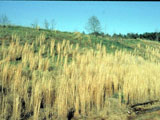
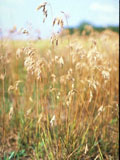
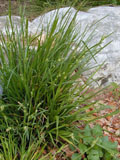
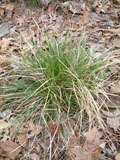
Let's start with grasses since the extensive fibrous roots of grasses are very effective in holding soil in place. Here are some native New York grasses that should do well:
Andropogon virginicus (broomsedge bluestem)
Carex blanda (eastern woodland sedge)
Carex pensylvanica (Pennsylvania sedge)
Deschampsia cespitosa (tufted hairgrass)
Elymus canadensis (Canada wildrye)
Eragrostis spectabilis (purple lovegrass)
You can add other plants to the grasses, but since I don't know how much sunlight you have on your slope and how much moisture there is in the soil, I can only make general suggestions. You should check the GROWING CONDITIONS for each recommended plant to be sure that they match the conditions at your site. Here are some plants that grow in or adjacent to Onondaga County, New York that would be suitable to add to the slope.
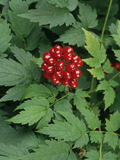
Hypericum prolificum (shrubby St. Johnswort)
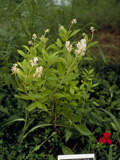
Ceanothus americanus (New Jersey tea)
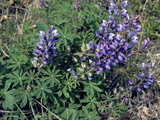
Lupinus perennis (sundial lupine)
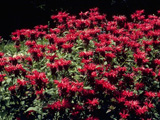
Monarda didyma (scarlet beebalm)
Monarda fistulosa (wild bergamot)
Sibbaldiopsis tridentata (shrubby fivefingers)
You can find other possibilities on our New York Recommended page.
Here are photos from our Image Gallery:
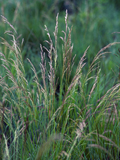
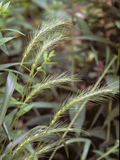
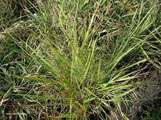
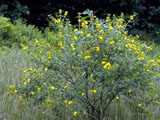
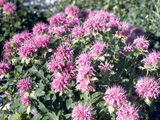
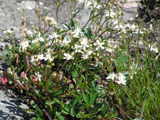
More Erosion Control Questions
Plants for erosion control in IL
April 21, 2011 - Steep 40ft slope in rural Illinois with Sandy soil. Recently several trees slid down this slope due to wet conditions. We need any inexpensive plants to hold the hillside in check before erosion creep...
view the full question and answer
Plants to prevent bank erosion in Virginia
April 02, 2009 - I am looking for good native plant choices for a steep river bank. My driveway is at the top of this slope, so I will need to avoid any plants that would cause erosion. I would prefer low shrubs.
view the full question and answer
Plants for steep lakeside bank in Minnesota
January 17, 2012 - I am new to MN and would like to plant some pretty plants on my steep lakeside bank. What type plants and flowers should I plant to prevent erosion, but not block the lake view?
view the full question and answer
Groundcover for Road Frontage in NC
March 12, 2015 - I need a fast growing ground cover or perennial flower for 1,000 feet of road frontage about one acre that will choke out weeds. I do not want to do much ground prep or any ground prep. I do not want...
view the full question and answer
Need suggestions for plants for a 45 degree slope in Falls Church, VA.
January 23, 2013 - Have a 45 degree hillside 50 feet wide by 60 feet long on north side of 26 story building. Very little sun with the need for soil retention plants. Would like a native plant or plants to cover area...
view the full question and answer
| Support the Wildflower Center by Donating Online or Becoming a Member today. |