Native Plants

Q. Who is Mr. Smarty Plants?
A: There are those who suspect Wildflower Center volunteers are the culpable and capable culprits. Yet, others think staff members play some, albeit small, role. You can torture us with your plant questions, but we will never reveal the Green Guru's secret identity.

Did you know you can access the Native Plant Information Network with your web-enabled smartphone?

Ask Mr. Smarty Plants
Ask Mr. Smarty Plants is a free service provided by the staff and volunteers at the Lady Bird Johnson Wildflower Center.

rate this answer

Sunday - July 19, 2009
From: Wilmington, NC
Region: Southeast
Topic: Non-Natives, Shrubs
Title: Different kinds of lantana in Wilmington, NC
Answered by: Barbara Medford
QUESTION:
I live in Wilmington, NC. I spent a small fortune on three varieties of lantana--Cherry Sunrise, Ham & Eggs and Bandana Red. I live on a salt water tidal creek and most are in full sun. Some are in partial sun, but only afternoon shade--well drained locations, moisture control soil and plenty of love!! I purchased them all from the same nursery and I planted them in the ground all at the same time--mid-May. They bloomed until July 22nd, and then the blooms stopped and berries were produced. I did research on the internet and everywhere I went suggested to cut off the berries, I did this and only a few plants have rebloomed for me. Frustration set in b/c of the time spent doing this! They have not gotten much bigger than they originally were. Now, we do have one exception!! I potted one Ham $ Eggs in a terra cotta pot on my deck--watered it ridiculously b/c I could not break the pot away from my other containers, and it has Tripled in size and continues to bloom out of control!! Can you please direct me as to what I am doing wrong or am I just out of luck?ANSWER:
Whoa! Way too much information. Let us first explain that the names you have are trade names of either cultivars or hybrids of lantana. Many of the components of these plants are likely non-native. The Lady Bird Johnson Johnson Wildflower Center is dedicated to the care and propagation of plants native not only to North America but to the area in which they are being grown. One of the advantages of native plants is that you know how they are expected to behave under certain conditions, because they have been doing that for eons, adapted to soil, climate and rainfall. When humans intervene, cross-breeding plants for different colors or bringing in non-natives that look exotic, you don't know what to expect from that plant. The nursery companies will extol their virtues, their color, their blooming time, but they also don't know exactly what to expect.
We found four species of Lantana native to North America: Lantana involucrata (buttonsage), native only to Florida, Lantana achyranthifolia (brushland shrubverbena), native to Arizona, New Mexico and Texas, Lantana canescens (hammock shrubverbena), native only to Florida and Texas, and Lantana velutina (velvet shrubverbena), native to Texas, and Lantana urticoides (West Indian shrubverbena), native to several southern states, including North Carolina. This last plant blooms red, orange and yellow from April to October.
So, the named plants you have could be a selection or cultivar of the one native to your state, or they could be non-native tropical imports, or hybrids of either or both. Probably the most-used species of Lantana is Lantana camara (Floridata website), native to Mexico and South America. It has become naturalized and invasive in Florida, and is hardy in USDA Hardiness Zones 8 to 11. In the southern tip of North Carolina, New Hanover County appears to be in Zones 7b to 8a, which would mean the plant could probably survive winter there. However, being non-native, it is out of our range of expertise; but we are going to try to find some websites on the specific named plants you have purchased and see if you can get some help from that. Remember, these will probably be nursery retail sites, and they are likely only going to tell you the good stuff, but at least it's a start.
'Cherry Sunrise' from the Care Free Gardener
'Ham and Eggs' (Wikipedia) Apparently, this is an old common name for Lantana Camara, because of the juxtaposition of the pink and yellow.
'Bandana Red' from GardenHarvestSupply.com
From the Image Gallery
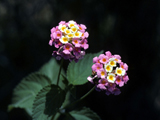
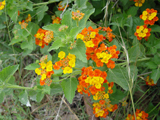
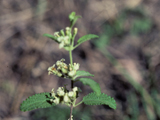
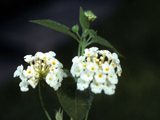
More Shrubs Questions
Needs Help with Peonies
January 14, 2011 - With the clay soil in North Texas (Frisco) which variety of peony would thrive and become a reliable bloomer? I do work on amending the soil with expanded shell and compost, but ultimately, we still h...
view the full question and answer
What hydrangeas can be grown in Austin?
June 02, 2011 - I was told that oak leaf hydrangea was the only hydrangea variety that could be successfully grown in Austin TX. My oakleaf hydrangea is doing great and I would like to plant other varieties. Can you...
view the full question and answer
Identification of white flowering bush with lovely scent
May 17, 2015 - Please identify the sweet smelling white flowering bush/tree blooming now,May, in western Massachusetts. The flowers are tiny 4(?) petals in small clusters. The scent is wonderful.
view the full question and answer
Hummingbird Bushes for Broken Arrow OK
August 27, 2014 - I am looking for bushes that attract hummingbirds. I live in Broken Arrow, OK. Can you recommend some?
view the full question and answer
Propagating Pavonia seeds
October 10, 2013 - Could you please recommend a method for scarifying Pavonia seeds?
Thank you
view the full question and answer
| Support the Wildflower Center by Donating Online or Becoming a Member today. |