Native Plants

Q. Who is Mr. Smarty Plants?
A: There are those who suspect Wildflower Center volunteers are the culpable and capable culprits. Yet, others think staff members play some, albeit small, role. You can torture us with your plant questions, but we will never reveal the Green Guru's secret identity.
Did you know you can access the Native Plant Information Network with your web-enabled smartphone?

Ask Mr. Smarty Plants
Ask Mr. Smarty Plants is a free service provided by the staff and volunteers at the Lady Bird Johnson Wildflower Center.

rate this answer

Friday - May 29, 2009
From: Livingston, NJ
Region: Mid-Atlantic
Topic: Non-Natives, Pruning, Trees
Title: Pruning smoketree in New Jersey
Answered by: Barbara Medford
QUESTION:
How far from ground level do I prune a relatively young Smoke tree to get the bush effect?ANSWER:
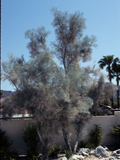
This is a classic example of really needing the Latin name for a plant, because common names can be given to totally different plants in different places. We started out by looking in our Native Plant Database for "smoke tree" or "smoketree." First, we looked at Cotinus obovatus (American smoketree), which, of course, in Texas we call a "Texas Smoketree." This tree only occurs in a few Southern and Southwestern states and is not shown in the USDA Plant Profile as appearing in New Jersey at all. Next on the natives list was Psorothamnus spinosus (smoketree), which is hardy to USDA Zones 9 to 11, common to desert washes of southern part of California, Arizona and Baja California. Spiny, nearly leafless shrub or small tree and is also known under the synonym Dalea spinosa. Scratch that one. Not only is it really not an ornamental you would be interested in raising, but it would probably freeze to death by October in New Jersey.
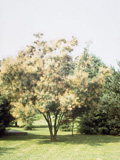
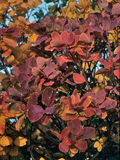
Since those were the only two plants known by that common name in our database, we went Googling and found Cotinus coggygria, (Smoke tree) which is native to Southern Europe and Central China, and is hardy to Zone 5 or a protected spot in Zone 4. Since a non-native is out of our range of expertise, we found this Floridata site which can give you more complete information. As it is in the same genus, Cotinus, as the native listed above, you would probably be safe in just letting it develop naturally. It actually would take pruning to keep it from appearing bush-like. They usually develop multiple trunks, with leafing no more than 2 feet above the soil. Refer to these Images for more guidelines on how the bush grows.
More Non-Natives Questions
Jasminum polyanthum Deer Resistant and Native?
March 07, 2015 - Are Jasminum polyanthum deer resistant? They are selling these plants at Trader Joe's right now so I'm assuming it's native to our area. But the instructions don't say anything about deer.
view the full question and answer
Late blooming Esperanza in St. Augustine FL
April 21, 2011 - I bought an Esperanza at a plant expo- I was told it was a Florida native Allamanda. It took me two years to figure out what I had. Mine grows 8 ft. tall and is huge! But it doesn't bloom until alm...
view the full question and answer
Can non-native guavas be successfully moved from Gulfport MS?
April 19, 2011 - Can guavas be moved successfully from one established planted location to another? My mother is having to relocate due to MDOT and we would like to move her established guavas.
Thank you,
view the full question and answer
How to grow a non-native rue plant in Duncanville TX
March 15, 2010 - Can I grow a Rue plant from a clipping? If so, what do I need to do? Please explain step by step. I'm new to all of this. Thanks
view the full question and answer
Are Castor Bean Leaves Toxic to Pets?
September 13, 2014 - I understand that the beans of the castor plant on lethal if chewed on. Are the leaves that toxic? I would love to plant this plant and not let it flower, but I do have visiting grandchildren and dog...
view the full question and answer
| Support the Wildflower Center by Donating Online or Becoming a Member today. |