Native Plants

Q. Who is Mr. Smarty Plants?
A: There are those who suspect Wildflower Center volunteers are the culpable and capable culprits. Yet, others think staff members play some, albeit small, role. You can torture us with your plant questions, but we will never reveal the Green Guru's secret identity.
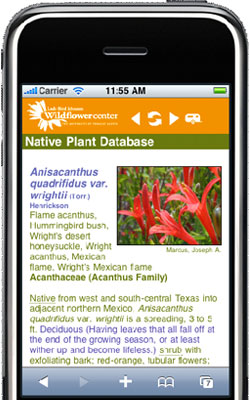
Did you know you can access the Native Plant Information Network with your web-enabled smartphone?

Ask Mr. Smarty Plants
Ask Mr. Smarty Plants is a free service provided by the staff and volunteers at the Lady Bird Johnson Wildflower Center.

rate this answer

Tuesday - April 19, 2011
From: Gulfport, MS
Region: Southeast
Topic: Non-Natives, Transplants
Title: Can non-native guavas be successfully moved from Gulfport MS?
Answered by: Barbara Medford
QUESTION:
Can guavas be moved successfully from one established planted location to another? My mother is having to relocate due to MDOT and we would like to move her established guavas. Thank you,ANSWER:
We assume MDOT means Mississippi Department of Transportation, and a highway is coming through your mother's garden, for which we are very sorry. The Psidium guajava, Guava is native to southern Mexico, the Caribbean, Central and South America. The Lady Bird Johnson Wildflower Center is dedicated to the growth, protection and propagation of plants native not only to North America but to the areas in which those plants grow natively. This USDA Plant Profile shows that the Guava is recorded as growing in Louisiana and Florida and, obviously, we are sure it will grow in Mississippi as well. This plant is a member of the Myricaceae family, which also includes Morella cerifera (Wax myrtle), a shrub which is native to New Jersey west to Eastern Oklahoma and Central Texas. Since we can find no specific information on transplanting a guava, here is some information on propagating or transplanting the wax myrtle:
"Transplants can be made bare-root in the wintertime (USDA-NRCS & USDI-NPS, 1993), or balled and burlap plants can be transplanted in the warmer months if the location is shady and the soil is kept moist (Nokes, 1986). Small plants have been successfully transplanted from containers in early spring. Use of a rooting hormone is recommended with bare-root plantings (Nokes, 1986). The use of plastic plant shelters is beneficial to protect young plants from heavy browsing, reduce plant competition, and create a friendlier microclimate until the young plant can get established."
Remember, this is talking about a wax myrtle, not a guava, and we really don't know if the same instructions apply. The size of the plant and especially the rootball are going to be determinants in how well the plant will transplant, no matter what. We would suggest you get a licensed professional arborist to make recommendations about whether it is better to try to transplant the trees, or leave them to the bulldozers and plant new small trees actually native to the area.
More Transplants Questions
Brown, dry leaves on weeping willow tree
May 01, 2008 - We live in central TX and have just planted a weeping willow tree. Our back yard has a retention pond and ravine that parallels our property and we were told that the weeping willow will do perfectly ...
view the full question and answer
When to move eastern gamagrass (Tripsacum dactyloides)
September 18, 2010 - I have a huge Eastern gamagrass clump that I need to move. What is the best time of year to transplant native grasses
view the full question and answer
Moving Iris bulbs
April 15, 2011 - I will be moving and want to take my Iris bulbs with me. Can I dig them up now that they are in flower?
view the full question and answer
Native turkscap failing to thrive in Shiro TX
March 19, 2013 - Dear Mr. Smarty Plants,
Two years ago I transplanted several native (not cultivars) Drummond's turkscaps in the proximity of water oaks in the front yard. All get shade and some sun. They seemed to ...
view the full question and answer
Hummingbird plants and Indian Hawthorn
May 13, 2008 - I live in The Woodlands in a new section of homes. I planted some hummingbird plants in full sun and they did ok last year for 4 months, then lost all their leaves and died when the winter came. At ...
view the full question and answer
| Support the Wildflower Center by Donating Online or Becoming a Member today. |