Native Plants

Q. Who is Mr. Smarty Plants?
A: There are those who suspect Wildflower Center volunteers are the culpable and capable culprits. Yet, others think staff members play some, albeit small, role. You can torture us with your plant questions, but we will never reveal the Green Guru's secret identity.

Did you know you can access the Native Plant Information Network with your web-enabled smartphone?

Ask Mr. Smarty Plants
Ask Mr. Smarty Plants is a free service provided by the staff and volunteers at the Lady Bird Johnson Wildflower Center.

rate this answer

Monday - December 08, 2008
From: Valdosta, GA
Region: Southeast
Topic: Wildlife Gardens
Title: Memorial garden in Georgia
Answered by: Barbara Medford
QUESTION:
I would like to plant a memorial garden in memory of my mother. She loved butterflies and bulbs blooming. Our backyard is shaded by large oaks and pines. A pool is located to the right, a large firepit is located behind the area and a cleared backyard is in front and to the left of the proposed site. We have very little grass (lots of acorns) due to the oaks. Any ideas of the layout?ANSWER:
Although you have given us a very good description of your property, it still may be difficult for us to provide you with a layout. What we can do is refer you to some websites with information on butterfly gardening, bulbs, and how to arrange them. First of all, we want to recommend that you incorporate only plants that are native not only to North America but to your area. Particularly for butterfly gardening, it is vital that the butterflies find native plants on which to feed and hatch their young. A recently published book, Bringing Nature Home: How Native Plants Sustain Wildlife in our Gardens (see Bibliography below) makes the point that there is an unbreakable link between native plant species and native wildlife. Indeed, most native insects cannot, or will not, eat non-native plants. The presence of too many "exotics" in an area can result in a disruption of the entire food chain, and whole ecologies are affected. What better memorial to your mother than a preservation of the species she loved?
Before we get down to specific plants recommended, we have a couple comments about your property, especially the trees. The amount of shade could be a problem, although we have tried to choose plants that tolerate some shade. Another point you need to think about when you are studying the various possibilities is that, with all those oak leaves and pine needles, your soil is probably fairly acidic. This is fine, there are a number of plants that prefer that and many that will tolerate it, just be careful not to plant something that won't tolerate it. There is also the issue of allelopathy, common to many oak species. Allelopathy is the emission of chemicals by the plant to eliminate competition for space and nutrients. This, added to the fact that most tree roots are in the upper 6 to 12" of soil, and extend far beyond the dripline, is why it is difficult to grow grass or flowering plants too near oak trees. So, when you are studying the layout of your garden in your chosen space, keep that in mind. For some more advice on planning a butterfly garden, see this Garden Helper article Creating a Butterfly Friendly Garden. In particular, notice that butterflies need sun, moisture and no pesticides.
We would like to recommend you read a couple of our How-To Articles: Using Native Plants and Wildlife Gardening for more ideas on how to begin. Other articles in our library are Butterfly Gardening and the Special Collections list of plants attractive to Butterflies and Moths of North America. On this last collection, you can use the NARROW YOUR SEARCH function, and select State-Georgia, Habit-herb (herbaceous or flowering plants), Duration-all durations, Light Requirement-light shade (2 to 6 hours of sun a day), Soil Moisture-damp. We made some picks from this list, and then repeated it with first shrubs and then trees for Habit. You can do the same thing, changing the light or soil moisture to better fit your situation and make your own selections. We have included a list of our choices below. Follow the plant links to the webpage on each plant for more information and links to other sources, such as Google. Here are the plants we chose to suggest:
HERBS (herbaceous or flowering plants)
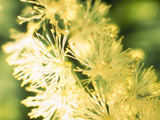
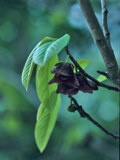
Actaea racemosa var. racemosa (black bugbane)
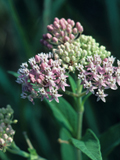
Asclepias incarnata (swamp milkweed)
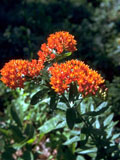
Asclepias tuberosa (butterfly milkweed)
Eurybia macrophylla (bigleaf aster)
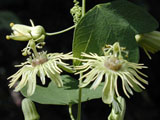
Passiflora lutea (yellow passionflower)
Rudbeckia hirta (blackeyed Susan)
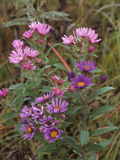
Symphyotrichum novae-angliae (New England aster)
SHRUBS
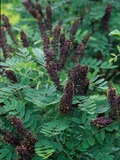
Amorpha fruticosa (desert false indigo)
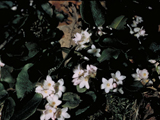
Epigaea repens (trailing arbutus)
TREES
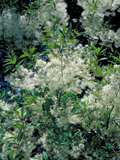
Chionanthus virginicus (white fringetree)
Now, on to the bulbs your mother loved. Many of the plants thought of as"bulbs" are not native to North America, including tulips, narcissi, jonquils and paperwhites, all members of the genus Narcissus and tulips, of the genus Tulipa. All of these are natives to Europe, North Africa and Asia and have been extensively hybridized. Luckily, there are a number of beautiful members of the Lilium genus native to Georgia. You can read an in-depth article about care and propagation of lilies from Native Lilies of the Old Field Garden by Philip Fry from Ottawa, Ontario, Canada of the the North American Native Plant Society. For some help getting started, try this Ohio State University article Growing Hardy Bulbs.
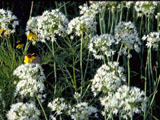
Allium canadense (meadow garlic)
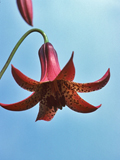
Lilium canadense (Canada lily)
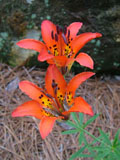
Lilium philadelphicum (wood lily)
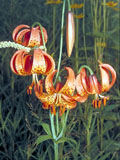
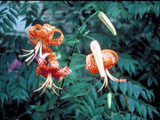
Lilium superbum (turk's-cap lily)
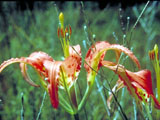
Lilium michauxii (Carolina lily)
For nurseries and seed companies in your area that specialize in native plants, please visit our National Suppliers Directory.

More Wildlife Gardens Questions
Wildlife garden for PA
October 12, 2010 - Dear Mr. Smarty plants,
I am a student at Allegheny College, Meadville, PA. I am working on my senior thesis, and I hope to submit a successful proposal to plant a native species and wildlife garden ...
view the full question and answer
Southwest US Winter-flowering Hummer Plants.
July 22, 2009 - Are there winter-flowering plants native to the American Southwest that are used as a food source by hummingbirds? I am a scientific illustrator working on an identification guide to common North Amer...
view the full question and answer
Will shoes pick up American Beautyberry fruit and stain carpets?
March 21, 2010 - Do the berries from American Beautyberry fall on the ground so your shoes pick up the berries to stain the carpet in my house?
view the full question and answer
Protecting plants from birds near bird feeder
April 24, 2009 - I am happy to have several cardinal pairs living in my yard, but I need to discourage them from eating & destroying my purple heart planted under the huge cedar that holds my bird feeders. The cardina...
view the full question and answer
Looking for grasses for slope around retention pond in Florida
August 02, 2011 - I live in St. Petersburg, FL on a large retention pond. Most of my neighbors on the pond have seawalls. I do not nor do my neighbors to my left and right. I am interested in colorful grasses to put...
view the full question and answer
| Support the Wildflower Center by Donating Online or Becoming a Member today. |