Native Plants

Q. Who is Mr. Smarty Plants?
A: There are those who suspect Wildflower Center volunteers are the culpable and capable culprits. Yet, others think staff members play some, albeit small, role. You can torture us with your plant questions, but we will never reveal the Green Guru's secret identity.

Did you know you can access the Native Plant Information Network with your web-enabled smartphone?

Ask Mr. Smarty Plants
Ask Mr. Smarty Plants is a free service provided by the staff and volunteers at the Lady Bird Johnson Wildflower Center.

rate this answer

Saturday - April 26, 2008
From: Pflugerville, TX
Region: Southwest
Topic: Herbs/Forbs, Wildflowers
Title: Poppies on Pflugerville, TX lake
Answered by: Barbara Medford
QUESTION:
I live on the new Pflugerville Lake. We are trying to get wildflower seed to plant around the lake in the mitigation areas. Will Poppies grow here?ANSWER:
Since Pflugerville is in Travis County, as is the Lady Bird Johnson Wildflower Center, we are going to assume you are dealing with the same soil, moisture, temperature issues that we do at the Center. When we searched our Native Plant Database on "poppy" we got a whole bunch of possibilities, some of which are members of the actual Papaveraceae family, and quite a few that are not. The "true" poppy seems to prefer cooler climates than we can provide. Below is a list of those that are native to North America, you can follow the plant links and read the descriptions, see what you think:
PAPAVERACEAE
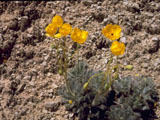
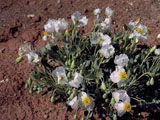
Arctomecon californica (California bearpoppy) - perennial, native to Arizona, Nevada, Utah
Arctomecon humilis (common bearpoppy) - perennial, native to Utah
Papaver californicum (western poppy) - annual, native to California
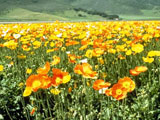
Papaver nudicaule (Icelandic poppy) - perennial, native to Alaska, Utah
Papaver radicatum (rooted poppy) - perennial, also called Alpine Poppy
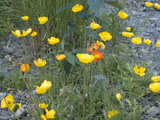
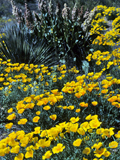
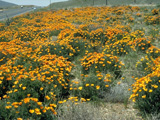
Eschscholzia californica (California poppy) - annual, native to Texas (among other states)
Eschscholzia californica ssp. mexicana (California poppy) - annual, native to Texas (among others)
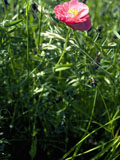
Argemone aurantiaca (Texas pricklypoppy) - beautiful in the field, but the word "prickly" is well chosen
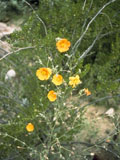
One other plant, a member of the Creosote-Bush family is an annual, Kallstroemia grandiflora (Arizona poppy) that does look like a poppy. It is native to Texas, also.
So, in answer to your question, will poppies grow in Pflugerville? We actually don't know that they will or won't, but we're thinking anything with "Iceland" or "Alpine" in the name probably won't, and the ones that are native only to California or the northern mountain states are not good candidates, either.
So, might we offer an alternative to your plans for the mitigation area around the lake? Check out this article on Meadow Gardening from our How-To Articles. You really can't start planting seeds until Fall, anyway, but you could start your planning now, and you could always include some poppy seeds in there, just to see if they'll grow. Then, if you're interested, go to the website for Native American Seed for information, lists of seeds available, catalogs, etc. Remember, it's always safer to stick to grasses and flowers that are native to the area. If you're interested in a specific plant, go to our Native Plant Database and read the information on the plant.
From the Image Gallery
More Herbs/Forbs Questions
Pruning Lyreleaf Sage from McAllen TX
April 14, 2013 - I planted a few Lyre Leaf Sage last year and they bloomed beautifully. I let them seed out and had a number of new plants show up this year. I have never cut the flower/seed stalks back and now that ...
view the full question and answer
Dietes bicolor(Bicolor Iris) winter-hardiness in Austin
February 09, 2010 - I have many bi-color irises (dietes bicolor), the freeze in Austin turned them brown. Can I trim them back without harming the plants? If trimming is acceptable, can you give me tips?
view the full question and answer
Winter care of Asclepias tuberosa from Austin
October 31, 2013 - We have several asclepias tuberosa (Butterflyweed). Monarch caterpillars have found and denuded them. We are excited about all of the Monarch caterpillars, but unsure of what to do next.
What do we...
view the full question and answer
Pictures and information on Scutellaris laterifolia, Blue Skullcap
June 19, 2006 - I am trying to find information on Scutellaria laterifolia (skullcap), of the plant family "labiatea".
Do you have any info or pictures?
Thanks.
view the full question and answer
Plants for a pool fence in Ohio
October 28, 2010 - I live in Ohio and have a pool with a white vinyl fence. Each year I plant sunflowers around it, but they are so messy when the birds/bees find them. Previously I planted castor beans, however, they...
view the full question and answer
| Support the Wildflower Center by Donating Online or Becoming a Member today. |