Native Plants

Plant Database
Search for native plants by scientific name, common name or family. If you are not sure what you are looking for, try the Combination Search or our Recommended Species lists.
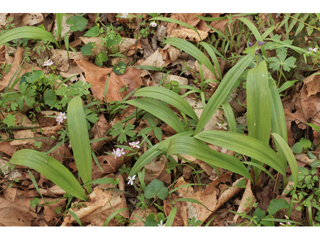
Cressler, Alan
Allium tricoccum
Allium tricoccum Aiton
Wild Leek, Ramp
Liliaceae (Lily Family)
Synonym(s): Validallium tricoccum
USDA Symbol: ALTR3
USDA Native Status: L48 (N), CAN (N)
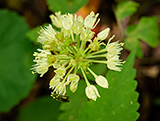
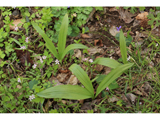
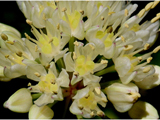
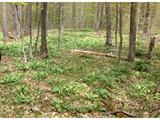
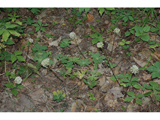
Two long, glossy, oval leaves appear in early spring and wither away before the smooth, 6-16 inch flowering stalk matures. Small white flowers occur in a hemispherical, terminal cluster; plant has a mild onion taste.
In late April, before this species comes into flower, the people of the Great Smoky Mountains gather the plants for their annual Ramp Festival. The foliage and bulbs can be used in salads and soups. Native Americans treated stings with juice from the crushed bulbs.
Plant Characteristics
Duration: PerennialHabit: Herb
Leaf Complexity: Simple
Fruit Type: Capsule
Size Notes: Scape up to about 16 inches tall.
Fruit: Seeds black.
Bloom Information
Bloom Color: White , YellowBloom Time: Jun , Jul , Aug
Bloom Notes: White to yellowish.
Distribution
USA: AL , CT , DC , DE , GA , IA , IL , IN , KY , MA , MD , ME , MI , MN , MO , NC , ND , NH , NJ , NY , OH , OK , PA , RI , SD , TN , VA , VT , WI , WVCanada: NB , NS , ON , QC
Native Distribution: W. N.B. & s. Que. to ND, s. to New England, MD, mts. to GA & TN, IL & MO
Native Habitat: Rich, deciduous upland & floodplain woods
Growing Conditions
Light Requirement: ShadeSoil Moisture: Moist
Soil pH: Circumneutral (pH 6.8-7.2)
Soil Description: Rich, mesic soils.
Conditions Comments: Grows best where there is sunny condition during early spring. Crushed foliage and bulb have strong onion flavor and may be eaten. Some Allium species can become weedy in warmer climates.
Benefit
Use Food: EDIBLE PARTS: Leaves, bulbs and bulblets. Field garlic (A. vineale) is too strong for most tastes. Gather leaves during spring and fall. Gather bulbs in the second year when they are large enough to use like cultivated onions. Flower stem bulblets are collected during the summer. Use as domestic onions, for seasoning or raw in salads. Bulbs can be used raw, boiled, pickled or for seasoning. Their strong taste can be reduced by parboiling and discarding the water. To freeze onions or garlic, one should coarsely chop, blanch two minutes, drain, pat dry and place them into plastic bags. The bulbs can also be dried for use as seasoning. Use flower bulbs to flavor soup or for pickling. (Poisonous Plants of N.C.)In late April, before flowering, the people of the Great Smoky Mountains gather these plants for their annual Ramp Festival. The foliage and bulbs can be used in salads and soups. First Nations People treated insect stings with juice from the crushed bulbs. (Niering)
Warning: POISONOUS PARTS: All parts but causes only low toxicity if eaten; can be safely eaten in small amounts, large quantities not recommended. Symptoms may include nausea, vomiting, diarrhea. Toxic Principle: Sulfides. (Niering)
Conspicuous Flowers: yes
Propagation
Description: Stratified seed or division. Plant seeds 1/4 in. deep outdoors and transplant the small bulbs the following summer, setting them 1-1 1/2 in. deep. Mature bulbs produce offsets which can be divided in the summer. Plant them 1 1/2 in. deep and cover withSeed Collection: Collect seeds as soon as they become exposed in the summer.
Seed Treatment: Two months of cold-moist stratification if stored or planted in indoor flats.
Commercially Avail: yes
Find Seed or Plants
View propagation protocol from Native Plants Network.
National Wetland Indicator Status
| Region: | AGCP | AK | AW | CB | EMP | GP | HI | MW | NCNE | WMVE |
| Status: | FACU | FACU | FACU | FACU | FACU |
From the National Organizations Directory
According to the species list provided by Affiliate Organizations, this plant is on display at the following locations:Natural Biodiversity - Johnstown, PA
Mt. Cuba Center - Hockessin, DE
Bibliography
Bibref 902 - Ex situ plant conservation : supporting species survival in the wild (2004) Guerrant, E. O.; K. Havens; M. MaunderBibref 1294 - The Midwestern Native Garden: Native Alternatives to Nonnative Flowers and Plants An Illustrated Guide (2011) Adelman, Charlotte and Schwartz, Bernard L.
Search More Titles in Bibliography
Web Reference
Webref 38 - Flora of North America (2019) Missouri Botanical Garden, St. Louis, MO & Harvard University Herbaria, Cambridge, MA.Webref 23 - Southwest Environmental Information Network (2009) SEINet - Arizona Chapter
From the Archive
Wildflower Newsletter 1994 VOL. 11, NO.6 - Wildflower Center Featured Non-Profit in Neiman Marcus Christmas Book, Dana Leav...Additional resources
USDA: Find Allium tricoccum in USDA PlantsFNA: Find Allium tricoccum in the Flora of North America (if available)
Google: Search Google for Allium tricoccum
Metadata
Record Modified: 2023-04-10Research By: TWC Staff