Native Plants

Q. Who is Mr. Smarty Plants?
A: There are those who suspect Wildflower Center volunteers are the culpable and capable culprits. Yet, others think staff members play some, albeit small, role. You can torture us with your plant questions, but we will never reveal the Green Guru's secret identity.

Did you know you can access the Native Plant Information Network with your web-enabled smartphone?

Ask Mr. Smarty Plants
Ask Mr. Smarty Plants is a free service provided by the staff and volunteers at the Lady Bird Johnson Wildflower Center.

rate this answer

Wednesday - July 24, 2013
From: Redwood City, CA
Region: California
Topic: Deer Resistant, Vines
Title: Deer Resistant Vine for California
Answered by: Anne Van Nest
QUESTION:
What can I plant to cover a retaining wall in Redwood City, CA that will grow down on it (no dirt below) that deer will not eat? I have just about given up. I have tried jasmine and Gelsemium and regular ivy. What about fig ivy?ANSWER:
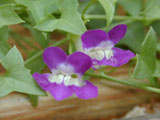
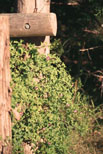
In looking at our website, there is one plant that is listed in the Plant Database for California that is also a Deer Resistant Species and is in the vine category. It is Maurandella antirrhiniflora (snapdragon vine). It is a dense groundcover that has interesting rose-purple flowers. The plants die back in the winter but it is a perennial. Perhaps you should give it a try.
Also the California Native Plant Society have an article online about deer resistant native plants by Melanie Hopper. She suggests that plants with a fast rate of growth will survive deer grazing. Here is her vine recommendation: California wild grape (Vitis californica) is a deciduous rampant vine that has appealing lush leaves; however, it survives some munching as it grows so quickly it is soon out of reach. It also regenerates itself rapidly. The variety ‘Roger’s Red’ (V. californica X vinifera) turns a blaze of red in the fall, and juicy grapes attract the birds.
Lastly, fig ivy or creeping fig (Ficus pumila) is not a native plant, so it wouldn’t be in our database. But a quick look online revealed numerous sources that did identify it as deer resistant.
From the Image Gallery

More Deer Resistant Questions
Climbing vines that are deer resistant
July 12, 2013 - Please find plants that are climbing vines and are deer resistant
view the full question and answer
Prunus subhirtella deer resistance in Ironwood MI
May 06, 2009 - Is the double flowering prunus pendula subhirtella deer "food"?
view the full question and answer
Plants that animals won't eat from Ione WA
April 19, 2013 - In Ione Washington and need to know what types of plants and flowers I can plant that animals in that area wont eat?
view the full question and answer
Leaves of Chile pequin consumed overnight from San Marcus TX
June 23, 2013 - Something ate all the leaves of my Chile petin overnight. There is a ton of frass under the plants but no sign of a critter to be found. These plants have been in the same area for years and this is t...
view the full question and answer
Flowering Deer Resistant Ground Cover for Dry Rocky Soil: Alabama
March 26, 2012 - My question has been partially answered in the FAQ but I live in Birmingham where the soil is clay and rocky so it's a little different. I want to plant on a rocky slope (small rocks like the size of...
view the full question and answer
| Support the Wildflower Center by Donating Online or Becoming a Member today. |