Native Plants

Q. Who is Mr. Smarty Plants?
A: There are those who suspect Wildflower Center volunteers are the culpable and capable culprits. Yet, others think staff members play some, albeit small, role. You can torture us with your plant questions, but we will never reveal the Green Guru's secret identity.

Did you know you can access the Native Plant Information Network with your web-enabled smartphone?

Ask Mr. Smarty Plants
Ask Mr. Smarty Plants is a free service provided by the staff and volunteers at the Lady Bird Johnson Wildflower Center.

rate this answer

Friday - July 12, 2013
From: Columbia, SC
Region: Southeast
Topic: Deer Resistant, Vines
Title: Climbing vines that are deer resistant
Answered by: Guy Thompson
QUESTION:
Please find plants that are climbing vines and are deer resistantANSWER:
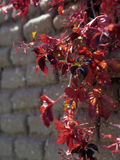
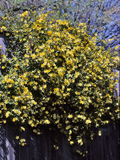
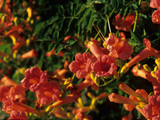
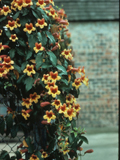
Deer resistance is a relative thing, depending upon the availability (or not) of other more desirable food. So there is no guarantee. But I have in mind several vine species, ranging from the very deer-resistant Wisteria frutescens (American wisteria) to Parthenocissus quinquefolia (Virginia creeper), which deer love to nibble on. The following species are probably in between in their palatability. Gelsemium sempervirens (Carolina jessamine), Campsis radicans (Trumpet creeper), Bignonia capreolata (Crossvine), Lonicera sempervirens (Coral honeysuckle), Clematis crispa (Swamp leatherflower) and Celastrus scandens (American bittersweet).
In my experience, deer do not bother Carolina jessamine or Crossvine, but they love Trumpet creeper. Actually, that works out well, because Trumpet creeper tends to produce underground runners that send up shoots in areas where you don't want them to be.
You did not tell me what sort of site you have for the vines. Some of the above species prefer full sun while others will grow in shade. Some are evergreen and others deciduous. Some grow to a greater height than others. Reading about them on the Lady Bird Johnson Wildflower Center Native Plant Database will give you the information you need to choose a vine suited to your needs.
I have observed that here in Texas (where the deer are rather small), any foliage at least 4 feet above the ground is not eaten by deer. And they do not generally eat stems free of leaves. So if you protect your vines until they grow high enough, you can enjoy most of the ones I have listed.
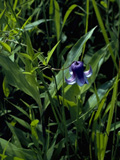
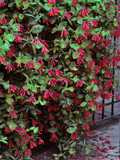
Most of the species listed above should be available at one of your local plant nurseries. Some are shown in the images below.
From the Image Gallery

More Deer Resistant Questions
Resourses that are being taken away - Tiffin OH
April 03, 2013 - What are resources that are being taken away from humans and organisms?
view the full question and answer
Deer-resistant trees for privacy in Texas
January 09, 2015 - I need to find a deer resistant tall shrub or tree to plant and hide the deer fence my neighbor just put up on our property line. My property has full sun in parts and mostly shady in other parts and ...
view the full question and answer
Deer resistance of peonies in Virginia
May 02, 2009 - Are peony's deer resistant - I'm in Virginia
view the full question and answer
Deer-resistant plants for Williams, OR
January 24, 2011 - I live in Williams, Oregon. I would like a listing of deer resistant, drought tolerant,evergreen, fast growing, native plants that can be used as a privacy screen on property perimeter.
view the full question and answer
Flowering, deer resistant plants for South Carolina
March 21, 2010 - Can you tell me which flowering plants are deer resistant and will grow in South Carolina?
view the full question and answer
| Support the Wildflower Center by Donating Online or Becoming a Member today. |