Native Plants

Q. Who is Mr. Smarty Plants?
A: There are those who suspect Wildflower Center volunteers are the culpable and capable culprits. Yet, others think staff members play some, albeit small, role. You can torture us with your plant questions, but we will never reveal the Green Guru's secret identity.

Did you know you can access the Native Plant Information Network with your web-enabled smartphone?

Ask Mr. Smarty Plants
Ask Mr. Smarty Plants is a free service provided by the staff and volunteers at the Lady Bird Johnson Wildflower Center.

rate this answer

Friday - February 01, 2013
From: Austin, TX
Region: Southwest
Topic: Seed and Plant Sources
Title: Deadwood for Degus
Answered by: Anne Van Nest
QUESTION:
I have a very specific and hopefully easy question. I just brought home some degus (small adorable rodents) and they have a severely restricted list of woods they can chew on safely. The safe trees that are fairly common (and that I recognize) are: birch, poplar, ash, willow, pecan, elm, sycamore and bamboo. I need to go somewhere in the woods or to a park and pick up some fallen deadwood from these trees. Can anyone recommend some places for some of these trees? All I seem to see around Austin are oaks and cedars. I'm in the NW Austin areas, but I'll drive anywhere. Willow is the theoretical best for them, along with pecan and poplar. Thanks!ANSWER:
Best wishes for a long and healthy relationship with your new degus pets. A quick search online showed that they are popular pets because of their diurnal habits, intelligence, friendly personalities, bonding nature with their human owners, and long lifespan. Their continually growing incisor and molar teeth cause them to chew, chew, chew and hence your search for safe, local, deadwood branches.
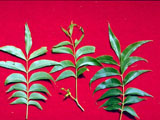
Around Austin, the most prevalent native trees on your list are the Carya illinoinensis (pecans). Pictures of the leaves, bark and a tree silhouette as well as information about the tree’s characteristics can be found in our native plant database so that you will be better able to identify the wood they need.
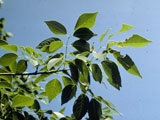
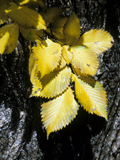
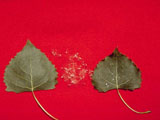
There are also many Fraxinus texensis (Texas ash) trees in the city as well as a few Salix nigra (black willow), Ulmus americana (American elm) and Populus deltoides (Eastern cottonwood) that you might consider. The willows and cottonwoods (poplars) can be found mainly along creeks.
Before you start out on your wood collecting expedition, please research your trees so that you can correctly identify the safe species for your degus. Also, it is imperative that you get prior permission to remove deadwood from public or private lands. Some people that might be able to help with this are the staff at the City Arborist office, Treefolks for location suggestions, and perhaps an urban fruit growing farmer or commercial arborist (if they have a brush pile of prunings). You should not have a problem finding a source of wood that is safe for your degus pets.
From the Image Gallery
More Seed and Plant Sources Questions
Landscapers in Austin area
January 02, 2012 - Can you recommend 2-3 Landscapers in the Austin area that I could get to landscape my yard? or where can I get this information?
view the full question and answer
Wisconsin Ground Cover for Acid Soil
July 09, 2012 - What type of native wisconsin ground cover plants do best on acidic bare areas under pine trees such as blue spruce?...and where is best source for these plants or seeds?
Thanks so much for your help
view the full question and answer
Rhizobium sources for bluebonnets
March 25, 2008 - Where can you buy Rhizobium for your bluebonnet seeds?
view the full question and answer
Willows native to Wisconsin
July 01, 2005 - I have a small garden center in the far northern reaches of Wisconsin....and I specialize in native varieties for up here. I also help folks with lake shore restoration and preservation.
There was...
view the full question and answer
Locating source for Iva frutescens
September 03, 2008 - Do you know where I can purchase the plant Iva Frutescens, sometimes called the Miracle Bush or Jesuit's bark?
Do you know if this bush attracts Monarch Butterflies?
view the full question and answer
| Support the Wildflower Center by Donating Online or Becoming a Member today. |