Native Plants

Q. Who is Mr. Smarty Plants?
A: There are those who suspect Wildflower Center volunteers are the culpable and capable culprits. Yet, others think staff members play some, albeit small, role. You can torture us with your plant questions, but we will never reveal the Green Guru's secret identity.

Did you know you can access the Native Plant Information Network with your web-enabled smartphone?

Ask Mr. Smarty Plants
Ask Mr. Smarty Plants is a free service provided by the staff and volunteers at the Lady Bird Johnson Wildflower Center.

rate this answer

Sunday - September 30, 2012
From: Fort Worth, TX
Region: Southwest
Topic: General Botany, Container Gardens, Cacti and Succulents
Title: Smog-eating plants from Ft. Worth TX
Answered by: Barbara Medford
QUESTION:
Looking for a list (40 >) of Native Texas Plants for Fort Worth Urban (Condo) that are Drought tolerant or (drip irr) and Fragrant and long blooming and eat up the city smog. Fort Worth is in a non-attainment area.ANSWER:
We are embarrassed to admit this, but there is no list of smog-eating plants for Tarrant County. That is likely because there is no such thing. Plus, we couldn't even find a category for answering this question, because we are gardeners, not scientists. But we are great proponents of all plants being pollution reducers, through photosynthesis.
From a previous Mr. Smarty Question on photosynthesis:
"All vascular plants have a process called photosynthesis, by which the energy of sunlight is used to manufacture food for the plants. From a previous Mr. Smarty Plants answer: "When sunlight strikes a leaf, a process called photosynthesis is put into play, the plant converts the energy from the sun, combines it with water and nutrients in the plant, and metabolizes it into food to support the plant, form new structures within the plant, and store food in the roots. Along the way, it releases oxygen, which is a good thing for the human race. The plant uses carbon dioxide, not good for breathing in the process, and releases much needed oxygen as a waste product!" How cool is that? From sunlight and photosynthesis the whole food chain of Nature is begun. Along the way, carbon is sequestered in the soil by the same process. This happens in native plants, alien plants and invasive plants. It's hard to call a plant useless. It may be irritating, poisonous, ugly, intrusive, but it is still feeding all the lifeforms on Earth and providing oxygen."
Having lived in Los Angeles in the mid-1950's, when people still had backyard incinerators to burn their household trash, we can tell you we know what smog is. From the second car in a lineup at a traffic light, we could not tell if the light was red or green. If there was a forest fire on Mt. Hollywood, where Griffith Park and the Observatory were located, we couldn't hang out clothes on the line because they would be ruined by smog mixed with soot. Now THAT is smog!
Since we don't seem to be able to help you with smog-specific plants, here are some articles we found, including a forum on smog in different cities, that might help you understand the problem.
City-Data.com Smog?
From the Environmentall Protection Agency: Carbon Sequestration in Agriculture and Forestry.
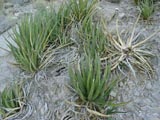
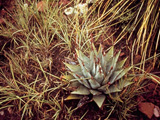
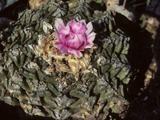
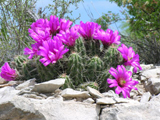
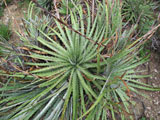
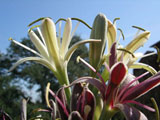
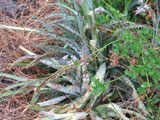
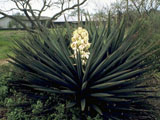
Now, here is what we can do. It appears you need container plants for your condo. First, read our How-To Article on Container Gardening with Native Plants. We would suggest succulents for your garden, which we assume will have some sun and some shade. You can better control the soil in container gardens; look for potting soil for cactus and succulents. It drains better, and for all desert plants (which these mostly are) good drainage is absolutely essential. We will search on our Native Plant Database for succulents appropriate to this use. In this case, where the succulents are not apt to spread or become invasive, you can also purchase small attractive succulents in commercial nurseries and home improvement stores. Just like trees, they will work on making oxygen and sequestering carbon. It may not seem like much, but you are doing your part to control pollution. Some of these will require require larger pots or can be planted in a flower bed, if you have a place for gardening besides a porch. Follow each plant link to our webpage on that plant to find out its ultimate size, growing conditions and amount of sunlight needed
Succulents for Tarrant County TX:
Agave lechuguilla (Lechuguilla)
Agave parryi ssp. neomexicana (Parry's agave)
Ariocarpus fissuratus (Chautle livingrock)
Echinocereus enneacanthus (Pitaya)
Hesperaloe parviflora (Red yucca)
Manfreda maculosa (False aloe)
From the Image Gallery

More Container Gardens Questions
Native container plants from Hillsdale NJ
March 22, 2013 - Looking for suggestions for the easiest natives to grow in containers.
view the full question and answer
Replanting a blue agave in Rio Rancho NM
January 11, 2010 - I have acquired a Blue Agave, approximately 4-5 ft high. It still appears quite healthy. It was used over the holiday season for display purposes in a liquor store. Unfortunately, the root ball has be...
view the full question and answer
Need suggestions for material to build a raised bed garden
February 13, 2015 - I am starting a raised bed garden but cannot find untreated railroad ties or landscape timbers. Does anyone have a source in the Austin or Dripping Springs area? I have tried McCoys, Home Depot, Natur...
view the full question and answer
Patio plants suffering from heat in Austin
August 22, 2010 - My patio plants are burning up from the intense sun of Austin's August. Last year it even burned the leaves. Besides moving 40 plants to a shadier spot do you have suggestions on how to protect the...
view the full question and answer
Arborvitae for house plant from Austin
August 15, 2013 - I am a Northerner transplanted to Austin, TX. While I love Austin it feels like many of the plants & trees I came to love up north won't grow here at all. Could I grow an arborvitae in my home as a...
view the full question and answer
| Support the Wildflower Center by Donating Online or Becoming a Member today. |