Native Plants

Q. Who is Mr. Smarty Plants?
A: There are those who suspect Wildflower Center volunteers are the culpable and capable culprits. Yet, others think staff members play some, albeit small, role. You can torture us with your plant questions, but we will never reveal the Green Guru's secret identity.

Did you know you can access the Native Plant Information Network with your web-enabled smartphone?

Ask Mr. Smarty Plants
Ask Mr. Smarty Plants is a free service provided by the staff and volunteers at the Lady Bird Johnson Wildflower Center.

rate this answer

Tuesday - May 17, 2011
From: East Granby, CT
Region: Northeast
Topic: Invasive Plants, Problem Plants
Title: Invasive native wild onions in East Granby CT
Answered by: Barbara Medford
QUESTION:
I have wild onions which have become extremely invasive. I have no idea how to get rid of them, and this year they seem to have taken over my entire flower bed. I tried pulling the bulbs out for several years, and it just seems so futile. Even if you can not offer a remedy, please make sure that people become aware of what a nasty invasive plant, these seemly harmless chivelike sprouts can become. I fear the only way to eliminate them is to cement them over. urgh!!!!ANSWER:
There are a number of different plants in the Allium genus that have the common name of "wild onion." Allium canadense (Meadow garlic) is native to Connecticut and sounds like your description. From our webpage on this plant:
"Use Food: There are many bulb forming plants that resemble wild onions, some are toxic. Only harvest plants with the distinct odor of onions. The chopped green leaves can be used like chives and the bulbs are cooked as any other onions."
From the Growing Conditions for the plant:
"Soil Moisture: Moist
Soil Description: Moderately rich, neutral soils.
Conditions Comments: Some Allium species can become weedy in warmer climates. Tolerates all conditions well; very hearty plant. Make sure soil is well-drained, plants will rot in standing water. Generally free of pests and disease, although some people have had problems with slugs."
Actually, we probably can't give you any real solution to the problem, unless you want to dig up the bed and make sure every little sliver of bulb is destroyed (not in the compost pile!). In the past, on invasive plants, we have recommended cutting off the top of the offender and painting the cut area (within 5 minutes) with a broad-spectrum herbicide and using a disposable sponge brush as an applicator. This still is probably only a delaying action, but theoretically, cutting all the upper leaves off, which manufacture food for the plants, as well as applying herbicide before the cut area heals itself over might eventually starve those roots. Theoretically.
We are publishing this to remind our readers to investigate every plant, even gift plants, thoroughly before you plant it. The only way to get rid of invasive plants is to never plant them. We appreciate your giving us a very clear example of this problem.
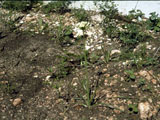
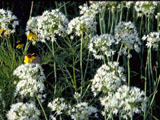
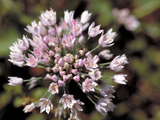
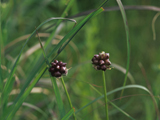
From our Native Plant Image Gallery:
More Problem Plants Questions
Source of dry molasses near Mason, Texas
June 21, 2015 - Can you guys point me to a local source of dry molasses? I can get 50 lb bags from Amazon but shipping cost is almost double the cost of the product. I want to try it as a supplement to mechanical con...
view the full question and answer
Clearing out non-native Himalayan blackberry
January 25, 2009 - Can you recommend a way to clear an area of Himalayan blackberry? We have cut the canes back but wish to eliminate them completely so that we can replant that area with native plants attractive to wil...
view the full question and answer
Aggressive Frogfruit
September 17, 2009 - I have frogfruit voluntarily growing in my flower beds. I had intended to use it as a ground cover but am concerned that it is taking over. Will it kill (smother) my flowers that I have planted for bu...
view the full question and answer
Controlling live oak suckers in Florida
July 20, 2014 - How do I kill emerging live oak sprouts coming from mature tree root system
view the full question and answer
Will Crossvine damage stucco walls?
June 17, 2015 - The Crossvine I planted about a month ago is doing well. It is growing up a stucco wall and its little tendrils are sticking to (or into?) the stucco. Is this going to grow into the stucco and damage ...
view the full question and answer
| Support the Wildflower Center by Donating Online or Becoming a Member today. |