Native Plants

Q. Who is Mr. Smarty Plants?
A: There are those who suspect Wildflower Center volunteers are the culpable and capable culprits. Yet, others think staff members play some, albeit small, role. You can torture us with your plant questions, but we will never reveal the Green Guru's secret identity.

Did you know you can access the Native Plant Information Network with your web-enabled smartphone?

Ask Mr. Smarty Plants
Ask Mr. Smarty Plants is a free service provided by the staff and volunteers at the Lady Bird Johnson Wildflower Center.

rate this answer

Friday - July 03, 2009
From: Mclean, VA
Region: Mid-Atlantic
Topic: Invasive Plants
Title: Understory planting in Virginia
Answered by: Anne Bossart
QUESTION:
We have some 10 mature tulip and sycamore trees in our No. VA property. The previous home owners were fond of English Ivy and Japanese pachysandra. We are working hard at replacing these invasives to encourage amphibians and birds to be permanent residents. Can you please provide understory trees and/or shrubs as well as perenial companions to these trees? I would also be interested in information about how to remove the pachysandra.ANSWER:
As you already know, the only way to eradicate tenacious vines and groundcovers is to be persistent. As far as the pachysandra goes, there are three methods: kill it chemically (not the Green Guru's recommended method!), covering it with black plastic to starve it of light and water (time consuming and unsightly) and digging it up (just plain hard work). It has been suggested that the best way to achieve removal by digging is to post on the web that it is available for free to those who will dig it!
We applaud your efforts to welcome nature back to your property. Visit the National Wildlife Federation's website at www.nwf.org/gardenforwildlife for tips on creating a wildlife habitat garden. You will also find two books particularly helpful: Rick Darke's "The American Woodland Garden" and Ken Druse's "The Natural Habitat Garden".
You don't mention the size of your property, conditions (soil, moisture, light) or what type of neighbourhood you are in, but going on the assumption that conditions will be fairly shady and dry, here are some plant recommendations for Virginia. If you visit our Plant Database and do a combination search for your area and conditions or search Recommended Species for Virginia you will find many more choices. In the end, your choices will be limited by what is available in the nurseries in your area.
Understory trees:
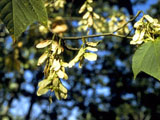
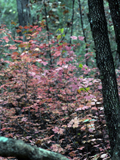
Acer pensylvanicum (striped maple)
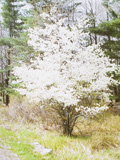
Amelanchier canadensis (Canadian serviceberry)
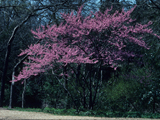
Cercis canadensis (eastern redbud)
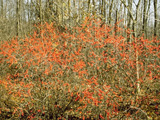
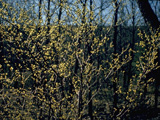
Hamamelis virginiana (American witchhazel)
Shrubs:
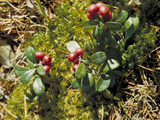
Arctostaphylos uva-ursi (kinnikinnick)
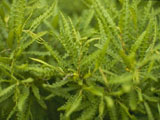
Comptonia peregrina (sweet fern)
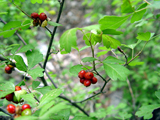
Lindera benzoin (northern spicebush)
Rhus aromatica (fragrant sumac)
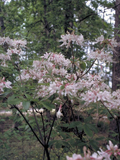
Rhododendron canescens (mountain azalea)
Vaccinium corymbosum (highbush blueberry)
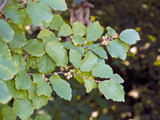
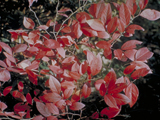
Viburnum acerifolium (mapleleaf viburnum)
Perennials:
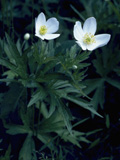
Anemone virginiana (tall thimbleweed)
Aquilegia canadensis (red columbine)
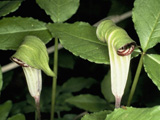
Arisaema triphyllum (Jack in the pulpit)
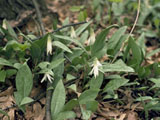
Erythronium albidum (white fawnlily)
Iris verna (dwarf violet iris)
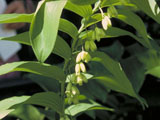
Polygonatum biflorum (smooth Solomon's seal)
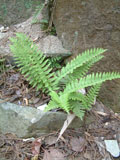
Polypodium virginianum (rock polypody)


More Invasive Plants Questions
Destroying seeds of Chinaberry tree
October 23, 2007 - I have a "chinaberry" tree in my yard, and while I understand that it is an invasive plant to Texas, I was hoping to save the large mature tree. As an effort to be more responsible I have been coll...
view the full question and answer
Controlling Rapistrum rugosum (annual bastardcabbage)
March 09, 2012 - The invasive, Rapistrum rugosum, seems to be especially ubiquitous this year. I communicated with Dr. Mark Simmons a few years ago regarding his research, which indicated that over-sowing wit...
view the full question and answer
Elimination of nutgrass
May 06, 2008 - Nutgrass has taken over my vegetable and perennial garden to the point that I can not see my plants or granite sand paths. The two major areas are about 600 square feet in total. What can I do to co...
view the full question and answer
Invasive thistles in wildflower field from Dripping Springs TX
February 17, 2014 - How to get rid of "native" thistles.. I have a large natural field that used to grow a variety of wildflowers, but in 2011 and 2012 it was taken over by thistles. I'm sure they are "native" Texas...
view the full question and answer
Could lilacs grow in Georgia?
April 27, 2010 - Hi Mr Smarty Pants,
First off, I want to commend you on your promotion of native plants. I am passionately anti-invasive plants (in fact, it was the subject of my master's thesis). That being said...
view the full question and answer
| Support the Wildflower Center by Donating Online or Becoming a Member today. |