Native Plants

Q. Who is Mr. Smarty Plants?
A: There are those who suspect Wildflower Center volunteers are the culpable and capable culprits. Yet, others think staff members play some, albeit small, role. You can torture us with your plant questions, but we will never reveal the Green Guru's secret identity.

Did you know you can access the Native Plant Information Network with your web-enabled smartphone?

Ask Mr. Smarty Plants
Ask Mr. Smarty Plants is a free service provided by the staff and volunteers at the Lady Bird Johnson Wildflower Center.

rate this answer

Wednesday - December 17, 2008
From: Bridgewater, MA
Region: Northeast
Topic: Best of Smarty, General Botany
Title: Is there a flower that blooms only once in seven years?
Answered by: Nan Hampton
QUESTION:
Just wanted to know if there exists a flower that blooms only once in seven years? Thank you!ANSWER:
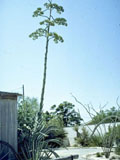
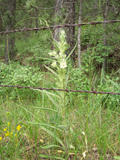
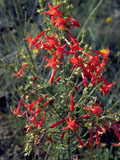
Mr. Smarty Plants has found the Himalayn lily (Cardiocrinum giganteum) that flowers after seven years of growth. Here are photos of the Himalayan lily. After it blooms the plant dies. Plants with this reproductive strategy are known as monocarpic, i.e., they flower and produce fruit only once in their lifetime and then die. All annuals and biennials are monocarpic, but there are also many perennial plants that are monocarpic. Some of these may live for 90 years before flowering and then dying. Some of the more notable examples are the Agaves or Century Plants (e.g., Agave americana (American century plant) and Agave parryi (Parry's agave)) of the desert Southwest. Another spectacular example from the southwestern U. S. is the Monument Plant (Frasera speciosa) and another beautiful plant in the western U.S. Scarlet Gilia (Ipomopsis aggregata) is also monocarpic. In Hawaii Haleakala Silversword (Argyroxiphium sandwicense) flowers only once in its lifetime of 15-50 years. Many bamboo species are also monocarpic and, additionally, all members of a particular bamboo species bloom simultaneously.
From the Image Gallery

More General Botany Questions
What is white sticky substance in the Mandevilla vine?
June 15, 2012 - When I was watering my Mandevilla one of the vines broke and there was a white, sticky substance that came out of the vine. I was just curious as to what that is.
view the full question and answer
Kerrville Soil for Vegetables
May 03, 2012 - We are moving to our vacation home in Kerrville, TX and plan on putting in a vegetable garden on the sunny north side of our house. I'm assuming that your answer to the person inquiring about "soil...
view the full question and answer
Identification of strange tiny creature in plant water
January 14, 2010 - I have a house plant rooted in water. I has been for over a year and the plant seems healthy, I change the water often and keep it clean. I now have noticed that something is growing it. A fish type o...
view the full question and answer
Native plants of Arizona from Chandler AZ
March 26, 2012 - What are some native plants of Arizona, and how do survive in the heat?
view the full question and answer
Smarty Plants on forbs
October 16, 2005 - What kind of plant is a forb? I see the term used frequently in reference to grasses (I think), but I can't figure out exactly what a forb is.
view the full question and answer
| Support the Wildflower Center by Donating Online or Becoming a Member today. |