Native Plants
Q. Who is Mr. Smarty Plants?
A: There are those who suspect Wildflower Center volunteers are the culpable and capable culprits. Yet, others think staff members play some, albeit small, role. You can torture us with your plant questions, but we will never reveal the Green Guru's secret identity.
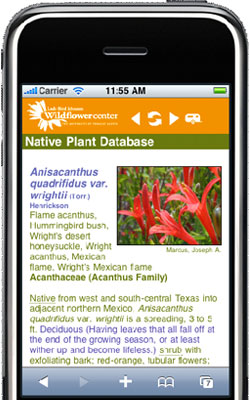
Did you know you can access the Native Plant Information Network with your web-enabled smartphone?

Ask Mr. Smarty Plants
Ask Mr. Smarty Plants is a free service provided by the staff and volunteers at the Lady Bird Johnson Wildflower Center.

rate this answer

Monday - July 30, 2007
From: Cedar Rapids, IA
Region: Midwest
Topic: Non-Natives
Title: Information on non-native Knock Out Rose
Answered by: Barbara Medford
QUESTION:
I am trying to find out some information about a Knock Out Rose. I dont know the scientific name for it. I have been to different web sites to find pictures, size etc. and can find nothing. Any help would be appreciated. Thank You.ANSWER:
The Knock Out rose is the result of several hybridizations of tea roses. Click on the highlighted link and it will take you to a website that has the answers to a lot of your questions. Most roses originated on the European continent or, farther back still, China. There are, however, native rose alternatives that you might consider.
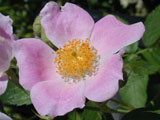
At the Lady Bird Johnson Wildflower Center, we encourage the use of native plants in the landscape. From our native plant database, here are links to information on several native roses that are found in your home state of Iowa. Rosa arkansana (prairie rose), Rosa blanda (smooth rose), Rosa carolina (Carolina rose), Rosa palustris (swamp rose), Rosa setigera (climbing rose), Rosa woodsii (Woods' rose). From these sites you should be able to get bloom time, pictures (when available), size and so forth of these native roses. We hope that you will at least consider "going native."
From the Image Gallery
More Non-Natives Questions
What is hollowing out my rosebuds in Austin, TX?
April 28, 2012 - I recently noticed some of my rose buds had been hollowed out from the inside. I have seen no evidence of insect though. What do you think it is and how can I treat the problem?
view the full question and answer
Damage to non-native Japanese maple
March 10, 2009 - I have a medium sized branch of a dwarf outdoor Japanese maple partially (about 70%) broken off. How can I fix it? What chemical/plant hormone/material can I use to initiate regrowth of the broken par...
view the full question and answer
Root ball disintegrating on Arroyo sweetwood from Dripping Springs TX
May 11, 2013 - I just purchased a arroyo sweetwood in a 5 gallon container and when I went to put it in the ground the root ball completely fell apart. I put it in the ground and watered it really good. What are its...
view the full question and answer
Browning leaves on non-native Burford holly
August 22, 2008 - I have several dwarf Burford hollies whose leaves are browning. The individual leaves have colors of green, dark brown to light brown extending from the stem. Any ideas?
view the full question and answer
Mulching vegetables with straw
June 13, 2007 - I have a small garden with 4 different veggies, tomatoes, hot peppers, squash & cucumbers. which plants is it OK to put straw under? which plants will straw hurt the stalks or other possibilities? tha...
view the full question and answer
| Support the Wildflower Center by Donating Online or Becoming a Member today. |