Native Plants
Q. Who is Mr. Smarty Plants?
A: There are those who suspect Wildflower Center volunteers are the culpable and capable culprits. Yet, others think staff members play some, albeit small, role. You can torture us with your plant questions, but we will never reveal the Green Guru's secret identity.
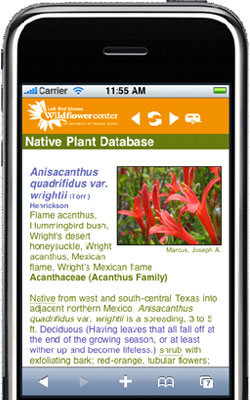
Did you know you can access the Native Plant Information Network with your web-enabled smartphone?
Ask Mr. Smarty Plants
Ask Mr. Smarty Plants is a free service provided by the staff and volunteers at the Lady Bird Johnson Wildflower Center.

rate this answer

Thursday - June 18, 2015
From: Palm Springs, CA
Region: California
Topic: Pollinators, Drought Tolerant, Herbs/Forbs
Title: Pollinators for Palm Springs, CA
Answered by: Larry Larson
QUESTION:
Just moved to Palm Springs, California. Hot and dry, desert region. What bee and pollinator-friendly plants would do well with full afternoon sun?ANSWER:
Boy – Did you ask the right question! The Wildflower Center has a list within its Special Collections for bees and such-like. It is the “California Pollinator Plant List” It has 21 California native plants that are recommended as highly attractive to pollinators such as native bees, honey bees, butterflies, moths, and hummingbirds.
As it seems just a bit too easy to just tag this list and as Palm Springs has such a desert-like climate, I also examined the USDA link, which shows where the plant is native right down to the county.
Here are a few that are listed as native to Riverside County [and thrive in a dry soil in the sun]:
Asclepias fascicularis (Mexican whorled milkweed)
Eriogonum fasciculatum (Eastern mojave buckwheat)
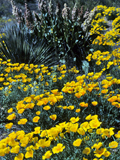
Eschscholzia californica (California poppy)
Helianthus annuus (Common sunflower)
From the Image Gallery



More Drought Tolerant Questions
Bringing upright a leaning cholla cactus
August 29, 2013 - I have a 3 ft. tall Cylindropuntia bigelovii
that fell over after recent rains. I righted it and supported it with garden stakes for about a month. I was afraid to pull too hard on the low...
view the full question and answer
Drought-Tolerant Plants for Arizona
July 16, 2015 - Slowly turning south-facing lawn to drought-tolerant plantings with gravel paths. Mature Ponderosa and several blue spruce and junipers surround area. Grass area I'm converting with a few larger tr...
view the full question and answer
Native Plant for a Sunny South-facing House Wall in Tucson
March 01, 2014 - I have a problematic block wall on the south side of the house and I what a plant to soften the look of the wall. I tried butterfly bush which I'm told died from of bounce-back heat from the wall. I ...
view the full question and answer
Plants that will withstand spray from fountain and heat from concrete
June 10, 2014 - Working on a property in Plano, I have an area around a fountain, surrounded by concrete, in full sun, that receives a lot of water that is blown from the fountain (which is treated with chlorine tabl...
view the full question and answer
Connecticut Plants for a Steep Slope
September 09, 2015 - I am looking for the best plants to retain a steep, dry, fully shaded slope in zone 5, Connecticut. It must be deer resistant. Plant height is not a factor.
view the full question and answer
| Support the Wildflower Center by Donating Online or Becoming a Member today. |