Native Plants

Q. Who is Mr. Smarty Plants?
A: There are those who suspect Wildflower Center volunteers are the culpable and capable culprits. Yet, others think staff members play some, albeit small, role. You can torture us with your plant questions, but we will never reveal the Green Guru's secret identity.

Did you know you can access the Native Plant Information Network with your web-enabled smartphone?

Ask Mr. Smarty Plants
Ask Mr. Smarty Plants is a free service provided by the staff and volunteers at the Lady Bird Johnson Wildflower Center.

rate this answer

Monday - August 11, 2014
From: Houston, TX
Region: Southwest
Topic: Pollinators, Grasses or Grass-like, Herbs/Forbs
Title: Soil Loosener/Pollinator Plants for Houston
Answered by: Larry Larson
QUESTION:
I am trying to establish a mostly-native pollinator way-station in a recently purchased lot in a 100 year old neighborhood in Houston. Much of the property has a thick layer of oyster shell four to six inches under the soil. It is also highly compacted, particularly in a section that was used as a driveway. Some spots have water standing for days after heavy rains. Are there native grasses (or other plants) with deep roots that would help to break up this man-made root barrier? (I am working with a limited budget.)ANSWER:
That sounds a great idea for your lot. The best treatment for your layer of oyster shell is to deeply turn in a good mixture of compost and other loosening agents such as decomposed granite. Expecting that this is a more of a major project than you’re looking for at the moment, here’s how I go about discovering the information stored within the Wildflower Center for helpful plants.
First, I check what has been already published on Mr. Smarty Plants. Here are a series of question/answer pairs regarding Groundcovers near Houston; they contain both plant suggestions and good advice.
Sources for ruellia from Houston
Looking for a native turf grass for the Houston area
How Can I Replace my Lawn with Natives in Houston, Texas
Native grass mix suitable for Houston
Indeed, you might check the "Native Groundcovers" list on the Houston Chapter of NPSOT's Native Plant Guide for possibilites of a groundcover or groundcovers to use on your lawn.
Similarly, here are a set of question/answer pairs when I looked for pollinators for South Texas:
Bee Plants for Victoria Texas
Adding Wildflowers to Corpus Christi
Will Salvia coccinea bloom in shade in Houston?
Clover for possible lawn area in The Woodlands, TX
The thought here is that several of these pollinator friendly plants also have deep root systems and can easily serve in the attempt to loosen the oyster shell, while you will also have pollinator friendly plants.
My second method to find suggestions is to just “do it myself”. If you call up the Wildflower Centers list of “recommended species”, you can search this list for plants with selected attributes. I selected the list for “Gulf marshes and prairies”. Then, looking at herbs that prefer full sun and can tolerate wet or moist soil, here is a selection of plants that should help the situation. [You have to read the “benefits” section for any comments about pollinators.]
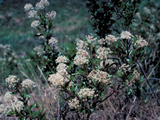
Ceanothus americanus (New jersey tea) - - - Comments in the plant record: supports pollinators – lives in inhospitable conditions because of its massive deep roots [!!].
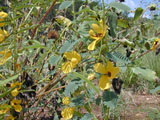
Chamaecrista fasciculata (Partridge pea) - - - supports pollinators
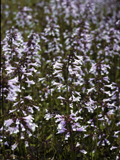
Salvia lyrata (Lyreleaf sage) - - - supports pollinators
And for grasses:
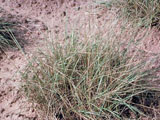
Poa arachnifera (Texas bluegrass)
Chasmanthium latifolium (Inland sea oats)
Carex texensis(Texas sedge)
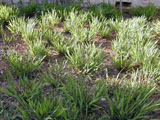
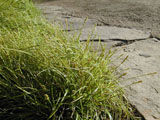
From the Image Gallery


More Herbs/Forbs Questions
Leaves of Chile pequin consumed overnight from San Marcus TX
June 23, 2013 - Something ate all the leaves of my Chile petin overnight. There is a ton of frass under the plants but no sign of a critter to be found. These plants have been in the same area for years and this is t...
view the full question and answer
Plants for narrow strip between sidewalk and fence
May 01, 2008 - I have a strip of land about 5 inches wide and 30 feet long -- between the fence and the sidewalk -- that I would like to plant something that would look nice and wouldn't require the weedeater every...
view the full question and answer
Invasiveness of Cosmos from Decatur GA
April 26, 2013 - I have been searching for an answer concerning the invasive plant Cosmos. I know that Florida declares this but I have not been able to find out does Georgia? And specifically,is it only the yellow Co...
view the full question and answer
Growing Chile Pequin Indoors
December 09, 2015 - About a year ago I visited your page and as a result I planted 8 seeds in spring 2015 from a large Chile Pequin plant that came up wild in my Cedar Park home near Austin. The last harvest was late su...
view the full question and answer
Need tips for planting wildflower seeds in pots in Edinburg, TX.
July 22, 2012 - Can you give me some tips for starting wildflower seeds in pots or trays, rather than outdoors? Is this even possible? Most instructions I have found are for seeding large areas. I want to get some p...
view the full question and answer
| Support the Wildflower Center by Donating Online or Becoming a Member today. |