Native Plants

Plant Database
Search for native plants by scientific name, common name or family. If you are not sure what you are looking for, try the Combination Search or our Recommended Species lists.
Marcus, Joseph A.
Frangula caroliniana
Frangula caroliniana (Walter) A. Gray
Carolina Buckthorn, Carolina False Buckthorn, Yellow Buckthorn, Indian Cherry, Yellowwood
Rhamnaceae (Buckthorn Family)
Synonym(s): Rhamnus caroliniana, Rhamnus caroliniana var. mollis
USDA Symbol: FRCA13
USDA Native Status: L48 (N)
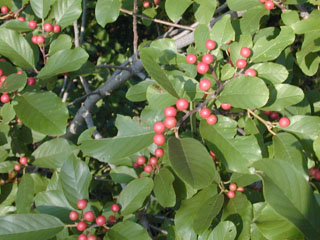
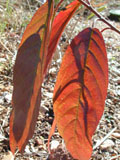
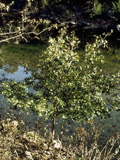
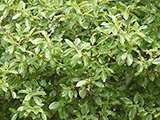
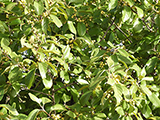
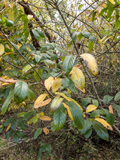
This small, deciduous tree or shrub, usually 12-15 ft. tall, can reach 30 ft. in height with leaves that stay green into late fall. Leaves up to 5 inches long, with a petiole as much as 1/2 inch long; blade ovate to elliptic, sometimes narrow, pointed at the tip and tapered or rounded at the base, margins smooth or with very small, rounded teeth, veins prominent, especially on the lower surface; upper surface of blade smooth, bright green. Flowers not showy, yellowish, in small clusters at the bases of the leaves, opening in May and June. Fruit fleshy, 1/4 inch or more in diameter, red, turning black when ripe.
Songbirds and other wildlife consume the berries, which apparently have medicinal properties but can be toxic. Although called a buckthorn, this species has no spines. It was discovered in South Carolina, hence the common and Latin species names.
Plant Characteristics
Duration: PerennialHabit: Tree
Leaf Retention: Deciduous
Leaf Complexity: Simple
Leaf Shape: Elliptic , Ovate
Fruit Type: Drupe
Size Notes: Up to about 30 feet tall, often much shorter.
Fruit: Red turning to black.
Bloom Information
Bloom Color: White , Yellow , GreenBloom Time: Apr , May , Jun
Bloom Notes: Yellowish to green or white.
Distribution
USA: AL , AR , FL , GA , IL , IN , KY , LA , MD , MO , MS , NC , NJ , OH , OK , SC , TN , TX , VANative Distribution: S.w. VA to OH, s. IL & NE, s. to FL, TX, and Tamaulipas in northeastern MExico
Native Habitat: Bottomlands, ravines and stream bottoms in Edwards Plateau and East Texas. Bottomlands; stream banks; woods
Growing Conditions
Light Requirement: Part ShadeSoil Moisture: Moist
Soil Description: Moist, calcareous, rocky soils.
Conditions Comments: Carolina buckthorn is an understory plant that produces shiny leaves. It stands attractively alone or it works as a specimen. Many bird species feed on the bright red fruit. By fall, the fruits turn black. In light shade, Carolina buckthorn is airy and tiered, somewhat like the flowering dogwoods. Three to four hours per day of sun are necessary. With more sun, the plant tends to get dense and shrubby losing some of its charm. Seedlings are produced in profusion.
Benefit
Use Wildlife: Ripe berries attract birds. Leaves and bark are browsed by deer.Attracts: Birds , Butterflies
Larval Host: Snout butterfly
Deer Resistant: No
Propagation
Propagation Material: SeedsDescription: Sow fresh seed without pretreatment or stored seed which has been stratified. Semi-hardwood cuttings taken in late summer or dormant hardwood cuttings root.
Seed Collection: Collect seeds in fall when fruits have turned dark purple. Clean off pulp to save seed or plant immediately with fruit intact or squished. Seeds to be sown immediately should not dry, as drying induces dormancy. Store seeds in sealed containers kept in a cool, dry place.
Seed Treatment: Stratify 30-60 days at 41 degrees.
Commercially Avail: yes
Maintenance: Gallon size plants need shade and relative dryness in summer - do not water daily or roots will rot.
Find Seed or Plants
View propagation protocol from Native Plants Network.
Mr. Smarty Plants says
Plants for wildlife and trees for shade.
September 29, 2007
We live in Kempner Texas, our land has mostly cedar trees. We would like to make a wildlife habitat on the back side of our property. Can you recommend plants that will grow in shade to partial sun,...
view the full question and answer
Variety of native tall plants for a screen in shady area near Ft. Worth
June 12, 2007
Hello, we live west of Ft Worth. We are looking for tall plants to form a visual screen along a chain link fence we share with a neighbor. We have post oaks there and it is very shady and the ground ...
view the full question and answer
Native plants for seasonal poor drainage
May 16, 2006
I have an area in my front yard that has a drainage ditch running through it. When it rains, that area stays very wet. What kind of plants available for sale will work in this situation?
view the full question and answer
National Wetland Indicator Status
| Region: | AGCP | AK | AW | CB | EMP | GP | HI | MW | NCNE | WMVE |
| Status: | FACU | FAC | FACU | FAC | FAC |
From the National Organizations Directory
According to the species list provided by Affiliate Organizations, this plant is on display at the following locations:Lady Bird Johnson Wildflower Center - Austin, TX
Nueces River Authority - Uvalde, TX
Stengl Biological Research Station - Smithville, TX
Texas Parks and Wildlife Department - Austin, TX
NPSOT - Fredericksburg Chapter - Fredericksburg, TX
NPSOT - Austin Chapter - Austin, TX
Jacob's Well Natural Area - Wimberley, TX
NPSOT - Williamson County Chapter - Georgetown, TX
Mt. Cuba Center - Hockessin, DE
Herbarium Specimen(s)
NPSOT 0683 Collected Jul 18, 1992 in Bandera County by Harry CliffeNPSOT 0609 Collected May 13, 1992 in Medina County by Harry Cliffe
Wildflower Center Seed Bank
LBJWC-611 Collected 2007-10-17 in Travis County by Lady Bird Johnson Wildflower CenterBibliography
Bibref 298 - Field Guide to Texas Trees (1999) Simpson, B.J.Bibref 841 - Native Alternatives to Invasive Plants (2006) Burrell, C. C.
Bibref 318 - Native Texas Plants: Landscaping Region by Region (2002) Wasowski, S. & A. Wasowski
Search More Titles in Bibliography
Web Reference
Webref 38 - Flora of North America (2019) Missouri Botanical Garden, St. Louis, MO & Harvard University Herbaria, Cambridge, MA.Additional resources
USDA: Find Frangula caroliniana in USDA PlantsFNA: Find Frangula caroliniana in the Flora of North America (if available)
Google: Search Google for Frangula caroliniana
Metadata
Record Modified: 2022-10-05Research By: TWC Staff