Native Plants

Q. Who is Mr. Smarty Plants?
A: There are those who suspect Wildflower Center volunteers are the culpable and capable culprits. Yet, others think staff members play some, albeit small, role. You can torture us with your plant questions, but we will never reveal the Green Guru's secret identity.

Did you know you can access the Native Plant Information Network with your web-enabled smartphone?

Ask Mr. Smarty Plants
Ask Mr. Smarty Plants is a free service provided by the staff and volunteers at the Lady Bird Johnson Wildflower Center.

rate this answer

Saturday - August 18, 2012
From: Salem, VA
Region: Mid-Atlantic
Topic: Wildlife Gardens, Planting, Seeds and Seeding, Erosion Control, Grasses or Grass-like, Herbs/Forbs
Title: Establishing wildflowers on a slope in Virginia
Answered by: Guy Thompson
QUESTION:
From Roanoke Virginia. I have a steep bank rising from one side of my driveway to woods above. Different areas vary from full sun, to half day shade. It is possible to carefully walk/stand on it, we are able to pull weeds or plant, but it could not be safely mowed. I am tired of my sparsely covering rug junipers. I have just learned about erosion control blankets from this site, and while I have seen other references to grass seed under these mats, can other plant seed, like phlox, or other ground cover seeds work with this method? I just can't find information on this. The bank was initially covered with landscaping paper, then mulch, and rug junipers planted through the paper. Weeds have taken it over for many years now. When using the blankets, do you use weed killer on the whole area before planting it? I am interested in a blanket that would completely degrade. Thank you for considering my question.ANSWER:
Your first step would be to get rid of all the plants you do not want to remain on the slope. This can be done by spraying with a general herbicide such as Roundup. Roundup only works on plants that are actively growing, so you must do this step before frost kills tender species. Then you can plant wildflower seeds on the slope and then cover the slope with a biodegradable erosion control blanket. But long-term erosion control will be better if there are also native grasses present. I include below an excerpt from a previous Mr. Smarty Plants answer that gives advice on suitable grass species. The species recommended for North Carolina should also be suitable for Virginia.
For plant recommendations, let's start with grasses since the extensive fibrous roots of grasses are very effective in holding soil in place. Native warm weather grasses will come up from seed after the weather warms in the spring. The seeds can be planted now beneath erosion control cloth (see comments below) or you can wait until early Spring. Here are some species native to your area of North Carolina that will grow in clay:
Andropogon gerardii (Big bluestem)
Elymus canadensis (Canada wild rye)
Elymus virginicus (Virginia wildrye)
Eragrostis intermedia (Plains lovegrass)
Muhlenbergia emersleyi (Bullgrass)
Muhlenbergia schreberi (Nimblewill)
Panicum virgatum (Switchgrass)
Schizachyrium scoparium (Little bluestem)
Sorghastrum nutans (Indiangrass)
Tridens flavus (Purpletop tridens)
Tripsacum dactyloides (Eastern gamagrass)
Elymus canadensis and Schizachyrium scoparium will grow well in partially shaded areas, and in full shade I recommend Chasmanthium latifolium (Inland sea oats). You can choose wildflowers to go with the grasses from the Virginia Recommended list of commercially available native plant species suitable for planned landscapes.
Our National Suppliers Directory site for your area can be searched for nurseries and seed companies specializing in native plants.
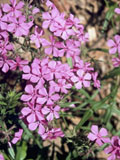
To prevent erosion until the plants are established, use a biodegradable erosion control blanket such as the one available at Native American Seeds. Native American Seeds also sells a variety of grass seeds. Wildflower seedlings, including phlox, can make their way through such a blanket. If you choose to plant phlox, remember that some species, such as Phlox divaricata (Wild blue phlox), prefer partial shade, while some others, including Phlox drummondii ssp. drummondii (Annual phlox), do best in full sun.
There are several How to Articles under Large Scale Wildflower Planting (for instance, Meadow Gardening) that should have useful information for your project.
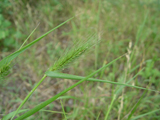
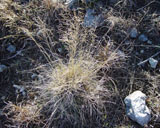
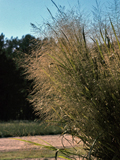
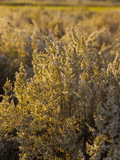
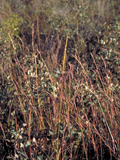
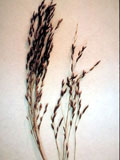
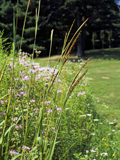
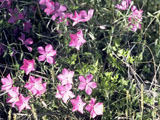
Below are photos of some of the plants from our Image Gallery:
From the Image Gallery


More Wildlife Gardens Questions
Wildflowers for bees in Missouri
July 13, 2013 - Mr. Smarty Plants,
I just became a beekeeper and would like to plant wildflowers that are best for bees. The area to plant is partially shaded with clay soil. Do you have any suggestions?
view the full question and answer
Why are there no monarch butterflies feeding on my milkweed
October 29, 2008 - I brought a milkweed from LA that has orange and yellow flowers. I live in Denton, TX. I haven't seen any eggs from the monarchs yet. Do the monarchs live on different milkweed in TX? I looked up ...
view the full question and answer
Will shoes pick up American Beautyberry fruit and stain carpets?
March 21, 2010 - Do the berries from American Beautyberry fall on the ground so your shoes pick up the berries to stain the carpet in my house?
view the full question and answer
Wildlife gardening in Georgia
February 19, 2008 - I am looking for native shrubs/flowers that will attract butterflies and/or birds. I live in Milledgeville, GA which is in central GA, 1 mile from the Oconee River. Some areas of my yard are full sun...
view the full question and answer
A Bounty of Edibles for New Braunfels Texas
October 25, 2013 - I was hoping you could suggest a few plants that would serve several purposes. I live in New Braunfels, TX and would like to incorporate as many drought tolerant plants which would support birds, but...
view the full question and answer
| Support the Wildflower Center by Donating Online or Becoming a Member today. |