Native Plants

Q. Who is Mr. Smarty Plants?
A: There are those who suspect Wildflower Center volunteers are the culpable and capable culprits. Yet, others think staff members play some, albeit small, role. You can torture us with your plant questions, but we will never reveal the Green Guru's secret identity.

Did you know you can access the Native Plant Information Network with your web-enabled smartphone?

Ask Mr. Smarty Plants
Ask Mr. Smarty Plants is a free service provided by the staff and volunteers at the Lady Bird Johnson Wildflower Center.

rate this answer

Thursday - December 22, 2011
From: Denver, CO
Region: Rocky Mountain
Topic: Non-Natives, Herbs/Forbs
Title: Taking stock in where and what you grow in Denver Colorado
Answered by: Leslie Uppinghouse
QUESTION:
I have two year old stock plants growing in a container in my home and they are finally starting to bloom. However, the buds open but don't produce any petals. Also they are experiencing yellow leaves. Should I fertilize? A similar thing is happening to marigolds, also in a pot. They are small plants but produce a ton of buds; however, these are now turning brown instead of opening. Please help!ANSWER:
The Flower most commonly referred to as stock is Matthiola incana which is a non native. It hails from southern Europe. The Lady Bird Johnson Wildflower Center helps to promote and protect native plants so we cannot offer real expertise with non native species, but will try and answer the question with some basics.
Stock is most commonly listed as an annual, but it can live for several years as a hardy annual and some states list it as a perennial. It is hardy to about five degrees fahrenheit, it is not frost tender. Denver Colorado is listed as right on the cusp of what a stock plant can take in terms of cold so you might be dealing with a plant that just isn't going to behave as a hardy annual or perennial. You may have to replant these plants annually to really get the most out of the species. Another common issue with plants producing buds and then dropping them before they open, is the lack of fertilization or some times over fertilization. This is a common problem with non native plants. You are trying to fool this plant into thinking it is growing in southern Europe and it just isn't so you have to manipulate its soil, light and food to make it happy and that's a tedious task.
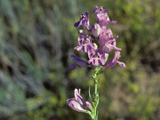
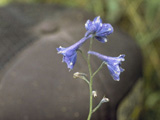
There are some fun natives that have a similar appearance to Matthiola incana that you could have in a pot that are perennial. Two are blue only, but they are pretty cute. Delphinium nuttallianum (Delphinium) and Delphinium barbeyi (Subalpine larkspur). The other has a paler color, light to fairly deep pink Penstemon jamesii (James's beardtongue). The advantages of planting natives over non natives are numerous but for your specific problem you will find that these plants will out live your stock and you won't have to fuss with soil amendments or heavy fertilization.
Lastly, you mention that your plants are in your home. If the pot is in the house you have a whole other set of problems. Neither stock nor marigolds would be truly happy indoors, even in Colorado. If you are looking for indoor plants then check in with your local nursery, they should have plenty of indoor plant suggestions. The difference between the two has to do with temperature, light requirements and dormancy. Indoor plants have been bred specifically to grow in a controlled environment and if this is where your pots are, then skip the suggestions above and grow some plants that can live indoors, there are plenty of blooming options for you.
From the Image Gallery

More Herbs/Forbs Questions
Native plants for under a pine tree in Vevay IN
June 29, 2009 - At our office we have a very nice garden however, in the front we have a large pine tree. We cannot get anything to take root & live there. Do you have any suggestions for a native shrub or perennia...
view the full question and answer
Availability of Heliotropium angiospermum from Austin
April 01, 2014 - I have admired the Wildflower Center's Heliotropium angiospermum (Scorpian's Tail) for the great number of butterflies it attracts. I would really love to purchase one on these plants, but don't se...
view the full question and answer
Damage to ruellia in Monroe LA
October 26, 2009 - I have hundreds of Ruellia Brittoniana. Dwarf Katie White,
Katie Blue and Katie Pink.
I am finding holes in some of the leaves, Some just have notches chewed out of them. Some of the leaves have...
view the full question and answer
Groundcover for Bonsall, CA
October 17, 2012 - I live in Bonsall, CA. (San Diego) I have 3 acres, flat and sloped that are graded dirt. (DG and sheep poop from previous owner). It is getting close to mud season and I'd like to plant winter cover...
view the full question and answer
Skunk cabbage from Amsterdam NY
May 02, 2012 - Will skunk cabbage grow under a mobile home and cause odor?
view the full question and answer
| Support the Wildflower Center by Donating Online or Becoming a Member today. |