Native Plants

Q. Who is Mr. Smarty Plants?
A: There are those who suspect Wildflower Center volunteers are the culpable and capable culprits. Yet, others think staff members play some, albeit small, role. You can torture us with your plant questions, but we will never reveal the Green Guru's secret identity.

Did you know you can access the Native Plant Information Network with your web-enabled smartphone?

Ask Mr. Smarty Plants
Ask Mr. Smarty Plants is a free service provided by the staff and volunteers at the Lady Bird Johnson Wildflower Center.

rate this answer

Saturday - February 07, 2009
From: Bowling Green, KY
Region: Mid-Atlantic
Topic: Wildflowers
Title: Wildflowers for an outdoor classroom in Bowling Green, Kentucky
Answered by: Barbara Medford
QUESTION:
We would like to know what types of wildflowers could easily be grown in an outdoor classroom in Bowling Green, KY.ANSWER:
Happily, most native wildflowers can easily be grown, because they have been around for eons reseeding themselves, hunkering down in droughts, and painting the landscape without any human intervention at all. The key word is "native." The Lady Bird Johnson Wildflower Center is committed to the care, protection and propagation of plants native not only to North America but to the area in which they are being grown. Because those plants are already adapted to the ecology in which they are growing, they need less fertilizer, water and maintenance.
We're going to go to Recommended Species, click on Kentucky on the map, NARROW YOUR SEARCH and then specify "Herbs" (herbaceous blooming plants) under Habit. Since we don't know what your soil moisture or light requirements are, we will leave those blank, but you can go back, using the same technique and specifying other characteristics to make your own list. Follow each plant link to the plant webpage in our Native Plant Database to get propagation help and more information on the plant. These plants are all commercially available, in the case of wildflowers probably as seed. To locate sources for the seed, go to our Native Plant Suppliers section, type in your town and state in the "Enter Search Location" box and you will get a list of native plant nurseries, seed providers and landscape and environmental consultants in your general area.
HERBS
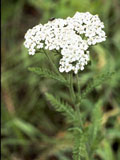
Achillea millefolium (common yarrow) - perennial, blooms white, pink April to September
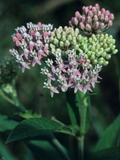
Asclepias incarnata (swamp milkweed) - perennial, blooms pink, purple June to August
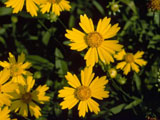
Coreopsis auriculata (lobed tickseed) - perennial, blooms yellow March to May
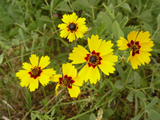
Coreopsis tinctoria (golden tickseed) - annual, blooms yellow, brown April to June
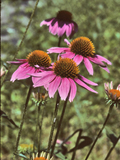
Echinacea purpurea (eastern purple coneflower) - perennial, blooms pink, purple April to September
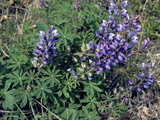
Lupinus perennis (sundial lupine) - perennial, blooms blue, purple May to June
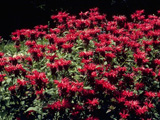
Monarda didyma (scarlet beebalm) - perennial, blooms red May to October
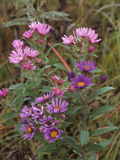
Symphyotrichum novae-angliae (New England aster) - perennial, blooms pink, purple August to October
More Wildflowers Questions
Wildflower gardening for Citrus Co., Florida
March 07, 2008 - I live in Citrus County Florida, on the north central, west side of the state. I hope to start a wildflower meadow in my natural back yard. Can you recommend good wildflowers to grow, and where to g...
view the full question and answer
Bluebonnets in Hampton VA?
July 12, 2014 - I gave my mom Blue Bonnet seeds for her yard in Hampton VA. She is on a mission to have no lawn and loves flowers. The seeds say to plant in Texas August-November. But, when should she plant them i...
view the full question and answer
Winter wildflower blooming in East Texas in the winter
October 06, 2009 - Is there a wildflower that will grow/bloom in east texas during the winter that can be tilled into garden in springtime. We put rye and red clover but were interested in getting some color/variety to ...
view the full question and answer
Herbicide use in bluebonnet field in Blanco, TX
April 10, 2012 - Dear Mr. Smarty Plants, I have the best of both worlds and the worst of both worlds. I’ve been throwing bluebonnet seeds for 6 years on our property near Blanco, and when it rains, as it has this year...
view the full question and answer
Define monoculture from St. Croix Falls, WI
May 30, 2014 - What do you call a dense stand or carpet of one species of wildflower? Our botany professor told us but that was 40 years ago!
view the full question and answer
| Support the Wildflower Center by Donating Online or Becoming a Member today. |