Native Plants

Q. Who is Mr. Smarty Plants?
A: There are those who suspect Wildflower Center volunteers are the culpable and capable culprits. Yet, others think staff members play some, albeit small, role. You can torture us with your plant questions, but we will never reveal the Green Guru's secret identity.

Did you know you can access the Native Plant Information Network with your web-enabled smartphone?

Ask Mr. Smarty Plants
Ask Mr. Smarty Plants is a free service provided by the staff and volunteers at the Lady Bird Johnson Wildflower Center.

rate this answer

Friday - November 14, 2008
From: Livermore, CA
Region: California
Topic: Poisonous Plants, Ferns, Herbs/Forbs, Trees
Title: Tropical looking plants for pool area in California
Answered by: Nan Hampton
QUESTION:
I am looking for small tropical looking plants, groundcover, and 2-small trees for around my pool. They have to be non-toxic to dogs,cats, and people. They can't attract bees/wasps, or have a root system that may crack the pool walls. I am having a hard time finding what are safe. Plants with colorful leaves are great, since most flowers would be out. I live in Livermore, CA 94551. I think it is zone 10 (not sure). Thank you for your help.ANSWER:
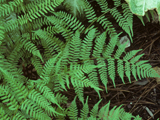
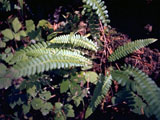
Well, you've given Mr. Smarty Plants a tough assignment. First of all, unless we pick ferns and mosses, the plants are going to have flowers of some kind. And, if they have flowers, it will difficult to find ones that aren't polinated by insects of some sort. Additionally, truly tropical plants aren't going to do well in your climate. The USDA Plant Hardiness Zone Map shows Alameda County, California in Zones 9a (20 to 25 °) and 9B (25 to 30 °). You could consider ferns for some of the plants around your pool. They do not produce flowers and do not attract insects as pollinators. Most ferns grow in shade or part shade and require at least a moderate amount of moisture. Here are a few ferns native to California and Alameda County. None of them appears on any of the toxic databases listed below and they do look rather tropical:
Ferns:
Athyrium filix-femina (common ladyfern
Dryopteris arguta (coastal woodfern) and photos
Pellaea andromedifolia (coffee cliffbrake)
Polystichum munitum (western swordfern)
Woodwardia fimbriata (giant chainfern) with photos from Stanford University
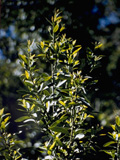
The following small trees are native to your area. None of them appear on any of the following toxic databases, but I don't guarantee that they won't be visited by bees and other insects.
Small Trees:
Umbellularia californica (California laurel)
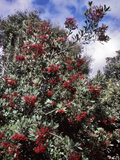
Heteromeles arbutifolia (toyon)
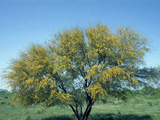
Acacia farnesiana (sweet acacia)
Arctostaphylos glauca (big berry manzanita)
Morella californica (California wax myrtle) with photos
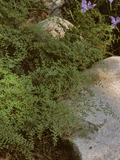
Groundcover. The following are recommended as groundcover. Neither of them appear on any of the following toxic databases, but I don't guarantee that they won't be visited by bees and other insects.
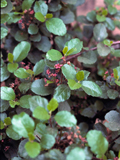
Ribes viburnifolium (island gooseberry)
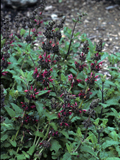
Salvia spathacea (hummingbird sage)
Toxic databases:
Poisonous Plants of North Carolina, Cornell University Plants Poisonous to Livestock, Canadian Poisonous Plants Information System, University of Pennsylvania's Poisonous Plants, and Texas Toxic Plants Database.

More Poisonous Plants Questions
Is Penstemon cobaea poisonous
May 12, 2009 - Is Penstemon cobaea Nutt or Wild foxglove poisonous like real fox glove? It is on a playground and Im concerned that it may not be safe for children.
view the full question and answer
Toxicity of catalpa wood?
June 05, 2012 - Is the sawdust from cutting up a catalpa tree or the smoke from burning the wood toxic?
Thank you,
view the full question and answer
Transplanting adventitious shoots of a mountain laurel in San Antonio
August 20, 2009 - Is it possible to transplant branches (shoots) growing from a mountain laurel that was chopped down? Some are two years old and several feet tall (but not yet blooming) and some as small as a foot. ...
view the full question and answer
Mulberry sap in the bloodstream from Kansas City
November 13, 2010 - What affect does mulberry sap have if put in contact with the blood stream?
view the full question and answer
Is Viburnum dentatum (Chicago Lustre) toxic to horses
May 26, 2009 - Are Chicago Lustre Viburnum -- Viburnum Dentatum -- toxic to horses?
view the full question and answer
| Support the Wildflower Center by Donating Online or Becoming a Member today. |