Native Plants

Q. Who is Mr. Smarty Plants?
A: There are those who suspect Wildflower Center volunteers are the culpable and capable culprits. Yet, others think staff members play some, albeit small, role. You can torture us with your plant questions, but we will never reveal the Green Guru's secret identity.

Did you know you can access the Native Plant Information Network with your web-enabled smartphone?

Ask Mr. Smarty Plants
Ask Mr. Smarty Plants is a free service provided by the staff and volunteers at the Lady Bird Johnson Wildflower Center.

rate this answer

Saturday - June 07, 2008
From: Austin, TX
Region: Southwest
Topic: Non-Natives
Title: Locating non-native Bradford pear tree in Austin
Answered by: Barbara Medford
QUESTION:
Where can I find a Bradford pear tree in Austin, TX?ANSWER:
Because at the Lady Bird Johnson Wildflower Center we are dedicated to the care and propagation of plants native to North America, we do not have the Bradford Pear, native to Korea and China, in our Native Plant Database. And, probably, our native plant suppliers do not stock it either. If you haven't already planted this tree, perhaps you would consider another choice? Please read this article from Dave's Garden: Bradford Pear Tree (To plant or not to plant?). We trumpet the virtues of native plants because they are already adapted to the conditions in the area where they are growing, thus needing less fertilizer, maintenance and water.
May we try converting you to native plants? Read our How-To Article on Using Native Plants for some of the reasons why it is so important to the environment. Next see our Just for Texas Collection of plants in Hill Country Horticulture. In that list, you can Narrow Your Search by selecting Texas, habit (tree, shrub, etc), duration (annual, perennial), light requirement (how many hours of sun you have a day in your garden) and soil moisture. We have chosen seven small trees, six of which flower beautifully, that we think you would enjoy in place of the non-native Bradford Pear. If you see some natives you like, go to our Suppliers section, enter your city and state in the Enter Search Location box, and you will get lists of nurseries, seed suppliers and landscape experts in your general area. Many have websites or phone numbers so you can check for availability. Here are some trees we like for the Austin area.
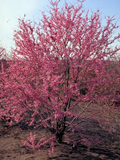
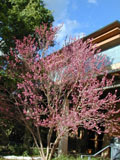
Cercis canadensis var. mexicana (Mexican redbud)
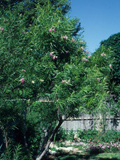
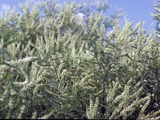
Chilopsis linearis (desert willow)
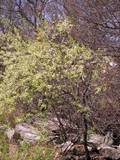
Prunus mexicana (Mexican plum)
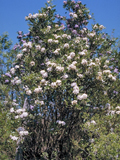
Sophora secundiflora (Texas mountain-laurel)
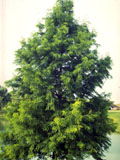
Taxodium distichum (bald cypress)
Ungnadia speciosa (Mexican buckeye)
Eysenhardtia texana (Texas kidneywood)
More Non-Natives Questions
Transplant time for small smoke tree from Battle Ground WA
June 01, 2014 - When do I transplant a smoke tree that is still young, about a foot high? It is too close to a fence, which I fear will be a problem as it gets big. I live in Battle Ground, WA which is zone 6.
view the full question and answer
Problems with non-native African violets in Des Moines
January 08, 2010 - My violets have stopped blooming after years and have developed a growth in the middle of the plant. Can I save these plants and how can I revive them. Thank you, I am desperate to salvage them as the...
view the full question and answer
Failure to bloom of non-native Althea in Oklahoma
August 17, 2008 - I have 2 Althea bushes that will not bloom. For the past 2 years, they become covered in buds, which eventually yellow, but never open. The buds are fully developed. This year the branches have starte...
view the full question and answer
Problems with shrubs by pool in Bethesda, MD
February 24, 2012 - We are trying to grow Otto Luyken Laurels by a pool and doing okay, some brown spots on leaves, but not many. Also have Arbivatea beside the pool about 3 feet from the edge of the pool. They have a l...
view the full question and answer
New house plant in pot in Chevy Chase MD
May 07, 2010 - Is it possible for one house plant to eventually die in the pot while a completely different plant grows in its place? The new plant looks similar to the potted plant next to it but it is not quite t...
view the full question and answer
| Support the Wildflower Center by Donating Online or Becoming a Member today. |