Native Plants

Plant Database
Search for native plants by scientific name, common name or family. If you are not sure what you are looking for, try the Combination Search or our Recommended Species lists.
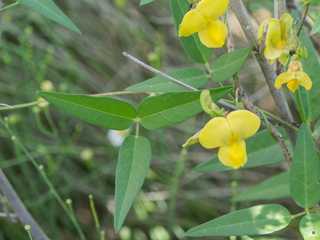
Romfh, Peggy
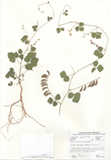
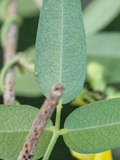
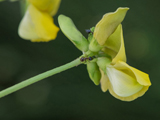
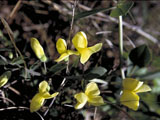
Vigna luteola
Vigna luteola (Jacq.) Benth.
Hairypod Cowpea, Yellow Vigna
Fabaceae (Pea Family)
Synonym(s): Vigna nilotica, Vigna repens
USDA Symbol: VILU3
USDA Native Status: L48 (N), PR (N), VI (N)
Yellow Vigna is a member of the pea family (Fabaceae), which includes trees, shrubs, herbs, and vines with compound or occasionally simple leaves and flowers usually in clusters. Taken as a single family, there are about 640 genera and 17,000 species. This enormous family, also known as the bean or legume family, includes many economically important genera: Peas belong to the genus Pisium; beans to Phaseolus; soybeans to Glycine; peanuts to Arachis; lentils to Lens; and chickpeas (garbanzos) to Cicer. Alfalfa (Medicago sativa) and clover species (Trifolium) provide forage for domestic livestock, but many other species are poisonous range weeds. Exotic hardwoods and gum arabic are provided by tropical trees belonging to this family, and numerous members are cultivated as handsome ornamentals. The traditional family name, Leguminosae, reflects some of the family’s importance (in Latin it refers to “plants with seedpods,” and in French légume means “vegetable”). The family is sometimes split into three smaller families, each distinguished by one of the three flower types: the Fabaceae, Mimosaceae, and Caesalpiniaceae. The fruit, an important feature, is similar in all three.

Plant Characteristics
Duration: PerennialHabit: Vine
Leaf Arrangement: Alternate
Fruit Type: Legume
Size Notes: Stems scrambling or climbing, up to about 6 feet long, or more.
Bloom Information
Bloom Color: YellowBloom Time: Jan , Feb , Mar , Apr , May , Jun , Jul , Aug , Sep , Oct , Nov , Dec
Distribution
USA: AL , FL , GA , LA , MS , NC , PA , SC , TX , VANational Wetland Indicator Status
| Region: | AGCP | AK | AW | CB | EMP | GP | HI | MW | NCNE | WMVE |
| Status: | FACW | FAC | FACW | FACW | FAC |
Wildflower Center Seed Bank
LBJWC-1194 Collected 2008-08-11 in Gaveston County by Lady Bird Johnson Wildflower CenterWeb Reference
Webref 57 - Atlas of Florida Plants (2020) Institute for Systematic BotanyWebref 23 - Southwest Environmental Information Network (2009) SEINet - Arizona Chapter
Additional resources
USDA: Find Vigna luteola in USDA PlantsFNA: Find Vigna luteola in the Flora of North America (if available)
Google: Search Google for Vigna luteola
Metadata
Record Modified: 2023-01-02Research By: TWC Staff