Native Plants

Q. Who is Mr. Smarty Plants?
A: There are those who suspect Wildflower Center volunteers are the culpable and capable culprits. Yet, others think staff members play some, albeit small, role. You can torture us with your plant questions, but we will never reveal the Green Guru's secret identity.

Did you know you can access the Native Plant Information Network with your web-enabled smartphone?

Ask Mr. Smarty Plants
Ask Mr. Smarty Plants is a free service provided by the staff and volunteers at the Lady Bird Johnson Wildflower Center.

rate this answer

Thursday - May 02, 2013
From: Elkhart, IN
Region: Midwest
Topic: Planting, Soils, Shade Tolerant, Herbs/Forbs, Trees
Title: Flowers under pine trees from Elkhart Indiana
Answered by: Barbara Medford
QUESTION:
I have a number of pine trees at the back of my lot and would like to plant flowers under the tree. What can I plant?ANSWER:
We have a very similar previous Mr. Smarty Plants answer for flowering plants under pine trees; it is, however, from Illinois. And, another one from New York, which also gives you instructions for using our National Suppliers Directory. So, we will use the same method detailed in the previous answers to find flowers that will grow in part shade, tolerate acidic soils and are native not only to North America but also to the area where they are to be grown; in your case, Elkhart County, IN.
We will go to our Native Plant Database and, scrolling down the page to use the Combination Search, search on Indiana for the state, herbs (herbaceous blooming plants) for Habit, and "part shade" under Light Requirements. We will list some examples and you can go back to do your own search for different plants with different characteristics. Follow each plant link to our webpage on that plant to learn bloom times and colors, mature heights, soils preferred and soil moisture for that plant. We ave checked each plant on our list with the USDA Plant Profile Maps to make sure they are native to your area and therefore compatible with your climate, soils and rainfall.
Achillea millefolium (Common yarrow)
Aconitum uncinatum (Southern blue monkshood)
Agalinis purpurea (Purple false foxglove)
Anemone virginiana (Tall thimbleweed)
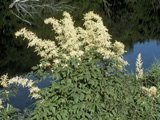
Aruncus dioicus (Bride's feathers)
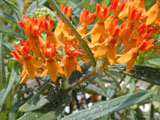
Asclepias tuberosa (Butterflyweed)
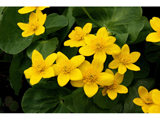
Caltha palustris (Yellow marsh marigold)
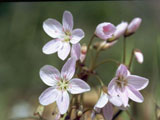
Claytonia virginica (Virginia springbeauty)
Euphorbia marginata (Snow on the mountain)
Fragaria virginiana (Virginia strawberry)
From the Image Gallery
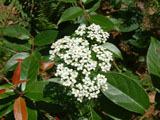
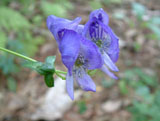
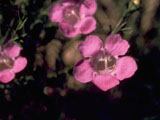
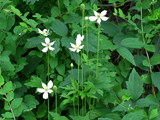
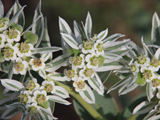
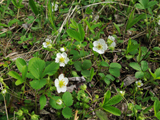
More Herbs/Forbs Questions
Fragrant foundation plants for sunny, dry area in Illinois
August 26, 2009 - We need suggestions of what to plant on the south side of our house heave sun and rather dry soil. We just took out old dead bushes. Would prefer something that flowers and smells nice that would gr...
view the full question and answer
Purchase of Galphimia angustifolia from Austin
June 08, 2014 - I have a Thryallis, Galphimia augustifolia, or Thryallis autustifolia, growing from a limestone ledge in my yard in west Austin TX. I have tried unsuccessfully to buy this native. Do you sell it at t...
view the full question and answer
Plants native to Galveston that would survive in Austin
December 01, 2008 - What plants are native to the Galveston, Texas region? Can any of those plants survive in the Austin area?
view the full question and answer
Spotted spurge in Dublin GA
June 05, 2011 - I noticed that you did not have a "Spotted Spurge", or "Chamaesyce maculata" listed. My Aunt asked me for help identifying it, until she remembered what it was.
view the full question and answer
Plants for steep bank in Pennsylvania
July 12, 2011 - What do I do with a very steep bank with hard clay soil to stop erosion and to look nice. Is there a ground cover that would help?
view the full question and answer
| Support the Wildflower Center by Donating Online or Becoming a Member today. |