Native Plants

Q. Who is Mr. Smarty Plants?
A: There are those who suspect Wildflower Center volunteers are the culpable and capable culprits. Yet, others think staff members play some, albeit small, role. You can torture us with your plant questions, but we will never reveal the Green Guru's secret identity.

Did you know you can access the Native Plant Information Network with your web-enabled smartphone?

Ask Mr. Smarty Plants
Ask Mr. Smarty Plants is a free service provided by the staff and volunteers at the Lady Bird Johnson Wildflower Center.

rate this answer

Friday - December 21, 2012
From: Arnold, MO
Region: Midwest
Topic: Grasses or Grass-like
Title: Low-maintenance grass for retention pond
Answered by: Nan Hampton
QUESTION:
I would like to know what would be a low-growing grass to put down for a water retention pond. We have clay and rocky soil. The incline of the sides of the retention pond are about 20 feet with grass bottoms and they hardly ever have water in them. I'm looking for something that is low-maintenance that would only have to be cut once a year or less.ANSWER:
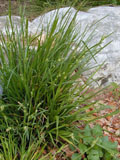
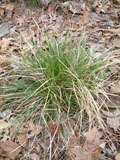
Below are ssuggestions for several grasses and sedges that should work in your retention pond. They are all native to Jefferson County or an adjacent county in Missouri.
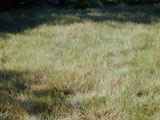
Bouteloua dactyloides (Buffalograss) would be an ideal solution as long as the retention pond doesn't hold water often. It grows to only 8 to 12 inches, requires no fertilizer or additional water. It does occur in neighboring St Louis County. Here is one of our How to Articles, Native Lawns: Buffalograss, with more information about the grass and how to plant and care for it.
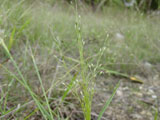
Digitaria cognata (Carolina crabgrass) is a relatively short grass that is native to Jefferson County. Here is more information from University of Michigan Herbarium and from The Samuel Roberts Noble Foundation.
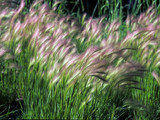
Hordeum jubatum (Foxtail barley) is an attractive grass that grows to about 20 inches high. Here is more information from Illinois Wildflowers and from Outsidepride.com in Oregon.
Sedges are also a possibility. They usually don't grow as tall as grasses and will usually tolerate growing in very wet soil which could occur in the retention pond. The ones listed below are evergreen or semi-evergreen.
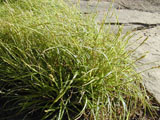
Carex texensis (Texas sedge) is evergreen. Here is more information from Niche Gardens in North Carolina and San Marcos Growers in California.
Carex blanda (Eastern woodland sedge) is evergreen. Here is more information from Illinois Wildflowers and from Missouri Plants.
Carex pensylvanica (Pennsylvania sedge) is semi-evergreen and grows to only 6 to 8 inches high. Here is more information from Illinois Wildflowers and from American Beauty Native Plants in Delaware.
You might try a combination of grasses and sedges at first to see what grows the best in your retention pond area. It will depend on the amount of sun, the soil type and water availability.
From the Image Gallery
More Grasses or Grass-like Questions
Controlling sedge in vegetable garden in Mississippi
August 03, 2008 - I have a veg. garden surrounded by Purple Sedge. The nut grass has been contained/eliminated by replacing all dirt 1' down. Now the surrounding sedge is beginning to creep inward infesting the gard...
view the full question and answer
Weedy buffalo grass from Dripping Springs, TX
March 07, 2013 - I have a buffalo grass lawn. It is thin and filled with weeds. I would like to find a solution to improve my lawn. I prefer a native grass but I need to be able to control the weeds and I am not ph...
view the full question and answer
Flowering Deer Resistant Ground Cover for Dry Rocky Soil: Alabama
March 26, 2012 - My question has been partially answered in the FAQ but I live in Birmingham where the soil is clay and rocky so it's a little different. I want to plant on a rocky slope (small rocks like the size of...
view the full question and answer
Native plants for bioswale in Tennessee
September 02, 2008 - What native plants do you recommend for a bioswale in Tennessee?
view the full question and answer
Vinca minor and St. Augustine grass
November 22, 2009 - Will St. Augustine grass choke out vinca minor?
view the full question and answer
| Support the Wildflower Center by Donating Online or Becoming a Member today. |