Native Plants

Q. Who is Mr. Smarty Plants?
A: There are those who suspect Wildflower Center volunteers are the culpable and capable culprits. Yet, others think staff members play some, albeit small, role. You can torture us with your plant questions, but we will never reveal the Green Guru's secret identity.

Did you know you can access the Native Plant Information Network with your web-enabled smartphone?

Ask Mr. Smarty Plants
Ask Mr. Smarty Plants is a free service provided by the staff and volunteers at the Lady Bird Johnson Wildflower Center.

rate this answer

Tuesday - July 03, 2012
From: Carmel, NY
Region: Northeast
Topic: Plant Lists, Shrubs, Trees
Title: Trees & Shrubs for a NY Slope
Answered by: Larry Larson
QUESTION:
Our community has a large steep slope (100'high by at least 600' wide) that is sunny & dry. The builders planted "wild flower seeds" on the slope that is now just weeds. We would like to know what shrubs and trees can be planted intermittently on this slope to make it more attractive. The only moisture it will get is from Mother Nature.ANSWER:
Hmmm…. “Wildflower Seeds”<=>“Just Weeds” Especially when not blooming, those two bear a strong resemblance to each other! Nevertheless, you asked about shrubs and trees to make the slope more attractive, and since Mother Nature will be their only moisture, natives are definitely the way to go!
Mr Smarty Plants recommendations often come out of the recommended species lists. This one is for New York. At this point one could limit the search to “shrubs” then “trees” successively, but I choose instead to simply choose “full sun” combined with heights “6-12”, “12-36” and “36-72” feet high. This still left me with 20 candidates for you. The list following are ones I consider some of the better choices, roughly sorted by height. You still need to consider colors and configuration for the best effect.
Rosa palustris (Swamp rose) 6-8 ft.
Amelanchier canadensis (Canadian serviceberry) 6-20 ft.
Asimina triloba (Pawpaw) 10-40 ft.
Prunus virginiana (Chokecherry) 20-30 ft.
Viburnum lentago (Nannyberry) 20-25 ft.
Ilex opaca (American holly) 25-60 ft.
Juniperus virginiana (Eastern red cedar) 30-40 ft.
Acer rubrum (Red maple) 40-60 ft.
As additional information that may help you choose plants to design your plantings, Mr Smarty Plants has had a few questions from your general area that might be useful to consider. This question answer pair considers Trees for privacy, while this one discusses Deer Resistant Species. Finally, for local information it is always a good idea to also consult with the local Extension Office. This link is to the Cornell Cooperative Extension of Putnam County.
From the Image Gallery
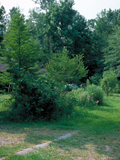
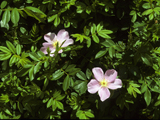
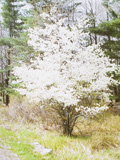
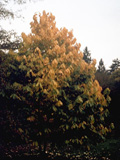
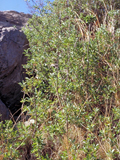
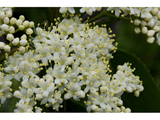
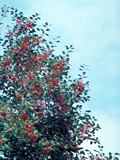
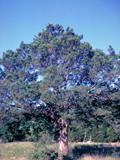
More Shrubs Questions
Trees for Privacy Screening in Central Texas
July 11, 2016 - I live in Cedar Park, Texas and have a neighbor who likes to have parties. I need a evergreen tree/hedge that will provide privacy and sound barrier. We have some wax myrtles but they don't work. We ...
view the full question and answer
Low-growing plant for grave in boggy Newfoundland
May 30, 2008 - I am looking for any suggestions on what type of plant I can plant on a grave. It is very boggy (peat)land. I want something that is hardy & not too tall. We have about 8 weeks of summer, July & Augus...
view the full question and answer
Tecoma stans problems in Santa Monica CA
September 20, 2010 - I just purchased a mature 6ft tall potted Tecoma Stance Vine (Honeysuckle), It is placed in an area where it gets at least 3 to 4 hours morning/early afternoon sun and then a shaded sun for the rest o...
view the full question and answer
Decorative small evergreen tree for Las Vegas NV
January 06, 2013 - I need a small decorative tree to be planted among a pine tree background; would prefer evergreen.
view the full question and answer
Non-blooming Dwarf Shrub and Agave Flowers
February 18, 2013 - I have two questions. I need a symmetrical dwarf shrub for full sun in Austin area that is non-flowering. Can you recommend some? And do agaves always flower when they are about 10 years and then die?
view the full question and answer
| Support the Wildflower Center by Donating Online or Becoming a Member today. |