Native Plants

Q. Who is Mr. Smarty Plants?
A: There are those who suspect Wildflower Center volunteers are the culpable and capable culprits. Yet, others think staff members play some, albeit small, role. You can torture us with your plant questions, but we will never reveal the Green Guru's secret identity.

Did you know you can access the Native Plant Information Network with your web-enabled smartphone?

Ask Mr. Smarty Plants
Ask Mr. Smarty Plants is a free service provided by the staff and volunteers at the Lady Bird Johnson Wildflower Center.

rate this answer

Saturday - April 28, 2012
From: Louisville, KY
Region: Mid-Atlantic
Topic: Compost and Mulch, Groundcovers, Grasses or Grass-like, Herbs/Forbs
Title: Turf grass for part-time home from Louisville KY
Answered by: Barbara Medford
QUESTION:
We have a small yard at a remote location with cistern water, and need a turf grass for a yard, clay soil, which I am willing to amend. It will receive sporadic attention as my husband and I do not live there full time. I know this is a toughie, we have a drought/dry summers in August, and Sept, and no way to water. , wet, cold but not freezing winters, about 4 hours of full sun, and bright indirect sun all day, no shade until later evening. I really want something native. A friend has purple top that is mown regularly like a lawn and has found it to be very low maintenance. What do you suggest?ANSWER:
We understand the garden in your mind's-eye: you are seeing a lovely woodland cottage with lush grass, huge, shady trees and it's waiting for you, unchanged, whenever you can come to it. Let us suggest a different image. It certainly can be a woodland garden, comfortable and welcoming, but we think you need to forget the turf grass. Any grass, native or non-native, requires pretty consistent regular care for the first year or so after it is planted. A turf grass will need to be hand-weeded until they are big enough to hold their own, and need a regular watering schedule. If your water supply is a rain-filled cistern, your water levels will be at the lowest, in the summer, when the heat and dry conditions are most demanding. Many grasses that can get by in that amount of sun will be grasses that demand a great deal of moisture.
We always feel it's less frustrating to take a nice dose of reality when you are planning a garden in an area like that. Look around you in the area-what is growing out of the ground? Trees, we know that, but what about the lower plants? You're going to say weeds, right? Maybe, maybe not. They may very well be native grasses, plants that belong right where they are, adapted to the rainfall, soils and climate from centuries of living right there.
So, here's our suggested plan. An area that is not going to get regular watering, or lots of sun, or consistent weeding and maintenance is not a very good candidate for turf. We would suggest, first, you select the areas where foot traffic will occur, and/or you don't think much of anything will grow. Consider getting decomposed granite to use not only for pathways but for beds that will in which some plants can grow. From the website The Human Footprint, here is a very comprehensive article on the use of decomposed granite. Another article from Landscape Design Advice Decomposed Granite as Paving Material adds more information.
Too much hauling and expense? Next possibility is mulch. First, read our How-To Article Under Cover With Mulch. This article details the various materials that are used as mulch, including decomposed granite. If you want to use that for pathways or gardens, you might consider an edging of native stone to keep the mulch from creeping, which the shredded hardwood bark mulchs will tend to do. Some areas may need renewal every six months or so, but as the mulch decomposes it will go into the soil to improve drainage and the texture of the soil.
We are going to search on our Native Plant Database for plants less than 1 foot tall, tolerant of part shade (2 to 6 hours of sun daily), with low water requirements as well as some grasses, not necessarily mowable turf grasses, but that will tolerate the same conditions. Those we select will all be native to Kentucky and we will even check to see if they grow natively in the general area of Jefferson County. Follow each plant link to our webpage on that plant to learn its growing conditions, water needs, etc.
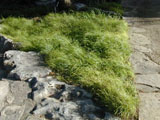
We found only one grass or grasslike plant native to your area, and it is Carex texensis (Texas sedge); honest, it is native to your area, too, and meets our criteria. One final suggestion: we once owned a lake cottage, on a large lot with many native trees. Although we did have a water supply, we didn't water the grounds. Instead, when we needed paths to the lake or sitting areas, we just mowed. Since what was there was grasses native to the area, it worked just fine.
Low Groundcover:
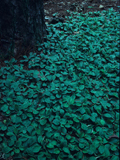
Antennaria plantaginifolia (Plantain-leaf pussytoes)
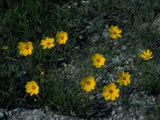
Coreopsis lanceolata (Lanceleaf coreopsis)
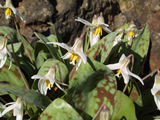
Erythronium albidum (White troutlily)
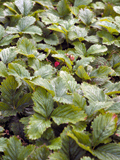
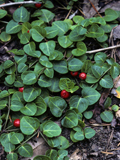
Fragaria virginiana (Virginia strawberry)
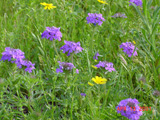
Glandularia bipinnatifida (Purple prairie verbena)
From the Image Gallery
More Herbs/Forbs Questions
Restoring disturbed land in Marshall, TX.
December 04, 2014 - I have a 30 acre tract of land in Marshall, Texas. The oil company has turned 2-3 acres surrounding the rig into gravel. I would like to return the gravel area to green space. Any suggestions on gras...
view the full question and answer
Mulching Spring Bulbs in Upstate NY
October 25, 2010 - Just planted tulip bulbs for Spring. The Parks Department then put 4 inches of mulch on top. Will the tulips be able to get through and bloom come Spring? Is mulch a good winterizer for them? Indoor c...
view the full question and answer
How to eliminate roadside thistles
May 26, 2015 - When we drive along the highway we see lots of wildflowers and no thistles in the median. How does the Highway Department keep the thistles out? Here in Kerrville, we are overwhelmed by thistles thi...
view the full question and answer
Finding a source of Straggler daisy
October 14, 2015 - I've decided on Straggler daisy but am having trouble finding it. It would be perfect for me. Do I have to wait until next Spring for it to show up? Can it be ordered through a nursery or a landscape...
view the full question and answer
Shade, Heat, Drought and Acidic Soil Tolerant Perennials for Las Vegas?
November 28, 2015 - What can I grow under my pine trees that is shade and heat (and acidity) tolerant? I live in Las Vegas, NV and would like perennials to plant under my pine trees.
view the full question and answer
| Support the Wildflower Center by Donating Online or Becoming a Member today. |