Native Plants

Q. Who is Mr. Smarty Plants?
A: There are those who suspect Wildflower Center volunteers are the culpable and capable culprits. Yet, others think staff members play some, albeit small, role. You can torture us with your plant questions, but we will never reveal the Green Guru's secret identity.

Did you know you can access the Native Plant Information Network with your web-enabled smartphone?

Ask Mr. Smarty Plants
Ask Mr. Smarty Plants is a free service provided by the staff and volunteers at the Lady Bird Johnson Wildflower Center.

rate this answer

Tuesday - January 10, 2012
From: Trussville, AL
Region: Southeast
Topic: Non-Natives, Plant Identification, Herbs/Forbs
Title: Questions about lilies from Trussville AL
Answered by: Barbara Medford
QUESTION:
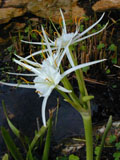
How can I tell what kind of lily I have? Or better yet,what is the difference between Asiatic lily and a daylily? I also noticed someone asked about Cahaba lily. Just want to let you know I grow Cahaba Or Spider lily in our shade garden. They come back every year with no prompting from me. But I have found the place they do best is in my fish pond. And, yes, they come back every year. That lady was asking about the seed pods, I have tried getting plants from them but it has never produced,we just throw ours away. Thank You.ANSWER:
We did find the Previous Mr. Smarty Plants answer which asked about the Cahaba Lily, which will bring you up to speed on that. Since we are not a forum, we can't guarantee original visitor will ever see your comment, but will leave it in so she will get the information if she searches Mr. Smarty Plants.
Now, on to your question about the difference between Asiatic lily and daylillies. This article from the American Hemerocallis Society has a database on which you could search for information. The daylilies are all now part of the genus Hemerocallis, none of which are native to North America, but rather to Eurasia, including China, Korea, and Japan.
There are members of the Liliaceae family which are native to North America, but the name "Asiatic" is a clue that native lilies are not what you are talking about. Try this website from the North American Lily Society to see if you can get any help there.
Native North American lilies belong to the genus Hymenocallis, in the family Liliaceae. Searching on Hymenocallis we found 6 members of the species, which includes Hymenocallis liriosme (Spider lily). Searching on Lialiaceae there were 268 members of that family listed. So, when you ask us how you can tell what kind of lily you have, frankly, we don't know. We suggest, again, that you look at the two societies listed above and see if they can help you.
The Lady Bird Johnson Wildflower Center deals only with plants native not only to North America but to the areas in which they are being grown.
From the Image Gallery
More Plant Identification Questions
Plant identification, Russian olive or buffaloberry
November 09, 2008 - Thank you for the info I found here regarding the silver buffaloberry and the russian olive. I need help in identifying which small shrub I have(it is one or the other)that was transplanted here on o...
view the full question and answer
Identification of plant growing in Plumbago
August 01, 2007 - Help - I have a strange looking plant that recently shot up in a potted Plumbago. I planted the Plumbago in its pot with Miracle Gro potting soil, and have been fertilizing with Miracle Gro as well. ...
view the full question and answer
Plant identification
September 04, 2010 - Please identify this tree: has leaves like a catalpa, blue/lavender flowers on a long flower spike at the end of the limb, green fruit/seed about the size of a pecan it is fuzzy like a peach with a h...
view the full question and answer
Flower with spike of yellow flowers with hairy purple filaments
July 03, 2012 - Fuzzy purple stamens! I can't find this plant identified anywhere. Blooms abt 1" or a little more across. 5 yellow petals, 5 sepals, & 5 stamens with yellow anthers, & the filaments are covered wi...
view the full question and answer
Plant Identification from Cold Lake AB
August 03, 2012 - How can I send a picture for you to help me identify a plant that grows in my garden that no one can seem to identify? I have taken a picture of it but can't seem to be able to attach it to this que...
view the full question and answer
| Support the Wildflower Center by Donating Online or Becoming a Member today. |