Native Plants

Q. Who is Mr. Smarty Plants?
A: There are those who suspect Wildflower Center volunteers are the culpable and capable culprits. Yet, others think staff members play some, albeit small, role. You can torture us with your plant questions, but we will never reveal the Green Guru's secret identity.

Did you know you can access the Native Plant Information Network with your web-enabled smartphone?

Ask Mr. Smarty Plants
Ask Mr. Smarty Plants is a free service provided by the staff and volunteers at the Lady Bird Johnson Wildflower Center.

rate this answer

Friday - December 02, 2011
From: Tucson, AZ
Region: Southwest
Topic: Diseases and Disorders, Trees
Title: Failure to thrive of Tex-ash in Tucson AZ
Answered by: Barbara Medford
QUESTION:
I planted a mature (15') Tex-Ash about a year ago. Lately more and more leaves seem to be browning and it has never filled out. I am concerned I am going to lose it if I don't get it something before Winter. Luckily I live in Arizona, but there will be a few freezing days here. Can you help diagnose the problem?ANSWER:
First, rhetorical question. When was "about a year ago"? If it was during the summer of 2010, although not as hot as the summer of 2011, your tree may be suffering from transplant shock. In the South and Southwest, we always recommend that woody plants (shrubs and trees) be planted in the cold weather of December to February. The trees are dormant then, and damage to roots or trunk is not quite as dangerous, plus you will not be asking a plant to draw up enough water and nutrient through its tiny fragile new rootlets to survive.
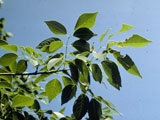
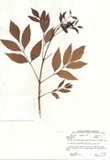
Second, we need to establish exactly what tree you have. Fraxinus texensis (Texas ash) is a possibility, but on the page about this tree in our Native Plant Database, we find this statement:
"Confined to Texas, except for a northern extension into the Arbuckle Mountains of Oklahoma. This southwestern relative of White Ash (Fraxinus americana) has fewer and smaller leaflets and smaller fruit and is adapted to a warmer, less humid climate; some consider it a variety of that species." So, we think it's a little unlikely that is what you have.
Then, there is the Fantex Ash. This does not appear in our database, because it is a cultivar and therefore not considered native. However, here is a previous Mr. Smarty Plants answer concerning that tree with more information about it.
Next possibility, Fraxinus velutina (Arizona ash). You can follow any of the plant links to learn more about each tree in our database. Please note this comment on the Arizona Ash:
"Conditions Comments: F. velutina is an extremely variable species. F. velutina var. coriacea grows in CA; F. velutina var. glabra grows in TX. All varieties are fast-growing and relatively short-lived."
From another previous Mr. Smarty Plants answer:
"Some characteristics that are common to members of the Fraxinus genus are that they are fast-growing and short-lived. They need a lot of water and fertilizer. One horticulturist has actually labeled them "trash trees" because of their short lives, demanding requirements and dropping of seed pods and leaves.
Ezine articles Arizona Ash Trees - "Arizona ash trees, like many other plants, are susceptible to various pests and diseases. These include cankering, mildews and various fungal infections, leaf scorch, rust diseases, and pests such as mites, webworms, carpenter worms, and borers. Ash trees are particularly vulnerable to Verticillium wilt, which is a soil-borne fungus. In some parts of the country (primarily the midwest), the emerald ash borer has killed many tens of thousands of ash trees. Luckily, Arizona ash tree varieties have not yet been affected by the destructive emerald ash borer. Trees that endure poor environmental conditions are more vulnerable to these problems, so it is important to keep the tree's defenses up by watering and fertilizing adequately.
Purdue University Verticillium Wilt of Shade Trees
USDA Animal and Plant Health Inspection Service Emerald Ash Borer
University of Illinois Extension Ash Tree Problems
Again, since we only have information on the native Fraxinus velutina (velvet ash) and not on the results of grafting which produces the cultivar Fantex, we can't say for sure what might be going on. According to this USDA Plant Profile Map, the Arizona Ash is native to Pima County in south-central Arizona, the climate would seem appropriate, but we noticed several referrals to ash trees needing lots of water. You might also get some local information on problems others in your area are having with ash trees by contacting the University of Arizona Cooperative Extension Office for Pima County.
From the Image Gallery
More Trees Questions
Is Franklinia alatamaha (Franklin tree) a major honeybee nectar source?
January 31, 2015 - Is the Franklinia tree a major nectar source for honeybees?
view the full question and answer
Problems with transplanted Texas Madrones from Junction TX
May 13, 2014 - We planted 3 little Texas madrones last year 9 - 12 inches high. 2 of them seem to have some kind of black blight along the edges of the leaves that I don't think was the result of our late freezes. ...
view the full question and answer
Replacement for black walnut near septic tank
March 10, 2009 - We have a black walnut tree growing on the sunny side of our house which provides wonderful shade in the summer but it is such a dirty tree. The leaves drop very early as well as small branches and t...
view the full question and answer
Tree Lost Leaves
September 05, 2013 - Are leaf cutter ants found in Michigan too? My leaves are being completely stripped off the tree. It went from growing very well when we planted it, to having completely no leaves at all. I know the l...
view the full question and answer
Recommend a plant similar to Corkscrew Willow for Austin, TX.
June 16, 2015 - Do corkscrew willows do well in Austin, TX? If not, can you recommend a willow like tree to plant along the banks of a creek?
view the full question and answer
| Support the Wildflower Center by Donating Online or Becoming a Member today. |