Native Plants

Q. Who is Mr. Smarty Plants?
A: There are those who suspect Wildflower Center volunteers are the culpable and capable culprits. Yet, others think staff members play some, albeit small, role. You can torture us with your plant questions, but we will never reveal the Green Guru's secret identity.

Did you know you can access the Native Plant Information Network with your web-enabled smartphone?

Ask Mr. Smarty Plants
Ask Mr. Smarty Plants is a free service provided by the staff and volunteers at the Lady Bird Johnson Wildflower Center.

rate this answer

Thursday - June 30, 2011
From: Lucas, TX
Region: Southwest
Topic: Wildflowers
Title: Care of wildflower meadow dried out in drought
Answered by: Guy Thompson
QUESTION:
Mr Smarty Plants, Our wildflower patch is completely dried up here in Lucas,Tx. What do you do with the field? Mow it? Trim it? Let it be? The patch is about 1/2 acre.. Thanks,ANSWER:
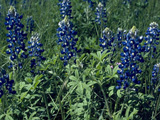
This year's drought has been harmful even for Texas native plants. But most of them are accustomed to dry years and will come back when conditions are better. I expect that your wildflower patch contains both annual and perennial species. As a meadow matures to about three years of age the perennials tend to predominate and will survive as long as their roots remain intact. But the annual flowers, such as Lupinus texensis (Texas bluebonnet), require seeds from this year's plants (or ungerminated seeds left over from a previous year) to produce new plants next season. If your plants bore flowers this spring they most probably set seed. Mowing the patch will help release any seeds still in pods and clear the way for them to germinate with the fall rains. Seeds will germinate only if in good contact with the mineral soil. You might consider dragging a rake or board over the area if you think some seeds have not fallen to the ground. If you can still see seeds of a few of your favorite plants, harvest them by hand and scatter them on the ground in September in advance of fall rains.
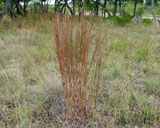
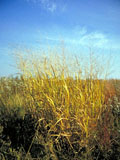
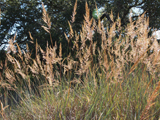
If you have tall grasses, such as Schizachyrium scoparium (Little bluestem), Panicum virgatum (Switchgrass) or Sorghastrum nutans (Indiangrass), do not set your mower blade lower than six inches. Controlled burns of meadows with expert guidance are sometimes recommended, but it is much too dangerous to do this in such a dry year as we are having.
Mr. Smarty Plants thinks you will be rewarded with a fine crop of wildflowers next spring.
From the Image Gallery
More Wildflowers Questions
Possibility of Oenothera flava growing in Michigan
June 16, 2006 - Oenothera flava (A. Nels) Garrett, is it true that this plant is not in Michigan? Is it rare or something? Because I had a hard time trying to find out what it was.
view the full question and answer
Source for dotted blue-eyed grass from Saluda SC
February 23, 2013 - I lived in Texas for several years and now live on acreage in South Carolina. I have heard that bluebonnets don't grow well in South Carolina. However, there is a place by the road near our house t...
view the full question and answer
Overwintering Yucca Seedlings in Illinois
October 02, 2013 - I have many yucca seedlings I started this year. My question is what do I need to do with them to overwinter here in Northern Illinois and when do I plant them in the ground for best chances of survi...
view the full question and answer
Planting bluebonnets
April 20, 2008 - How long do bluebonnet seeds take to mature, and when is the earliest in their development they can be harvested? When can they be scattered?
view the full question and answer
Meadow garden for Colorado Springs CO
June 03, 2012 - We recently purchased a restored home on a mesa just above the downtown area of Colorado Springs on the front range. The previous owners seeded the front lawn with blue gramma and told me that all I ...
view the full question and answer
| Support the Wildflower Center by Donating Online or Becoming a Member today. |