Native Plants

Q. Who is Mr. Smarty Plants?
A: There are those who suspect Wildflower Center volunteers are the culpable and capable culprits. Yet, others think staff members play some, albeit small, role. You can torture us with your plant questions, but we will never reveal the Green Guru's secret identity.

Did you know you can access the Native Plant Information Network with your web-enabled smartphone?

Ask Mr. Smarty Plants
Ask Mr. Smarty Plants is a free service provided by the staff and volunteers at the Lady Bird Johnson Wildflower Center.

rate this answer

Friday - September 24, 2010
From: Powell,, OH
Region: Midwest
Topic: Wildlife Gardens, Poisonous Plants
Title: Horse-friendly plants for Powell OH
Answered by: Marilyn Kircus
QUESTION:
I am looking for horse friendly plants, i.e., shrubs, trees, bushes, etc. that can be planted in wet area in Ohio. Thank you in advance for your assistance.ANSWER:
I hope you mean plants, that when eaten by horses, are not known to make them sick. You will probably have to fence the horses away from these plants as they will probably eat most of them. I spent several hours trying unsuccessfully to find plants that no horse would eat. But you might check on recommendations in horse forums. I found several discussions about horses eating plants there. Horses will also damage the bark of even large trees so you will have to always protect the trunks.
I started by using the Recommended Plants for Ohio from the Ladybird Johnson Wildlife’ Center’s web page. Then I narrowed the choices to full sun and wet soils. (I suspect you may have a low place in your pasture so assumed full sun.) I then narrowed the resulting list to shrubs and got six of them, then looked for the trees and got twelve.
I checked each one to see if it was listed in Cornell’s Plants Poisonous to Livestock. None of these show up there as toxic.
Shrubs:
Betula pumila Bog birch
Hibiscus moscheutos L. Crimson-eyed rosemallow
Physocarpus opulifolius Atlantic ninebark
Rosa palustris Swamp rose
Salix bebbiana Bebb Willow
Trees:
Amelanchier canadensis Canadian serviceberry
Betula populifolia gray birch
Fraxinus nigra Black ash
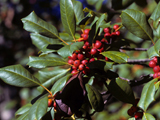
Ilex opaca American Holly
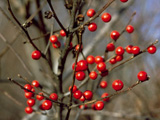
Ilex verticillata Common winterberry
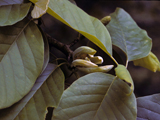
Magnolia acuminata Cucumber tree
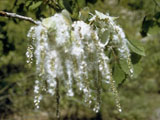
Populus tremuloides Quaking aspen
Ptelea trifoliata Wafer ash
Quercus macrocarpa Burr oak
Quercus palustris Pin oak
Salix amygdaloides Peach-leaf willow
Salix nigra Black willow
You can find more information and usually pictures of these plants when you click the links. And if you need plants for part shade, you can go back and pick the Recommended Plants for Ohio and then pick shrubs and trees that grow in wet soils in part shade.
From the Image Gallery
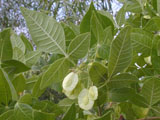
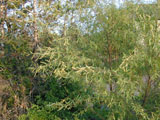
More Poisonous Plants Questions
Major poisonous plants in California
June 26, 2013 - Hi!
So I'm working on an art project that requires a comprehensive list of poisonous plants within California. I'm looking specifically however, for plants which are fatally poisonous (upon inges...
view the full question and answer
Petals of flowers on cake from London
August 28, 2010 - Hi could you confirm that Gemini, Lisianthus and Lilies are non toxic if positioned onto a fresh cream cake (stem will be paced into a vial but the petals will come into contact with the cream). Thank...
view the full question and answer
Toxicity of catalpa wood?
June 05, 2012 - Is the sawdust from cutting up a catalpa tree or the smoke from burning the wood toxic?
Thank you,
view the full question and answer
Remedy for sore finger scratched by an Agave plant
October 18, 2013 - I scratched my ring finger on a Agave plant this afternoon. It did bring blood to the surface and i washed it off. Where the scratch is, is very tender and it is swollen and tingles. Any suggestions f...
view the full question and answer
Getting rid of poison ivy
May 08, 2009 - Dear Mr Smarty Plants, Likewise I also have a shady area in my yard with overgrowth of poison ivy. It borders a small duck pond and we have a Golden Retriever. I too would like to plant soon afterward...
view the full question and answer
| Support the Wildflower Center by Donating Online or Becoming a Member today. |