Native Plants

Q. Who is Mr. Smarty Plants?
A: There are those who suspect Wildflower Center volunteers are the culpable and capable culprits. Yet, others think staff members play some, albeit small, role. You can torture us with your plant questions, but we will never reveal the Green Guru's secret identity.

Did you know you can access the Native Plant Information Network with your web-enabled smartphone?

Ask Mr. Smarty Plants
Ask Mr. Smarty Plants is a free service provided by the staff and volunteers at the Lady Bird Johnson Wildflower Center.

rate this answer

Wednesday - September 01, 2010
From: Dallas, TX
Region: Southwest
Topic: Compost and Mulch, Transplants, Cacti and Succulents
Title: Transplanting yucca pups from Dallas
Answered by: Barbara Medford
QUESTION:
Can I transplant Pup Yucca plants off of the main yucca and how do I cut them off?ANSWER:
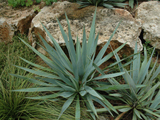
There are 28 species of the genus Yucca native to Texas. Just for fun, we always try to find a species of a plant that is native to the area from which the question comes. As it turns out, Yucca pallida (twistleaf yucca), grows natively in the Dallas area. In fact, according to this article from the Texas A&M Native Plant Database, this yucca is endemic to the North Central Texas area.
This may not be the yucca you have, but nearly all species of that plant have similar instructions for transplanting of the pups. You can't hurt them, in fact you might have trouble killing them. Just dig around one of the pups with a sharp shovel, which in the process will also cut through the rhizome from the parent plant, which is fine. If the shovel won't do the job, a sharp knife or maybe a hatchet is in order. If you want to nurse it for a while, you can transplant it to a large pot with cactus mix potting soil in it, maybe not in full sun all day, at least until the weather gets a little cooler. Water it, but make sure it is draining well. In cactus mix, with a hole in the bottom of the pot, you should have no problem.
You can transplant from the pot to the soil, or go directly to the soil. Again, there must be very good drainage for the roots. If you are planting in clay soil, do something, compost, even some sand, to improve the drainage. Desert plants cannot tolerate water on their roots. Speaking of roots, if you leave even the tiniest piece of the root in the soil, you will get more yuccas coming up. Hope you have neighbors who like yucca.
From our Native Plant Image Gallery:



More Transplants Questions
Optimum planting time for perennials and trees
November 02, 2007 - Our group is running out of fall workdays. Is it OK to plant native perennials and small trees in Central Texas during the winter months? Or should we wait now until the spring?
view the full question and answer
Suffering Yaupon in Austin
July 14, 2012 - I am in the Austin area and I planted a Pride of Houston Yaupon in my back yard in March. It is in full sun. Lately the leaves have been turning pale green and now they fall off the tree upon touchi...
view the full question and answer
Best time to plant non-native Crape Myrtle in Fulshear TX
July 01, 2010 - When are the best times to plant Crape Myrtles? My husband and I have just moved to Fulshear, TX (just slightly west of Houston) and being summer, I didn't think this was the best planting period. ...
view the full question and answer
Transplant shock in Mountain Laurel in San Antonio, TX
June 03, 2011 - I planted a 2 ft. tall Texas mountain laurel a month ago. Some of the leaves have turned very yellow and some of them are falling off. The plant doesn't look real healthy in general. I did add s...
view the full question and answer
Transplanting native flame leaf sumac in Eden, TX
October 26, 2008 - We have tried without success to transplant a flame leaf sumac from the ranch to the house. What are we doing wrong?
view the full question and answer
| Support the Wildflower Center by Donating Online or Becoming a Member today. |