Native Plants

Q. Who is Mr. Smarty Plants?
A: There are those who suspect Wildflower Center volunteers are the culpable and capable culprits. Yet, others think staff members play some, albeit small, role. You can torture us with your plant questions, but we will never reveal the Green Guru's secret identity.

Did you know you can access the Native Plant Information Network with your web-enabled smartphone?

Ask Mr. Smarty Plants
Ask Mr. Smarty Plants is a free service provided by the staff and volunteers at the Lady Bird Johnson Wildflower Center.

rate this answer

Wednesday - February 03, 2010
From: San Antonio, TX
Region: Southwest
Topic: Wildflowers
Title: Pink evening primrose in San Antonio
Answered by: Barbara Medford
QUESTION:
We purchased the Lady Bird Johnson Wildflower Mix from the Native American Seed Co. last year. It included Pink Evening Primrose. Their colonization has gone extremely well -- so much so that it is taking all the space in our wildflower area and not leaving room to plant other wildflower seeds (Indian blanket, etc.) Will other wildflowers come up naturally in the midst of the colony of primrose? If not, what can be done to thin or control the primrose colony to allow the planting of other seeds?ANSWER:
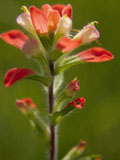
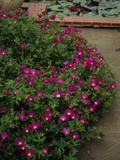
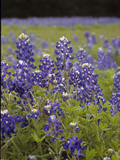
In "Just for Texans" in the Collections Section, there is a list of the plants that have seeds in the Lady Bird Legacy Mix. You can go to that list and follow each link to the page on that wildflower to learn when it blooms, and what it needs to prosper. Of these, 8, including Lupinus texensis (Texas bluebonnet) and Castilleja indivisa (entireleaf Indian paintbrush), are annuals and 4, including Oenothera speciosa (pinkladies) and Callirhoe involucrata (purple poppymallow) are perennials. For all of them, the predominant blooming season is March to May, but the evening primrose blooms from February to July and is semi-evergreen, making it something to look at in the wildflower garden when other plants are fading.
All of this is to say that, in Nature, this sort of problem kind of takes care of itself. The wildflower mix you are referring to was very carefully chosen, we're sure, to emulate the wildflower meadows Central Texas is famous for. However, evening primroses can be sneakily invasive; when they are dormant in the winter or during a hot, dry summer, the roots will still be spreading and new plants can pop up where you didn't expect them. About the best advice we can give you is to allow plants to bloom and then pull them out before they go to seed. Individual flowers only last one day, but you can keep an eye on them and when seed pods begin to appear, out they come. Since it is a good, long-blooming groundcover plant, we would certainly recommend that you leave some, and not try to exterminate them. Then, after noting what plants from the Mix are or are not coming up, you might choose to reseed only with the individual seeds of the particular plants you are missing. You didn't say how long you have had your wildflower garden, but we're sure you know that new seeds should be planted in the Fall. With any seed mix, you take your chances on what will do well in the space and what will not. Even the annuals in the mix will self-seed and return without further seeding, so additional over-seeding is best used to add diversity. If some species do not do well, or even come up, two years in a row, you might consider the soil and growing conditions each prefers.
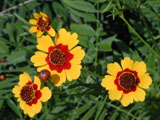
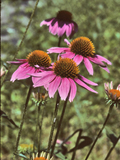
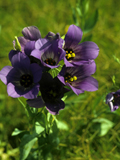
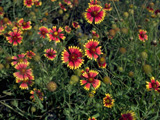
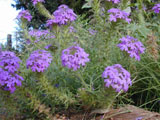
Species in the Lady Bird Legacy Wildflower Mix from our Native Plant Image Gallery:
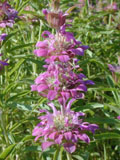
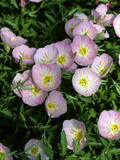
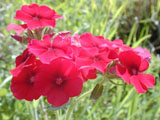
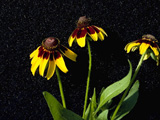
More Wildflowers Questions
When Should Wildflower Seeds be Planted in Dallas, Texas
November 28, 2011 - Mr. Pants: I have received some seed packets of wildflower seeds from GO TEXAN. How late can I plant these in central Dallas (8 a/b)?
view the full question and answer
Native grass and wildflower possibilities for Weatherford, TX
July 04, 2006 - I live in Weatherford, Texas - 20 acres and would love to have a prairie or soft cover throughout the year (less mowing). What do you recommend? I don't know anything about this ... So, feel free to ...
view the full question and answer
Wildflowers blooming in Austin in October
June 10, 2008 - Does the Austin area have any flowers that grow/bloom in October? I'm getting married in Austin in October and want the entire event to be as earth-friendly as possible..hence native flowers.
view the full question and answer
Small native flowering plants for Plano, TX
July 07, 2005 - Suggestions for native flowering plants small enough for a border planting? I live in Plano TX, just north of Dallas. Zone 8.
view the full question and answer
Texas wildflowers for April wedding
March 13, 2007 - A friend of mine is getting married in Texas in April and wanted to decorate the event with flowers native to that state. In my experience wildflowers do not last long out of the ground or in cut for...
view the full question and answer
| Support the Wildflower Center by Donating Online or Becoming a Member today. |