Native Plants

Q. Who is Mr. Smarty Plants?
A: There are those who suspect Wildflower Center volunteers are the culpable and capable culprits. Yet, others think staff members play some, albeit small, role. You can torture us with your plant questions, but we will never reveal the Green Guru's secret identity.

Did you know you can access the Native Plant Information Network with your web-enabled smartphone?

Ask Mr. Smarty Plants
Ask Mr. Smarty Plants is a free service provided by the staff and volunteers at the Lady Bird Johnson Wildflower Center.

rate this answer

Thursday - September 10, 2009
From: Johnson City, TN
Region: Southeast
Topic: Trees
Title: Pecan tree for Johnson City TN
Answered by: Barbara Medford
QUESTION:
I live in E. Tennessee and was wondering if there are any pecan trees that can be grown here? If so, which type? I am a native Texan and love pecans. I would appreciate any information you can give me.ANSWER:
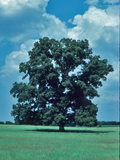
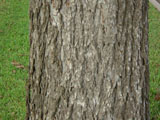
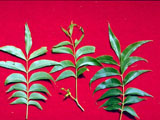
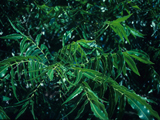
Carya illinoinensis (pecan) can certainly be grown in Tennessee. This USDA Plant Profile does not show them growing in the extreme northeastern tip where Washington County is, but we believe that they probably would flourish there if the soils are moist. However, don't buy the ingredients for pecan pie quite yet; the tree is slow-growing, tends to bear nuts in alternate years and will not ordinarily begin bearing until it is 15 to 20 years old. The best nut production is on trees 75 to 225 years old. Here are the Growing Conditions from our Native Plant Database:
Water Use: High
Light Requirement: Sun
Soil Moisture: Moist
CaCO3 Tolerance: Low
Cold Tolerant: yes
Soil Description: Rich, moist, well-drained soils. Sandy, Sandy Loam, Medium Loam, Clay Loam, Clay, Caliche type
Conditions Comments: The sweet, edible nut, makes pecan the best hickory for fruit production. The tree does not bear liberal quantities of fruit in the northern part of its range, but makes an interesting ornamental there. Susceptible to galls, twig girdlers, aphids, borers, weevils, pecan scab, tent caterpillars, and webworms. Slow-growing. Difficult to transplant because of a large taproot.
For more information, see this Floridata website Carya illinoinensi. As mentioned above, the young tree has a long taproot which, if damaged, could result in the death of the tree. So, you are going to have to begin with a very small tree, and let it grow quite a while before you can expect a crop. When it does begin to bear, you can expect small seedlings popping up everywhere, mostly planted by squirrels. They and other small mammals, even some birds, are going to be waiting for those nuts, too. The tree gets quite large and is not a good selection for a small yard.
From our Native Plant Image Gallery
More Trees Questions
How do you stop the bark from peeling off the tree in Amarillo?
May 07, 2012 - How do you stop the bark from peeling off the tree? I live in Amarillo, TX. If you can't stop the progression, how do you keep the tree alive?
view the full question and answer
Controlling oak suckers in Austin
June 24, 2012 - We have 2 live oak trees that are sprouting shoots all around the surrounding area. We would like to plant some grass and would like to remedy this first.
We have mowed the shoots and still they jus...
view the full question and answer
Care for oak acorns after planting from Huntsville TX
April 21, 2012 - I planted oak trees from acorns, how often and how much do I water them?
view the full question and answer
Is there a recommended list for Texas Eastern Cross Timbers?
August 29, 2011 - Is there a recommended list for Texas Eastern Cross Timbers?
view the full question and answer
How to Identify Male and Female Texas Persimmon Trees
October 07, 2014 - I have just learned that Texas persimmon trees are either male or female. Is it possible to tell which is which when buying one? I am planting on 50 acres near Blanco. Do I need one of each? I'd ...
view the full question and answer
| Support the Wildflower Center by Donating Online or Becoming a Member today. |