Native Plants

Q. Who is Mr. Smarty Plants?
A: There are those who suspect Wildflower Center volunteers are the culpable and capable culprits. Yet, others think staff members play some, albeit small, role. You can torture us with your plant questions, but we will never reveal the Green Guru's secret identity.

Did you know you can access the Native Plant Information Network with your web-enabled smartphone?

Ask Mr. Smarty Plants
Ask Mr. Smarty Plants is a free service provided by the staff and volunteers at the Lady Bird Johnson Wildflower Center.

rate this answer

Tuesday - October 07, 2014
From: Austin, TX
Region: Southwest
Topic: Planting, Trees
Title: How to Identify Male and Female Texas Persimmon Trees
Answered by: Anne Van Nest
QUESTION:
I have just learned that Texas persimmon trees are either male or female. Is it possible to tell which is which when buying one? I am planting on 50 acres near Blanco. Do I need one of each? I'd like to have one that bears fruit so that wildlife can chow down.ANSWER:
Texas persimmon is Diospyros texana and you are correct that they are dioecious meaning that the male and female flowers are on separate plants. But don't despair, since you have 50 acres within which to plant, you have lots of room to put in enough trees to ensure that you have good fruiting.
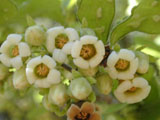
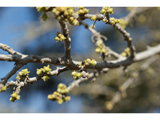
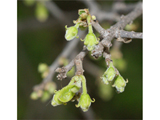
Damon Waitt, Senior Director of the Lady Bird Johnson Wildflower Center has answered a previous Mr. Smarty Plants question on identifying the gender of persimmon trees. Here's what he wrote: Persimmon trees are either male or female and only the females bear fruit. You can tell male trees from female trees because male flowers are smaller and appear in small clusters, while the larger female flower appears alone.
Inside the female flower you will find the pistil but also sterile stamens, noticeably smaller than stamens in the male flower. The stamens in a persimmon's female flowers are usually sterile but rarely produce pollen. So rarely a tree with female flowers can produce fruit without another tree with male flowers being around. To complicate matters further, a tree's sexual expression can vary from one year to the other and many cultivars of persimmon are parthenocarpic (setting seedless fruit without pollination).
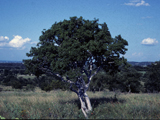
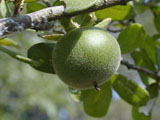
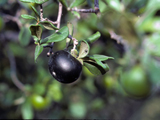
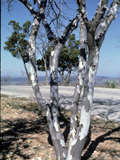
The Native Plant Database has the following information about the tree: This well-shaped, small tree is valued primarily for its striking trunk and branches, which are a smooth, pale greyish white or whitish grey, peeling off to reveal subtle greys, whites, and pinks beneath. The fruits, borne on female trees, are edible once soft, with a flavor some liken to prunes, and are favorites of many birds and mammals. It is extremely drought-tolerant and disease-resistant and is ideal for small spaces in full sun.
The Aggie Horticulture website at TAMU has justified praise for the tree too. Here's what they say ... Texas Persimmon is one of Texas's premier small trees. The bark of mature trees peels away to reveal shades of gray, white and pink on the trunk underneath, rivaling the beauty of the Texas madrone. Combined with fine textured dark green foliage that stays evergreen in the southern range, intricate branching, and wide range of suitable environments for growth, make it worthy use in modern landscapes, especially those with limited space. It grows best in shallow, rocky limestone soils, and in the Edwards Plateau it can make heavy thickets. It is, however, tolerant of most soils and sites as long as they are sunny and well-drained.
The Aggie Hort website also recommends that persimmon trees should be planted 15-18 feet apart in rows that are 20 feet apart.
The Oregon State University has described the male and female flowers online as female flowers being white, inconspicuous, about 3 mm, bell-shaped, solitary or rarely in pairs, sweetly fragrant, appearing in early to mid spring.
Jim Conrad's Naturalist Newsletter at www.backyardnature.net has several pictures of Texas persimmon flowers (both male and female). He describes the male (staminate) flowers as having only pollen-producing stamens (usually numbering 16 in each flower), while the female flowers are much larger and fewer in each cluster. He shows a close up of the female (pistillate) flower with four hairy styles atop a green, oval ovary. Jim comments that in the natural environment the male trees outnumber the females by a ratio of 10 to 1.
The USDA says that the tree should start to produce fruit when it is 5 or 6 years old. The flowers appear from February to June and the fruits mature in August and September.
From the Image Gallery
More Trees Questions
Native Texas tree for anniversary in Austin
May 20, 2009 - My husband and I would like to plant a tree in our yard commemorating our 5 year anniversary (wood anniversary). What native Texas tree can we plant in June? I love Red buds and any pretty blooming ...
view the full question and answer
Tulip trees losing bark in OH
July 11, 2011 - We have two tulip trees in our yard that are losing their bark at the base of the trunk. I am careful with the mower keeping away from the tree when I mow. What could the problem be and what can I d...
view the full question and answer
Disease and soil disturbance effects on Pacific madrone
April 02, 2007 - I have a couple acres, here in Northern California Sierra Nevada foothills. My property has many, many trees - quite a few are the beautiful (yet messy!) Arbutus menziesii, or Pacific Madrone. Some ...
view the full question and answer
Planting a Willow Close to a Water Line
March 18, 2016 - I have a postage stamp-sized front yard, with the water tap in the front 1/3. I believe the water line runs right through the middle of my pss-front yard. I REALLY wanted to plant a weeping willow t...
view the full question and answer
Trees for privacy in NY
March 17, 2011 - I am looking for trees native to New York that I can plant in front of my backyard fence that is six feet tall that will not hide my fence or overshadow my east facing garden beds and plants underneat...
view the full question and answer
| Support the Wildflower Center by Donating Online or Becoming a Member today. |