Native Plants

Q. Who is Mr. Smarty Plants?
A: There are those who suspect Wildflower Center volunteers are the culpable and capable culprits. Yet, others think staff members play some, albeit small, role. You can torture us with your plant questions, but we will never reveal the Green Guru's secret identity.

Did you know you can access the Native Plant Information Network with your web-enabled smartphone?

Ask Mr. Smarty Plants
Ask Mr. Smarty Plants is a free service provided by the staff and volunteers at the Lady Bird Johnson Wildflower Center.

rate this answer

Tuesday - May 12, 2009
From: Rockmart, GA
Region: Southeast
Topic: Trees
Title: Fragrant tree found in Savannah
Answered by: Nan Hampton
QUESTION:
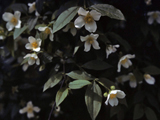
I was in Savannah last weekend and as we were walking through one of the side streets we were hit with the fragrance of Lilac. I grew up around Lilac bushes but never expected a full in bloom single trunk tree. The flowers were different, they kind of looked like a lilac and white thing star. What is the name of the tree that we discovered in Savannah, Georgia? Will it grow in zone 7?ANSWER:
Mr. Smarty Plants isn't at all sure what your tree is, but here are some fragrant trees that you might find in Savannah:1) North American native Philadelphus pubescens (hoary mock orange), probably good in Zone 7. Here are additional photos.
2) North American native Osmanthus americanus (devilwood) with additional photos and information.
3) Asian native Osmanthus fragrans (Tea Olive), which is a bit tender in Zone 7.
If none of these is the fragrant tree you saw and you happen to have a photograph of it, please send it to us and we will do our best to identify it. Visit Mr. Smarty Plants' Plant Identification page for instructions on submitting photos.

More Trees Questions
Need to identify leaf extensions on the leaves of an elm sapling in Houston, Tx.
May 22, 2013 - I have an elm sapling which grows strange leave extensions on its leaves. Can I send you a picture? Tree looks healthy
view the full question and answer
Privacy screening from Phoenix AZ
April 14, 2013 - I live in the center of Phoenix, Az. On the eastern side of my house we have some 2 story condos next door. The width of the side yard is about 12'-15' and it gets lots of shade. I also have my powe...
view the full question and answer
Which native palms survived severe cold from Las Cruces NM
June 12, 2011 - Can you tell me which of the north American native palms survived the severe cold last year that hit El Paso and Las Cruces?
view the full question and answer
Spraying paint on White Pine tree trunks
October 31, 2011 - Is there a paint that is safe to spray on a tree trunk without damaging/killing the tree? We have White Pines that have ~16" spacing without limbs & would like to 'camouflage' the bare space. If pa...
view the full question and answer
Difficulty with Clay Soil from Palm Bay, FL
August 22, 2012 - I had a very nice little native shady area behind my house for over 40 years, but now it has been cleared except for a 100 foot tall live oak in the center of this raised mound (50' x 80'). I've be...
view the full question and answer
| Support the Wildflower Center by Donating Online or Becoming a Member today. |