Native Plants

Q. Who is Mr. Smarty Plants?
A: There are those who suspect Wildflower Center volunteers are the culpable and capable culprits. Yet, others think staff members play some, albeit small, role. You can torture us with your plant questions, but we will never reveal the Green Guru's secret identity.

Did you know you can access the Native Plant Information Network with your web-enabled smartphone?

Ask Mr. Smarty Plants
Ask Mr. Smarty Plants is a free service provided by the staff and volunteers at the Lady Bird Johnson Wildflower Center.

rate this answer

Friday - May 08, 2009
From: Leavenworth, KS
Region: Midwest
Topic: Erosion Control, Grasses or Grass-like
Title: Native plants for eroding hillside in Kansas
Answered by: Nina Hawkins
QUESTION:
We have a creek running thru our property and the hill running down to it is about 30 feet tall, in some places almost straight down, some sloping. Some is in shade, some full sun. We would like some flowering plants, if possible, that will aid with erosion since the rain water is washing the hillside.ANSWER:
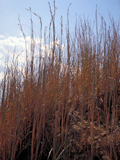
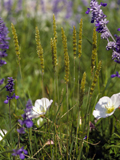
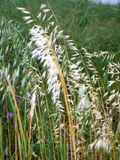
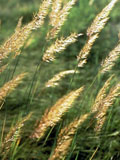
Your best bet for effective erosion control is definitely grasses because their fibrous roots hold soil very well. But there's certainly no reason that should stop you from having wildflowers too. Grasses are not to be underestimated - they provide interest when your flowers aren't blooming and many look great en masse. You can find a wide variety of native plants that are recommended for your area on our Recommended Species page, where you can also narrow your search to certain characteristics and choose the water and light requirements specific to a spot on your hillside. Below are some beautiful grasses and a few wildflowers that often grow among grasses. These plants are native to Kansas and several are known to reseed freely to form colonies.
Schizachyrium scoparium (little bluestem)
Koeleria macrantha (prairie Junegrass)
Bouteloua curtipendula (sideoats grama)
Sorghastrum nutans (Indiangrass)
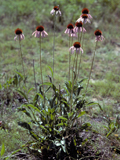
Echinacea angustifolia (blacksamson echinacea)
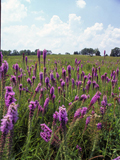
Liatris pycnostachya (prairie blazing star)
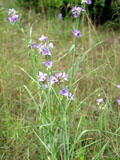
Tradescantia ohiensis (bluejacket)
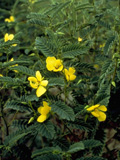
Chamaecrista fasciculata (partridge pea)
More Erosion Control Questions
Economical, low maintenance plants for erosion control on a bank
May 29, 2006 - Please advise of all species suitable for preventing bank erosion, specifically those that will cover a southern exposure 400 foot long, 15 foot high bank in western North Carolina that grows rapidly ...
view the full question and answer
Plants for difficult site in Jacksonville, TX
July 07, 2010 - East Texas (Cherokee County) red clay hillside, hard-packed, difficult to get to, 40' of it slopes 4' down in about 6'! Another 30' of it is flat. Between the hillside and the flat clay area is a...
view the full question and answer
Erosion tolerant plants for shade from Kerrville TX
August 06, 2013 - We have just cleared a lot of cedar out of a small draw and would like to know the best groundcovers, shrubs, etc. to plant to hold the soil. Deep shade most of the day.
view the full question and answer
Hillside Erosion Control for Gainesville GA
August 07, 2013 - I have a steep bare hill and the runoff from it is heavy this year. I need help with a fast growing groundcover that will help control erosion and runoff. Planting on the hill is difficult because you...
view the full question and answer
Native grasses for erosion control in Harlingen, TX
March 12, 2009 - I like to know what type of fast growing grass, ground cover or trees I can put on a slope for erosion control in Harlingen Texas the slope receives afternoon Sun
view the full question and answer
| Support the Wildflower Center by Donating Online or Becoming a Member today. |