Native Plants
Q. Who is Mr. Smarty Plants?
A: There are those who suspect Wildflower Center volunteers are the culpable and capable culprits. Yet, others think staff members play some, albeit small, role. You can torture us with your plant questions, but we will never reveal the Green Guru's secret identity.
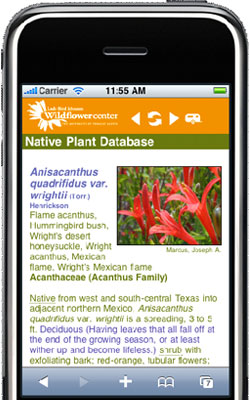
Did you know you can access the Native Plant Information Network with your web-enabled smartphone?

Ask Mr. Smarty Plants
Ask Mr. Smarty Plants is a free service provided by the staff and volunteers at the Lady Bird Johnson Wildflower Center.

rate this answer

Friday - April 10, 2009
From: Austin, TX
Region: Southwest
Topic: Seeds and Seeding, Transplants, Wildflowers
Title: Should I transplant my bluebonnets from the planter they came into soil in Austin?
Answered by: Jimmy Mills and Joe Marcus
QUESTION:
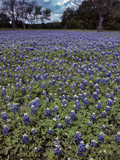
Dear Mr. Smarty Plants, Since moving to Austin two years ago I have fallen in love with bluebonnets. Last year I purchased seedlings from the Wildflower Center but a taste-first-evaluate-later inquisitive little fawn bit them down to the rosettes and spat them out. This year I have come across a beautiful 16" square planter filled with established bluebonnet plants blooming away like the median of Highway 71. I bought this immediately, and now I would like to know how to encourage the bluebonnets to naturalize. Should I transplant them out of the planter into the area where I'd like them to bloom (anywhere), or will that damage the roots at this point? Should I transplant them later? Or should I just let them go to seed, collect the seed, and start with that in the fall? Thanks for any help you can provide as I try to bring bluebonnets up on top of my hill here in West Austin..ANSWER:
Bluebonnets Lupinus texensis (Texas bluebonnet) are described as winter annuals; they germinate in the fall, form rosettes and overwinter, then flower in the spring. The plants that you have are just about at the peak of their flowering, so transplanting at this point would probably be counter productive as they could suffer transplant shock. However,you might just move the planter to the area where you want the bluebonnets to grow before the seedpods mature. When mature, your bluebonnet legumes will burst open, slinging the seeds quite some distance in a seed-dispersal strategy known as explosive dehiscence. Many plants employ this method of seed dispersal. If you cannot move the planter, you may want to enclose it somehow (not with plastic, which would cook the plants) to capture the catapulting seeds. You can also pull them, roots and all, from the planter just as the seedpods are turning brown and put them in closed paper grocery bags. You'll be able to hear them popping inside the bag for days or weeks. When they're finished popping, remove the seeds from the bottom of the bag and compost the plants and paper bags. The seeds can then be planted wherever you would like to plant them either right away or in the fall following the instructions in our How-to article.
Another good source of information is The Texas Bluebonnet by J. Andrews. See Bibliography.
More Seeds and Seeding Questions
Starting Venus Flytrap From Seed
September 05, 2013 - I am a high school student doing a project on the Venus flytrap and would like you to help me by answering the following questions: What are the Venus flytrap predators and prey? How to raise a Venus ...
view the full question and answer
Growing bluebonnets in pot in Flower Mound TX
November 01, 2011 - We received a package of bluebonnet seeds along with the DVD Wildflowers: Seeds of History as a gift. In the film, Andrea DeLong mentions that bluebonnets did not grow well in a rich organic soil. W...
view the full question and answer
Golden groundsel plants or seeds for Bulverde TX
October 02, 2011 - Where can I find golden groundsel, plants or seeds?
view the full question and answer
Problems with Eves necklacepods (Styphnolobium affine)
March 25, 2008 - Mr. S-P,
I urgently need your advice regarding two Eve's necklacepods that appear to be dying. They are in two completely different areas of my yard. One began leafing out and then the leaves sh...
view the full question and answer
Seeding success with Penstemon cobaea from Austin
June 18, 2013 - I've never had much luck in harvesting seeds from foxgloves (Penstemon cobaea, I think). Whenever I open the seed casing, the seeds inside are covered with some kind of mold. What's going on, and ho...
view the full question and answer
| Support the Wildflower Center by Donating Online or Becoming a Member today. |