Native Plants

Q. Who is Mr. Smarty Plants?
A: There are those who suspect Wildflower Center volunteers are the culpable and capable culprits. Yet, others think staff members play some, albeit small, role. You can torture us with your plant questions, but we will never reveal the Green Guru's secret identity.
Did you know you can access the Native Plant Information Network with your web-enabled smartphone?

Ask Mr. Smarty Plants
Ask Mr. Smarty Plants is a free service provided by the staff and volunteers at the Lady Bird Johnson Wildflower Center.

rate this answer

Friday - February 20, 2009
From: Laredo, TX
Region: Southwest
Topic: Diseases and Disorders, Pests, Transplants
Title: Pest on leaves of native Texas persimmon in Laredo, TX
Answered by: Barbara Medford
QUESTION:
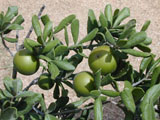
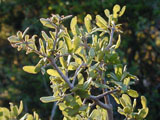
I have a transplanted a Texas persimmon tree from the wild. It has some globes in the leaves. It seems like some pest injected something from underside of leaves. Any suggestion? What is happening to my tree? By the way, it is a beautiful 8 ft. tree.ANSWER:
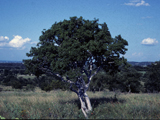
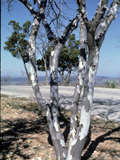
First, congratulations on successfully transplanting a Diospyros texana (Texas persimmon) from the wild. This is not easy, as it has an awesome root, but apparently you did very well. When we did research on this plant, we learned that it is extremely disease-resistant and has few pests. none normally serious. It sounds like you have some insect-produced galls, which are unsightly but rarely dangerous. This About.com website Dealing with Leaf Galls likened them to insect bites on a human-leaves a little bump, irritating, but then it goes away. Spraying the galls is not useful, because by the time you see the gall, the insect is long gone. Since we are not entomologists, we would suggest you contact the Texas A&M AgriLIFE Extension Office for Webb County. They may know if there are similar problems in your area, and can suggest control, if you feel the problem is serious enough to warrant that. If you do spray, it will have to be in the early Spring, when the insects are still around.
More Diseases and Disorders Questions
Dying branches on Texas Mountain Laurel from Kempner TX
September 14, 2012 - The branches on my Texas Mountain Laurel are very dry and brittle. The leaves are also starting to die. The tree has been in my yard for six years and prior to that it sat wrapped in burlap for ov...
view the full question and answer
Bulging trunks on post oak
August 05, 2011 - I have a huge post oak with a codominant trunk that is bulging between the two main trunks. The bulging is causing the trunks to spread apart, so one of the trunks is getting much too close to the ho...
view the full question and answer
Leafing out problems with oaks in Towson MD
June 02, 2012 - 3 native 5-year-old oaks kept old leaves until March and are not leafing by the end of May. The few leaves that have emerged are shriveled. WHAT'S WRONG?
view the full question and answer
Recovery from transplant shock for bougainvillea
July 12, 2007 - I live outside of Phoenix. I just bought a bougainvillea in a large pot. It was doing nicely until I brought it home. I placed it in a sunny spot in my front yard inside of a large volcanic rock that ...
view the full question and answer
Need to know about little brown spots on Texas Mountain Laurel
May 11, 2015 - I have little brown spots on my Texas Mountain Laurel leaves. I can email you a picture if needed. What could it be and how can I help my little laurels work thru these spots?
The texas mountain ...
view the full question and answer
| Support the Wildflower Center by Donating Online or Becoming a Member today. |