Native Plants

Q. Who is Mr. Smarty Plants?
A: There are those who suspect Wildflower Center volunteers are the culpable and capable culprits. Yet, others think staff members play some, albeit small, role. You can torture us with your plant questions, but we will never reveal the Green Guru's secret identity.

Did you know you can access the Native Plant Information Network with your web-enabled smartphone?

Ask Mr. Smarty Plants
Ask Mr. Smarty Plants is a free service provided by the staff and volunteers at the Lady Bird Johnson Wildflower Center.

rate this answer

Tuesday - February 10, 2009
From: Severn, MD
Region: Mid-Atlantic
Topic: Shrubs
Title: Native shrub to replace non-native azaleas.
Answered by: Joe Marcus
QUESTION:
I want to replace my two dozen azaleas this spring (I think they're unattractive once the flowers fall off). I like the multiseason characteristics of weigela (midnight wine, W&R), but want to go native. Can you suggest a native alternative to these compact oriental beauties?ANSWER:
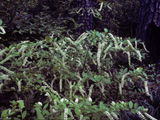
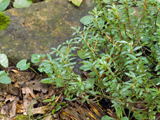
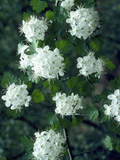
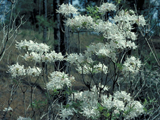
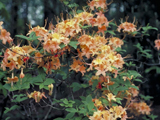
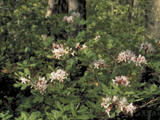
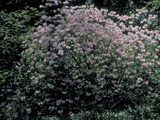
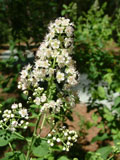
Among the most difficult requests we receive are those for landscape plant recommendations.. Some of the issues to consider when choosing a new plant for your landscape are how the landscape will is used, how the plant will fit with other plants and features in the landscape, ultimate size of the new plant, soil, water, nutrition and maintenance needs of the plant, potential insect, disease, and pets and children poisoning problems, and, of course, personal aesthetic considerations. Unfortunately, we cannot answer many of those questions; only you, the owner can do that. However, we can make some suggestions for some plants that might work for you. Here is a list of selected Maryland native plant species. One or more of these plants might work for you as a replacement for your azaleas.
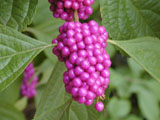
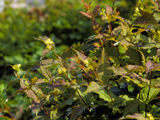
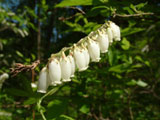
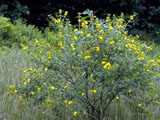
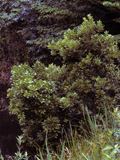
Callicarpa americana (American beautyberry),
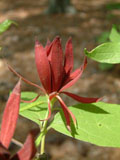
Calycanthus floridus (eastern sweetshrub),
Ceanothus americanus (New Jersey tea),
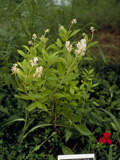
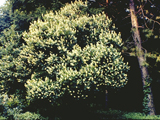
Clethra alnifolia (coastal sweetpepperbush),
Diervilla lonicera (northern bush honeysuckle),
Eubotrys racemosus (swamp doghobble),
Hypericum prolificum (shrubby St. Johnswort),
Itea virginica (Virginia sweetspire),
Paxistima canbyi (Canby's mountain-lover),
Physocarpus opulifolius (common ninebark),
Rhododendron arborescens (smooth azalea),
Rhododendron calendulaceum (flame azalea),
Rhododendron prinophyllum (early azalea),
Rhododendron viscosum (swamp azalea),
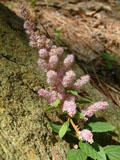
Spiraea alba (white meadowsweet),
Spiraea betulifolia (white spirea),
Spiraea tomentosa (steeplebush),
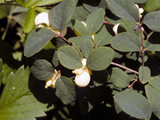
Symphoricarpos albus (common snowberry),
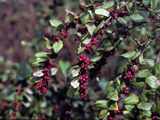
Symphoricarpos orbiculatus (coralberry),
Vaccinium angustifolium (lowbush blueberry)
More Shrubs Questions
Evergreen perennials for a pond bank in Texas
June 18, 2015 - We want evergreen perennial plants for the banks of our small pond. The banks are eroding and we need to help keep them strong. We have ducks in the pond and lots of turtles. We would love something ...
view the full question and answer
Need a shrub to conceal a privacy fence in Knightdale, NC.
August 03, 2011 - Could you recommend a medium-sized shrub/bush (max height of 6-7 feet) to plant along a privacy fence (purpose is to conceal the fence from the street view per HOA)? I live in Zone 8.
view the full question and answer
Shrub or small tree to hide walls in southern California
August 31, 2009 - We have multiple issues in our back yard in 92683, and will probably need an assortment of plants to accomplish it. In a nutshell, here are the basics we were hoping to fix: 1) Ugly 5 & 6 foot block...
view the full question and answer
Leaf loss on Cenizo in Bertram TX
November 17, 2009 - I need help with a purple sage (Leucophyllum frutescens) problem. Most of one of my plants started having paler, more greyish leaves, then the leaves began to fall off. It seemed to still look healthy...
view the full question and answer
Native, non-invasive plants for Canaan Valley, WV
April 23, 2006 - I recently purchased a home on an acre of land in the middle of Canaan Valley, WV. The front yard is flat and sunny, the back is on a ridge and is a little forest with a creek at the bottom. The tre...
view the full question and answer
| Support the Wildflower Center by Donating Online or Becoming a Member today. |