Native Plants

Q. Who is Mr. Smarty Plants?
A: There are those who suspect Wildflower Center volunteers are the culpable and capable culprits. Yet, others think staff members play some, albeit small, role. You can torture us with your plant questions, but we will never reveal the Green Guru's secret identity.

Did you know you can access the Native Plant Information Network with your web-enabled smartphone?

Ask Mr. Smarty Plants
Ask Mr. Smarty Plants is a free service provided by the staff and volunteers at the Lady Bird Johnson Wildflower Center.

rate this answer

Saturday - October 25, 2008
From: Austin, TX
Region: Southwest
Topic: Invasive Plants, Non-Natives
Title: Getting rid of giant ragweed in Austin
Answered by: Barbara Medford
QUESTION:
How can I get rid of a large field of giant ragweed? Part of the site is a steep slope, which is difficult to mow. I want to encourage native grasses but they are crowded out by the ragweed.ANSWER:
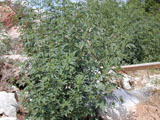
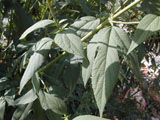
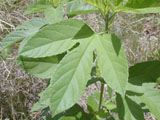
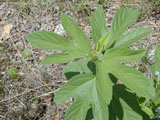
The best information we could get on Ambrosia trifida var. texana (Texan great ragweed) after doing some research is to allow perennial plants to crowd out this annual. Yeah, right.
So, here's the plan. Get them before they go to seed. And really get them-either cut off the seeding part or pull out the whole things. They're blooming now (thus all the allergies all over town), and once they've bloomed, they set seed. Birds love the rich, oily seeds for winter food, so you're going to make some birds unhappy, but if you don't want a fresh field of new Giant Ragweed next year, those plants have got to go before the seeds ripen. This is not to say they won't come back, because the birds are going to pick up seeds in the field next to yours, and deposit them for you. But if you can slow it down to the point that you recognize them when they're young and yank them out then, long before they even produce the flowers and pollen and sneezes, then you're at least gaining.
Most of the native grasses you are interested in are, indeed, perennials and will, given half a chance, begin to dominate the area, but the ragweed, although annual, is just so numerous that it can shade out the perennial grasses and seriously damage their growth. So, there you have it - you're going to have to do it the hard way, and mid-October is a real good time to start. If you wait until they die back in cold weather, they will have already deposited millions of seeds in the ground, and be all ready to go next year.
More Non-Natives Questions
Lantana failing to bloom from Tampa FL
October 04, 2012 - I reside in central Florida. I have planted several lantana the orange,red,yellow type. I don't have proper species name. They have been in the ground 3 weeks with 2" of potting soil around root ba...
view the full question and answer
Planting non-native coastal bermudagrass in Portland TX
September 09, 2009 - How do you plant coastal grass?
view the full question and answer
Care for non-native Mexican ruellia in Monroe LA
October 27, 2009 - Dwarf Mexican Petunia
I have found information that late in the season, when growth becomes leggy, cut back plants by as much as a half to force a new spurt of growth.
Watch for tobacco bud wo...
view the full question and answer
Research on Native vs. Non-Native Plants
October 22, 2009 - I am doing a research project on comparing and analyzing the effects of non-native plants vs. native plants on the environment and surrounding ecosystems. The end result of my project will be to desi...
view the full question and answer
Tecoma stans problems in Santa Monica CA
September 20, 2010 - I just purchased a mature 6ft tall potted Tecoma Stance Vine (Honeysuckle), It is placed in an area where it gets at least 3 to 4 hours morning/early afternoon sun and then a shaded sun for the rest o...
view the full question and answer
| Support the Wildflower Center by Donating Online or Becoming a Member today. |